THE ADVENTURE COLLECTIVE® · Independent discovery and booking for outdoor travel

A practical, four-hour introduction to outdoor rock climbing on Morro da Babilônia in Rio. Certified instructors focus on knots, belaying, and rappelling while you climb routes with city-and-sea views.
A practical, four-hour introduction to outdoor rock climbing on Morro da Babilônia in Rio. Certified instructors focus on knots, belaying, and rappelling while you climb routes with city-and-sea views.
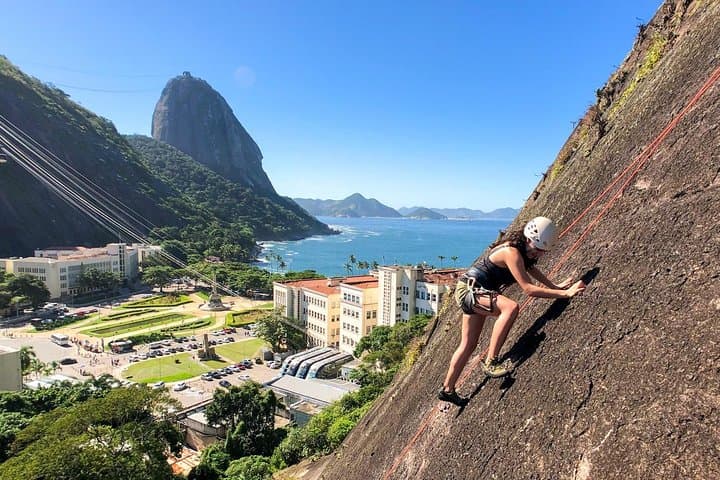
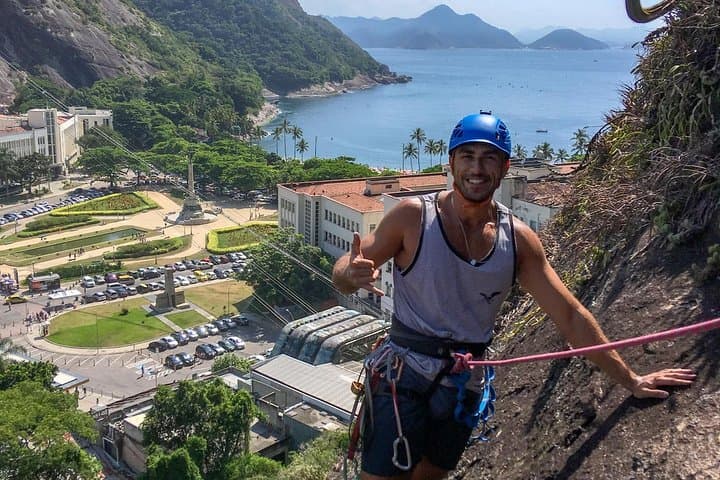
You meet at a sun-warmed plaza, the angel statue marking a precise starting point in a city that never stands still. From there a short walk threads through low-rise houses and sudden bursts of green until the cliff face of Morro da Babilônia appears: a compact granite shoulder rising above the southern curve of Rio’s beaches. Wind off the Atlantic teases the ropes; the city sprawls below like a map that keeps shifting with every step.
Verified experiences and guided adventures in the surrounding area.
Operated by Rio Mountain Sports · Rio de Janeiro, Rio de Janeiro
You meet at a sun-warmed plaza, the angel statue marking a precise starting point in a city that never stands still. From there a short walk threads through low-rise houses and sudden bursts of green until the cliff face of Morro da Babilônia appears: a compact granite shoulder rising above the southern curve of Rio’s beaches. Wind off the Atlantic teases the ropes; the city sprawls below like a map that keeps shifting with every step.
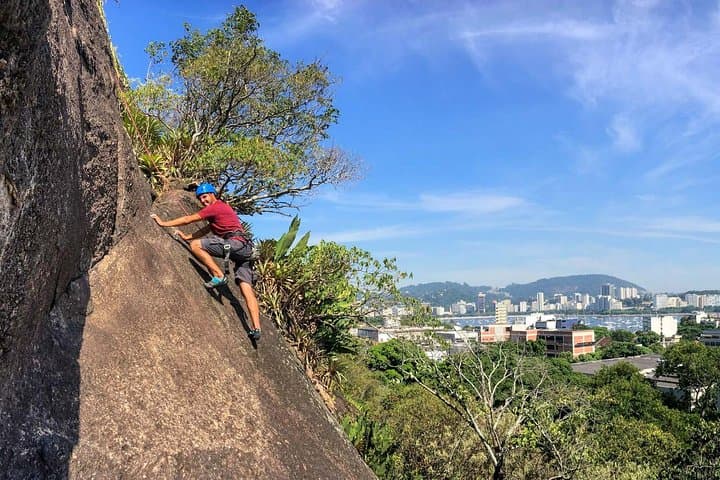
Morro da Babilônia is less a remote alpine wall than an urban outcrop shaped by geology and history. Its granite slabs are the same Palaeozoic bones that throw up Sugarloaf and nearby headlands; over centuries people used the ridge as lookout and later as a working neighborhood. Today the rock is shared territory: local climbers, trainers from AGUIPERJ, and visitors looking for a first taste of real stone. The route choices are short and contained — ideal for practicing knots, footwork, and rappels while the ocean keeps time with the tide below.
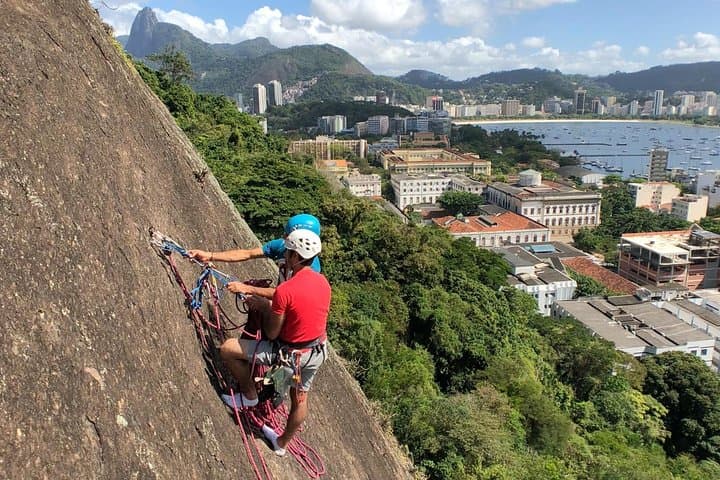
The lesson focuses on practical movement and safe systems. Instructors set top-rope anchors, teach the figure-8 and other essential knots, and guide you through belaying and controlled rappelling. Emphasis is on repeatable skills rather than adrenaline — you’ll climb, come down, and climb again until technique sticks into muscle memory. On clear days the views sweep from Copacabana’s crescent to the distant arc of Niterói; the city becomes a live reference for route-finding and exposure management.
Culturally, these slopes sit at the edge of communities who have long used the rock for exercise and escape; your instructor will outline local route ethics and how climbers here coexist with the urban environment. Geologically the rock is forgiving enough for novices but offers texture that demands attention: focus your feet and let the friction do the work.
Practical guidance: the program runs roughly four hours and is best booked on a cool morning to avoid peak sun. Bring 1.5 liters of water, closed-toe shoes (approach shoes or sturdy trainers are fine), sunscreen, and mosquito repellent. All technical equipment — harness, helmet, ropes — is supplied, and instructors provide hands-on coaching for every skill taught. Expect small-group attention (max four in shared sessions), moderate physical effort, and progressive learning.
Safety notes: this activity isn’t recommended for pregnant travelers or those with serious spinal or cardiovascular issues; disclose height and weight at booking to ensure correct equipment fit. If you want photos, bring a small camera or phone tethered to yourself — instructors can usually pause for shots but will prioritize safety. The lesson gives an excellent, practical primer on outdoor climbing in Rio: teachable, scenic, and built around repetition so you leave confident to try more routes on your next return.
moderate.
4 hours.
Should have a moderate fitness level—comfortable walking, using legs for sustained effort, and able to handle short bursts of upper-body work.
No—this lesson is designed for first-time outdoor climbers and those with indoor experience; all core skills are taught on-site.
Yes—certified instructors supply harnesses, helmets, ropes, and other technical gear; bring only personal items and footwear.
Shared lessons are small, with a maximum of four participants to ensure hands-on instruction and safety oversight.
Travelers must be reasonably fit; the operator advises against participation for pregnant guests or those with serious spinal or cardiovascular conditions—declare any medical issues at booking.
The meeting point is the angel statue in the square named on your booking confirmation—arrive with ID and your water and snacks.
Full refund available if you cancel at least 24 hours before the scheduled start; the operator will cancel in bad weather.
Morro da Babilônia has long been an urban lookout and community space; its compact granite faces became popular with local climbers and instructors learning to train outdoors.
Practice leave-no-trace: avoid excess chalk, use established anchors, and carry out trash; local groups work to balance climbing access with neighborhood needs.
Rio Mountain Sports operates guided outdoor trips and adventures with an emphasis on safety, stewardship, and memorable experiences.
You meet at a sun-warmed plaza, the angel statue marking a precise starting point in a city that never stands still. From there a short walk threads through low-rise houses and sudden bursts of green until the cliff face of Morro da Babilônia appears: a compact granite shoulder rising above the southern curve of Rio’s beaches. Wind off the Atlantic teases the ropes; the city sprawls below like a map that keeps shifting with every step.
You meet at a sun-warmed plaza, the angel statue marking a precise starting point in a city that never stands still. From there a short walk threads through low-rise houses and sudden bursts of green until the cliff face of Morro da Babilônia appears: a compact granite shoulder rising above the southern curve of Rio’s beaches. Wind off the Atlantic teases the ropes; the city sprawls below like a map that keeps shifting with every step.
Morro da Babilônia is less a remote alpine wall than an urban outcrop shaped by geology and history. Its granite slabs are the same Palaeozoic bones that throw up Sugarloaf and nearby headlands; over centuries people used the ridge as lookout and later as a working neighborhood. Today the rock is shared territory: local climbers, trainers from AGUIPERJ, and visitors looking for a first taste of real stone. The route choices are short and contained — ideal for practicing knots, footwork, and rappels while the ocean keeps time with the tide below.
The lesson focuses on practical movement and safe systems. Instructors set top-rope anchors, teach the figure-8 and other essential knots, and guide you through belaying and controlled rappelling. Emphasis is on repeatable skills rather than adrenaline — you’ll climb, come down, and climb again until technique sticks into muscle memory. On clear days the views sweep from Copacabana’s crescent to the distant arc of Niterói; the city becomes a live reference for route-finding and exposure management.
Culturally, these slopes sit at the edge of communities who have long used the rock for exercise and escape; your instructor will outline local route ethics and how climbers here coexist with the urban environment. Geologically the rock is forgiving enough for novices but offers texture that demands attention: focus your feet and let the friction do the work.
Practical guidance: the program runs roughly four hours and is best booked on a cool morning to avoid peak sun. Bring 1.5 liters of water, closed-toe shoes (approach shoes or sturdy trainers are fine), sunscreen, and mosquito repellent. All technical equipment — harness, helmet, ropes — is supplied, and instructors provide hands-on coaching for every skill taught. Expect small-group attention (max four in shared sessions), moderate physical effort, and progressive learning.
Safety notes: this activity isn’t recommended for pregnant travelers or those with serious spinal or cardiovascular issues; disclose height and weight at booking to ensure correct equipment fit. If you want photos, bring a small camera or phone tethered to yourself — instructors can usually pause for shots but will prioritize safety. The lesson gives an excellent, practical primer on outdoor climbing in Rio: teachable, scenic, and built around repetition so you leave confident to try more routes on your next return.