THE ADVENTURE COLLECTIVE® · Independent discovery and booking for outdoor travel

Move from gym walls to real rock in a four-hour, beginner-friendly guided climb just outside Cody, Wyoming. Short approaches, solid rock and patient professional guides make this an ideal intro to outdoor climbing near Yellowstone.
Move from gym walls to real rock in a four-hour, beginner-friendly guided climb just outside Cody, Wyoming. Short approaches, solid rock and patient professional guides make this an ideal intro to outdoor climbing near Yellowstone.
You start at a small gravel lot just east of the long tunnel, the town of Cody shrinking behind you as the road opens to cliffs and sagebrush. The guide clips a harness with a practiced motion, voices steady over the wind, and the rock—the pale, grippy face—waits, catching first light. For the next four hours, rope, shoes, and patient coaching turn a stranger’s vertical wall into a task you can measure in holds and breaths.
Verified experiences and guided adventures in the surrounding area.
Operated by Wyoming Mountain Guides · Cody, Wyoming
You start at a small gravel lot just east of the long tunnel, the town of Cody shrinking behind you as the road opens to cliffs and sagebrush. The guide clips a harness with a practiced motion, voices steady over the wind, and the rock—the pale, grippy face—waits, catching first light. For the next four hours, rope, shoes, and patient coaching turn a stranger’s vertical wall into a task you can measure in holds and breaths.
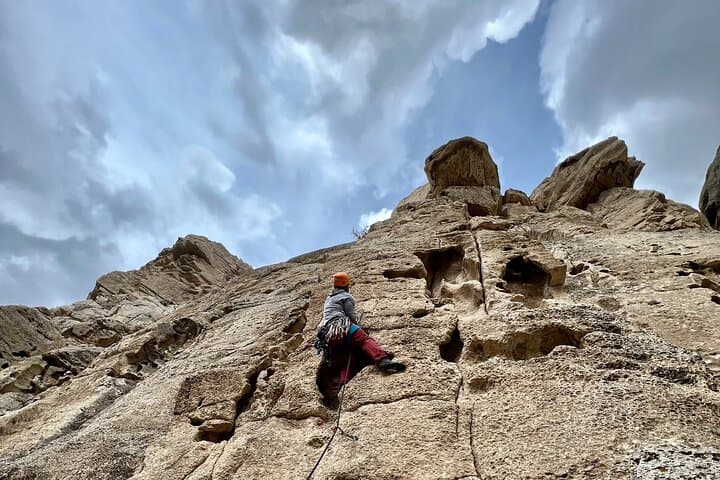
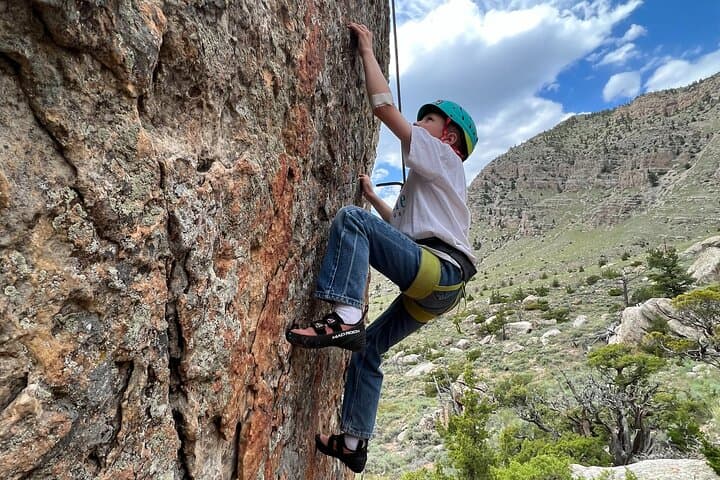
This half-day experience is designed for people who have never climbed outdoors or want to move from gym to real rock. The routes are short, single-pitch climbs—typically 30–60 feet—with approaches under 15 minutes and modest elevation gain (generally 50–150 feet from the lot to belay stances). Guides set top-ropes and handle the technical systems, so you focus on footwork, body position, and the small victories of reaching a bolt or clipping a quickdraw.
Cody sits at the eastern gateway to Yellowstone and shares its geological lineage: ancient volcanic activity sculpted the region into ridges and cliffs, while rivers carved approach gullies that now serve as natural access corridors. The climbing often uses textured volcanic rock and cemented sandstone, which offers reliable friction and a variety of holds. The culture in Cody is pragmatic and outdoors-first—locals mix ranching history with a deep knowledge of seasons, snowpack and wind, and the climbing community is generous with beta and route history.
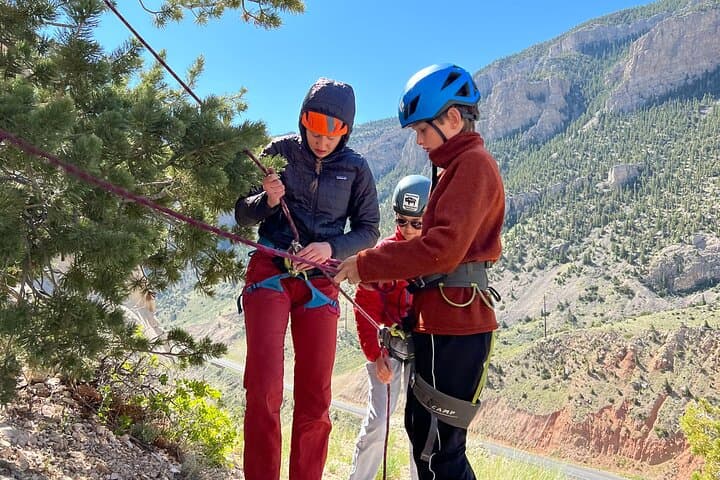
Practical guidance: arrive in sturdy shoes and layers—the wind can make a warm morning feel cold at the belay. Bring at least 1–1.5 liters of water and snacks; altitude and effort dry you faster than you expect. Guides supply helmets, harnesses and climbing shoes, and manage ropes and anchors, but bookings require basic fitness and no major back or heart issues. Park in the climbers’ lot (meet there for check-in) and expect a safety briefing and gear fitting before you climb.
Timing matters: aim for mornings to avoid mid-afternoon gusts and, in summer, the heat. Learn the commands—"On belay," "Climbing," "Take"—they’re simple, universal and keep the team coordinated. Respect the rock and the anchors; top-rope anchor systems are installed for safety and should be used as directed by guides.
For a first outdoor climb, Cody offers an efficient, confidence-building entry: short approaches, solid rock, and guides who prioritize technique and safety. Walk away with a new set of skills—and a different view of the skyline, one measured in vertical meters rather than miles.
moderate.
4 hours.
Participants should be in moderate physical condition—able to hike short steep approaches and handle repeated pulls on upper body and core.
No — this half-day experience is beginner-focused; guides teach basic ropework and climbing technique on top-roped routes.
Guides supply harnesses, helmets, climbing shoes, ropes and technical gear; bring personal water and snacks.
Routes are chosen for beginners—short single-pitch climbs with manageable moves—but expect sustained effort and brief exposure to heights.
Meet at the climbers' lot just east of the long tunnel; guides will provide exact parking instructions at booking.
Full refund is available if you cancel at least 24 hours before the scheduled departure time; check your booking confirmation for specifics.
Bookings ask for age and weight; while minors can join with guardian consent, very high weights may limit harness options—check with the operator when booking.
Cody’s landscape was shaped by volcanic events and early ranching routes; the town itself grew around the turn-of-the-century as a gateway to Yellowstone and a base for outdoor guides.
Stick to established approaches and belay areas to protect fragile soils and native plants; local operators emphasize Leave No Trace and anchor stewardship.
Wyoming Mountain Guides operates guided outdoor trips and adventures with an emphasis on safety, stewardship, and memorable experiences.
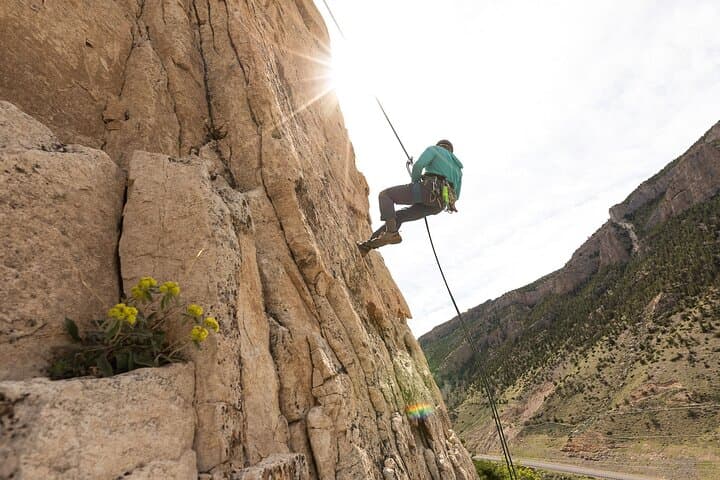
You start at a small gravel lot just east of the long tunnel, the town of Cody shrinking behind you as the road opens to cliffs and sagebrush. The guide clips a harness with a practiced motion, voices steady over the wind, and the rock—the pale, grippy face—waits, catching first light. For the next four hours, rope, shoes, and patient coaching turn a stranger’s vertical wall into a task you can measure in holds and breaths.
You start at a small gravel lot just east of the long tunnel, the town of Cody shrinking behind you as the road opens to cliffs and sagebrush. The guide clips a harness with a practiced motion, voices steady over the wind, and the rock—the pale, grippy face—waits, catching first light. For the next four hours, rope, shoes, and patient coaching turn a stranger’s vertical wall into a task you can measure in holds and breaths.
This half-day experience is designed for people who have never climbed outdoors or want to move from gym to real rock. The routes are short, single-pitch climbs—typically 30–60 feet—with approaches under 15 minutes and modest elevation gain (generally 50–150 feet from the lot to belay stances). Guides set top-ropes and handle the technical systems, so you focus on footwork, body position, and the small victories of reaching a bolt or clipping a quickdraw.
Cody sits at the eastern gateway to Yellowstone and shares its geological lineage: ancient volcanic activity sculpted the region into ridges and cliffs, while rivers carved approach gullies that now serve as natural access corridors. The climbing often uses textured volcanic rock and cemented sandstone, which offers reliable friction and a variety of holds. The culture in Cody is pragmatic and outdoors-first—locals mix ranching history with a deep knowledge of seasons, snowpack and wind, and the climbing community is generous with beta and route history.
Practical guidance: arrive in sturdy shoes and layers—the wind can make a warm morning feel cold at the belay. Bring at least 1–1.5 liters of water and snacks; altitude and effort dry you faster than you expect. Guides supply helmets, harnesses and climbing shoes, and manage ropes and anchors, but bookings require basic fitness and no major back or heart issues. Park in the climbers’ lot (meet there for check-in) and expect a safety briefing and gear fitting before you climb.
Timing matters: aim for mornings to avoid mid-afternoon gusts and, in summer, the heat. Learn the commands—"On belay," "Climbing," "Take"—they’re simple, universal and keep the team coordinated. Respect the rock and the anchors; top-rope anchor systems are installed for safety and should be used as directed by guides.
For a first outdoor climb, Cody offers an efficient, confidence-building entry: short approaches, solid rock, and guides who prioritize technique and safety. Walk away with a new set of skills—and a different view of the skyline, one measured in vertical meters rather than miles.