THE ADVENTURE COLLECTIVE® · Independent discovery and booking for outdoor travel

Watch invasive North American beavers at work along Lake Fagnano, then warm up with a lakeside roast at a mountain refuge. This guided half-day from Ushuaia mixes quiet forest walks, scenic lookouts and local hospitality.
Watch invasive North American beavers at work along Lake Fagnano, then warm up with a lakeside roast at a mountain refuge. This guided half-day from Ushuaia mixes quiet forest walks, scenic lookouts and local hospitality.
A low wooden refuge perches on the shore of Lake Fagnano, embers whispering as the wind pushes across a long, cold ribbon of water. You step from the vehicle on gravel and peat, traded light for the muffled hush of a century-old lenga forest; the trees close around the path and the beavers’ quiet engineering begins to appear in small ponds and gnawed stumps.
Verified experiences and guided adventures in the surrounding area.
Operated by Kaitek Viajes · Tolhuin, Tierra del Fuego
A low wooden refuge perches on the shore of Lake Fagnano, embers whispering as the wind pushes across a long, cold ribbon of water. You step from the vehicle on gravel and peat, traded light for the muffled hush of a century-old lenga forest; the trees close around the path and the beavers’ quiet engineering begins to appear in small ponds and gnawed stumps.
The beavers here are not native — introduced mid-20th century — and their levees have reshaped the Valdivian and subantarctic forests, creating still-water pockets that attract local Cauquén (upland geese) and other waterfowl. Geologically, Fagnano is a linear, glacially scoured lake aligned with an active fault; the shoreline alternates between wind-swept beaches and moss-draped buttresses. Estancias and ranching culture persist along the coast, and evenings at a shelter often end with shared roast, wine and stories in Spanish and English.
Expect a short hike through uneven forest floor to viewing ponds; guides emphasize stealth to avoid startling the animals. The outing typically includes scenic stops at Valle Carbajal and Paso Garibaldi en route and time at Estancia La Carmen for lakeside views and a three-course roast dinner. Bring layered, windproof clothing, waterproof footwear, and a pair of binoculars — beavers are most active near dawn and dusk. Stay on trails, keep distance from dams, and follow guides’ instructions: the experience balances quiet wildlife observation with cultural hospitality at a remote southern lake.
easy.
5 hours.
Suitable for light to moderate fitness — able to walk 1–3 miles on uneven, sometimes boggy terrain.
No — North American beavers were introduced in the 1940s and have since altered wetland and forest ecosystems across the island.
Yes — the tour operates with air-conditioned transport from Ushuaia and returns the same day; confirm your pickup point when booking.
Some areas at the refuge and shelter are accessible, but the forest viewing trail has uneven ground and may not be suitable for standard wheelchairs or strollers.
Yes — the excursion includes a three-step dinner (entrée, roast with salads, dessert) and coffee/tea; alcoholic beverages served to guests 18+.
Beavers were introduced in the mid-20th century; their populations expanded rapidly and transformed wetlands, prompting ongoing management discussions.
Stay on trails, avoid altering beaver structures, and support local estancias that practice low-impact tourism to reduce disturbance to sensitive riparian habitats.
Kaitek Viajes operates guided outdoor trips and adventures with an emphasis on safety, stewardship, and memorable experiences.


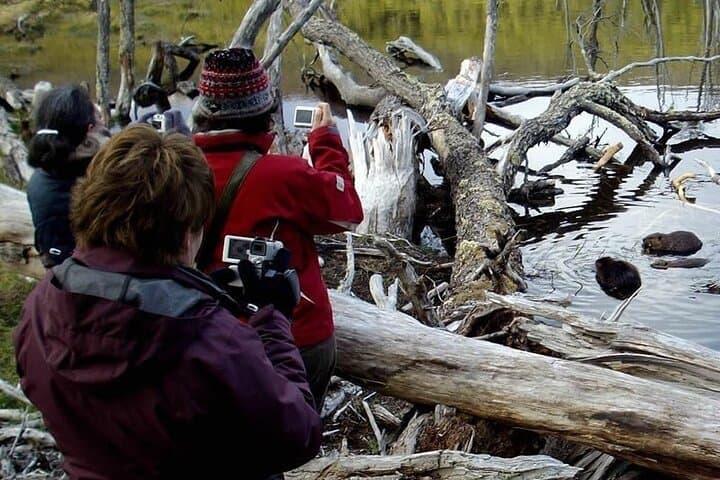

A low wooden refuge perches on the shore of Lake Fagnano, embers whispering as the wind pushes across a long, cold ribbon of water. You step from the vehicle on gravel and peat, traded light for the muffled hush of a century-old lenga forest; the trees close around the path and the beavers’ quiet engineering begins to appear in small ponds and gnawed stumps.
A low wooden refuge perches on the shore of Lake Fagnano, embers whispering as the wind pushes across a long, cold ribbon of water. You step from the vehicle on gravel and peat, traded light for the muffled hush of a century-old lenga forest; the trees close around the path and the beavers’ quiet engineering begins to appear in small ponds and gnawed stumps.
The beavers here are not native — introduced mid-20th century — and their levees have reshaped the Valdivian and subantarctic forests, creating still-water pockets that attract local Cauquén (upland geese) and other waterfowl. Geologically, Fagnano is a linear, glacially scoured lake aligned with an active fault; the shoreline alternates between wind-swept beaches and moss-draped buttresses. Estancias and ranching culture persist along the coast, and evenings at a shelter often end with shared roast, wine and stories in Spanish and English.
Expect a short hike through uneven forest floor to viewing ponds; guides emphasize stealth to avoid startling the animals. The outing typically includes scenic stops at Valle Carbajal and Paso Garibaldi en route and time at Estancia La Carmen for lakeside views and a three-course roast dinner. Bring layered, windproof clothing, waterproof footwear, and a pair of binoculars — beavers are most active near dawn and dusk. Stay on trails, keep distance from dams, and follow guides’ instructions: the experience balances quiet wildlife observation with cultural hospitality at a remote southern lake.