THE ADVENTURE COLLECTIVE® · Independent discovery and booking for outdoor travel

An early-morning private transfer takes you from Cusco to the high puna where Rainbow Mountain reveals its painted ridges beneath the looming Ausangate glacier. This full-day hike combines dramatic geology, Quechua highland culture, and serious altitude — best tackled with good acclimatization and layered gear.
An early-morning private transfer takes you from Cusco to the high puna where Rainbow Mountain reveals its painted ridges beneath the looming Ausangate glacier. This full-day hike combines dramatic geology, Quechua highland culture, and serious altitude — best tackled with good acclimatization and layered gear.
Dawn finds you on a narrow road out of Cusco, highland air tasting faintly of coffee and livestock as headlights slice through pre-dawn blue. The van climbs, villages blink awake, and by the time you step onto the puna at Hanchipata the sky has hardened into a cold, clear vault. The mountain doesn’t whisper — it commands: Vinicunca’s layered mineral bands sit like a painted ridge beneath the shadow of Ausangate, the glaciated peak watching from above.
Verified experiences and guided adventures in the surrounding area.
Operated by Rainbow Mountain Travels · Cusco, Cusco Region
Dawn finds you on a narrow road out of Cusco, highland air tasting faintly of coffee and livestock as headlights slice through pre-dawn blue. The van climbs, villages blink awake, and by the time you step onto the puna at Hanchipata the sky has hardened into a cold, clear vault. The mountain doesn’t whisper — it commands: Vinicunca’s layered mineral bands sit like a painted ridge beneath the shadow of Ausangate, the glaciated peak watching from above.
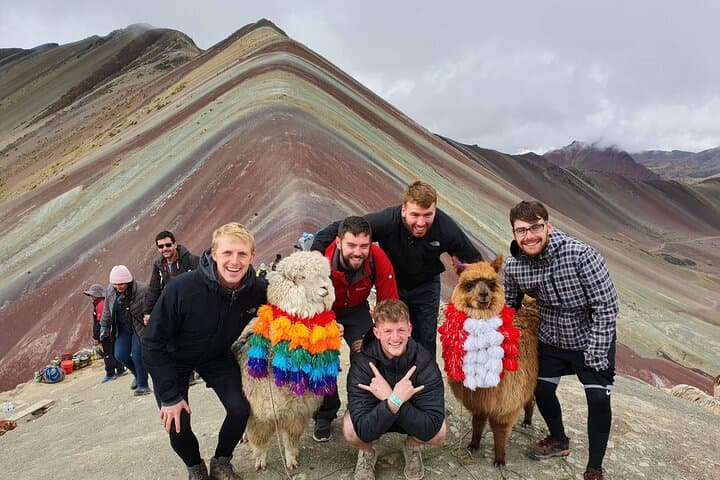
Geology here is readable: iron and copper oxides, sandstones and clays uplifted and stripped to reveal vivid stripes born of millions of years of tectonics and erosion. Culturally, the slopes belong to Quechua communities for whom Ausangate is an Apu — a living mountain — and you’ll pass small herds of llamas tended by local shepherds on route.
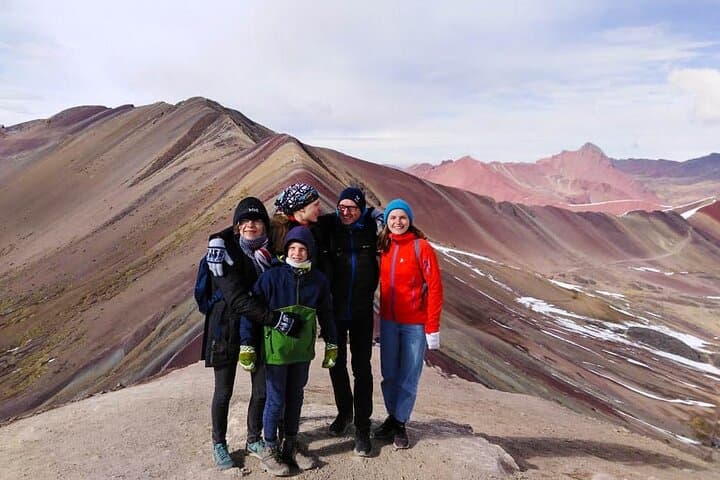
Practically, the route is a stiff high-altitude hike rather than technical climbing: expect a 1 hour 45 minute ascent to roughly 5,000–5,200 m with rocky, often wind-scoured trails and a steady, lung-burning incline. Guides provide breakfast, lunch and oxygen; many groups start between 3:00–3:30 a.m. to beat bus crowds and secure early light. Pace deliberately, sip water frequently, and use layered clothing — the summit is cold and exposed while the walk lower down can be calm and sunny.
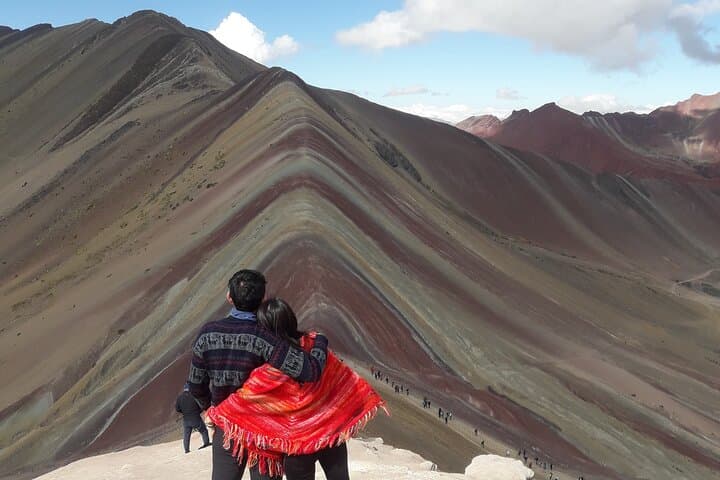
Photo composition favors side-on approaches that capture Ausangate behind the colored bands; give yourself time to acclimatize in Cusco beforehand. If you’re sensitive to altitude consider hiring a horse for sections or adding an extra acclimation day. The payoff is immediate: color, scale, and a rare high-Andean silence that presses politely against your ears.
challenging.
10–12 hours (door-to-door).
Good aerobic fitness and some high-altitude experience recommended; expect steep sections and thin air.
Vinicunca’s colored ridge sits at roughly 5,000–5,200 meters above sea level, so altitude effects are common.
The trail is non-technical but steep and at high altitude; beginners with good fitness and acclimatization can do it, but expect slow uphill progress.
Yes — local horse rentals for portions of the ascent are usually offered on-site for an additional fee paid in cash.
No — the Red Valley has a separate entrance fee typically paid at the site, so bring local currency.
Ausangate is a sacred Apu in Andean cosmology; local Quechua communities have historically practiced pastoralism and pilgrimage on these highlands.
This puna ecosystem is fragile—stay on designated trails, avoid trampling vegetation, and pack out all waste to protect soil and rare alpine plants.
Rainbow Mountain Travels operates guided outdoor trips and adventures with an emphasis on safety, stewardship, and memorable experiences.
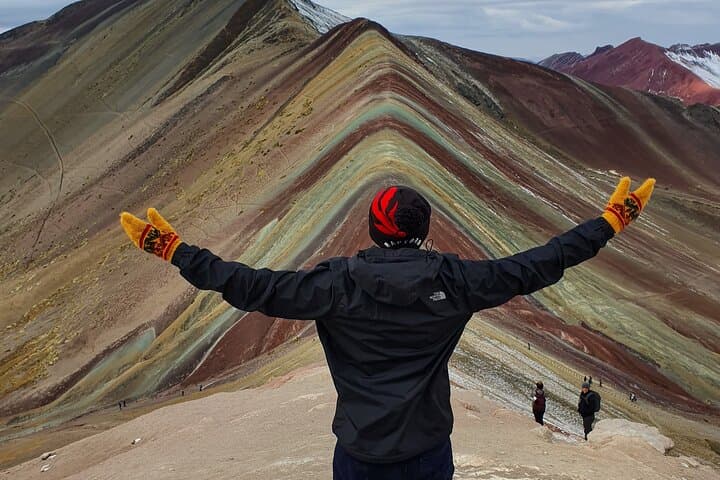
Dawn finds you on a narrow road out of Cusco, highland air tasting faintly of coffee and livestock as headlights slice through pre-dawn blue. The van climbs, villages blink awake, and by the time you step onto the puna at Hanchipata the sky has hardened into a cold, clear vault. The mountain doesn’t whisper — it commands: Vinicunca’s layered mineral bands sit like a painted ridge beneath the shadow of Ausangate, the glaciated peak watching from above.
Dawn finds you on a narrow road out of Cusco, highland air tasting faintly of coffee and livestock as headlights slice through pre-dawn blue. The van climbs, villages blink awake, and by the time you step onto the puna at Hanchipata the sky has hardened into a cold, clear vault. The mountain doesn’t whisper — it commands: Vinicunca’s layered mineral bands sit like a painted ridge beneath the shadow of Ausangate, the glaciated peak watching from above.
Geology here is readable: iron and copper oxides, sandstones and clays uplifted and stripped to reveal vivid stripes born of millions of years of tectonics and erosion. Culturally, the slopes belong to Quechua communities for whom Ausangate is an Apu — a living mountain — and you’ll pass small herds of llamas tended by local shepherds on route.
Practically, the route is a stiff high-altitude hike rather than technical climbing: expect a 1 hour 45 minute ascent to roughly 5,000–5,200 m with rocky, often wind-scoured trails and a steady, lung-burning incline. Guides provide breakfast, lunch and oxygen; many groups start between 3:00–3:30 a.m. to beat bus crowds and secure early light. Pace deliberately, sip water frequently, and use layered clothing — the summit is cold and exposed while the walk lower down can be calm and sunny.
Photo composition favors side-on approaches that capture Ausangate behind the colored bands; give yourself time to acclimatize in Cusco beforehand. If you’re sensitive to altitude consider hiring a horse for sections or adding an extra acclimation day. The payoff is immediate: color, scale, and a rare high-Andean silence that presses politely against your ears.