THE ADVENTURE COLLECTIVE® · Independent discovery and booking for outdoor travel

Spend a full day in a purpose-built hide watching wild brown bears and their cubs in Finland. High sighting rates, expert guides and quiet, up-close photographic opportunities make this a leading option for responsible wildlife photographers.
Spend a full day in a purpose-built hide watching wild brown bears and their cubs in Finland. High sighting rates, expert guides and quiet, up-close photographic opportunities make this a leading option for responsible wildlife photographers.
Dawn sits heavy over boreal pines as you climb down into the wooden hide. Mist lifts from a bog beyond the clearing and, somewhere beyond the treeline, the muted crunch of paws answers a distant bird call. The hide is designed for silence; wood and canvas buffer breath and shutter clicks so that a mother brown bear and her yearling or newborn cubs can move with natural confidence less than ten metres away.
Verified experiences and guided adventures in the surrounding area.
Operated by Bear Centre · Kuhmo, Kainuu
Dawn sits heavy over boreal pines as you climb down into the wooden hide. Mist lifts from a bog beyond the clearing and, somewhere beyond the treeline, the muted crunch of paws answers a distant bird call. The hide is designed for silence; wood and canvas buffer breath and shutter clicks so that a mother brown bear and her yearling or newborn cubs can move with natural confidence less than ten metres away.
The region’s bears are the product of a long northern ecology: glacially sculpted ridges, mixed conifer forests and berry-rich peatlands that feed omnivores through a short Finnish summer. Bears have been part of local Sámi and Finnish folklore for millennia — treated with respect in ritual and story — and modern hides evolved to let photographers observe without altering animal behavior.
Expect a patient, cinematic day. The center reports a 90–99% sighting rate during peak months; 20–30 individuals visit the area each season and multiple bears may appear in the same evening. Guides brief on safety, silence and the ethics of wildlife photography before each session.
Practical notes: this is a long, stationary photographic experience — bring weatherproof layers, a sturdy telephoto lens (300mm+ preferred), a tripod and high-capacity memory cards. Cameras are useful, but so is patience: light shifts quickly in northern latitudes and bears’ behaviour is as much about waiting as framing.
Whether you’re after close, character-filled portraiture of cubs learning their world or wide environmental shots of a feeding mother, the hide offers responsible, high-probability access to one of Europe’s most impressive large mammals.
easy.
16 hours.
Suitable for all fitness levels — the day involves long periods sitting and short walks to/from hides
Bears may come within a few metres of the hides; design and guide protocols maintain safety for both animals and guests.
Children can attend if they can remain quiet and follow guide instructions; confirm age limits with the operator before booking.
Meals are not typically included—bring snacks and hydration or confirm catering options with the operator in advance.
No — basic camera knowledge is enough. Guides give briefings; a tripod and telephoto lens will improve results.
Bears hold a long cultural role in Finnish and Sámi folklore; bear watching evolved from local traditions into regulated wildlife tourism to protect both people and animals.
Operations use hides to minimize disturbance and support research; follow guide rules and avoid flash or baiting to reduce human impact.
Bear Centre operates guided outdoor trips and adventures with an emphasis on safety, stewardship, and memorable experiences.


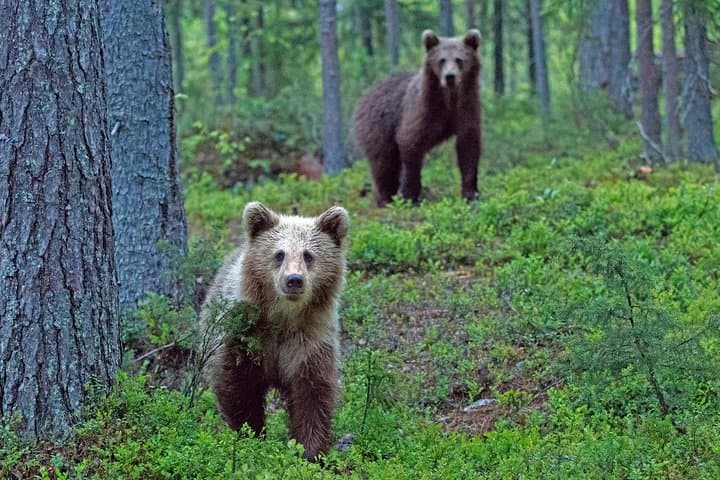
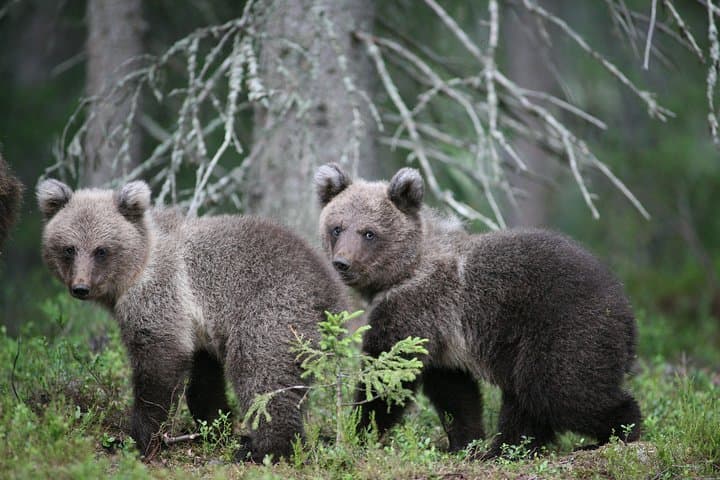
Dawn sits heavy over boreal pines as you climb down into the wooden hide. Mist lifts from a bog beyond the clearing and, somewhere beyond the treeline, the muted crunch of paws answers a distant bird call. The hide is designed for silence; wood and canvas buffer breath and shutter clicks so that a mother brown bear and her yearling or newborn cubs can move with natural confidence less than ten metres away.
Dawn sits heavy over boreal pines as you climb down into the wooden hide. Mist lifts from a bog beyond the clearing and, somewhere beyond the treeline, the muted crunch of paws answers a distant bird call. The hide is designed for silence; wood and canvas buffer breath and shutter clicks so that a mother brown bear and her yearling or newborn cubs can move with natural confidence less than ten metres away.
The region’s bears are the product of a long northern ecology: glacially sculpted ridges, mixed conifer forests and berry-rich peatlands that feed omnivores through a short Finnish summer. Bears have been part of local Sámi and Finnish folklore for millennia — treated with respect in ritual and story — and modern hides evolved to let photographers observe without altering animal behavior.
Expect a patient, cinematic day. The center reports a 90–99% sighting rate during peak months; 20–30 individuals visit the area each season and multiple bears may appear in the same evening. Guides brief on safety, silence and the ethics of wildlife photography before each session.
Practical notes: this is a long, stationary photographic experience — bring weatherproof layers, a sturdy telephoto lens (300mm+ preferred), a tripod and high-capacity memory cards. Cameras are useful, but so is patience: light shifts quickly in northern latitudes and bears’ behaviour is as much about waiting as framing.
Whether you’re after close, character-filled portraiture of cubs learning their world or wide environmental shots of a feeding mother, the hide offers responsible, high-probability access to one of Europe’s most impressive large mammals.