THE ADVENTURE COLLECTIVE® · Independent discovery and booking for outdoor travel

Spend a day off Accra where drums, elders and the lower Volta River welcome you to a naming ceremony and hands-on bead-making workshop. Learn local symbolism, try traditional glass techniques, and return with a personal Ghanaian name and artisan-made keepsakes.
Spend a day off Accra where drums, elders and the lower Volta River welcome you to a naming ceremony and hands-on bead-making workshop. Learn local symbolism, try traditional glass techniques, and return with a personal Ghanaian name and artisan-made keepsakes.
You arrive by air‑conditioned vehicle, wind changing from city exhaust to river-borne humidity as the road bends toward the lower Volta. Children peek from compound gates; drums gather like a call, then break into rhythm as you step onto compacted earth. The chief and elders receive guests beneath a simple pavilion, and the village recognizes newcomers with song and a naming ceremony that folds you into local custom.
Verified experiences and guided adventures in the surrounding area.
Operated by Landtours LLC · Ada Foah, Greater Accra Region
You arrive by air‑conditioned vehicle, wind changing from city exhaust to river-borne humidity as the road bends toward the lower Volta. Children peek from compound gates; drums gather like a call, then break into rhythm as you step onto compacted earth. The chief and elders receive guests beneath a simple pavilion, and the village recognizes newcomers with song and a naming ceremony that folds you into local custom.
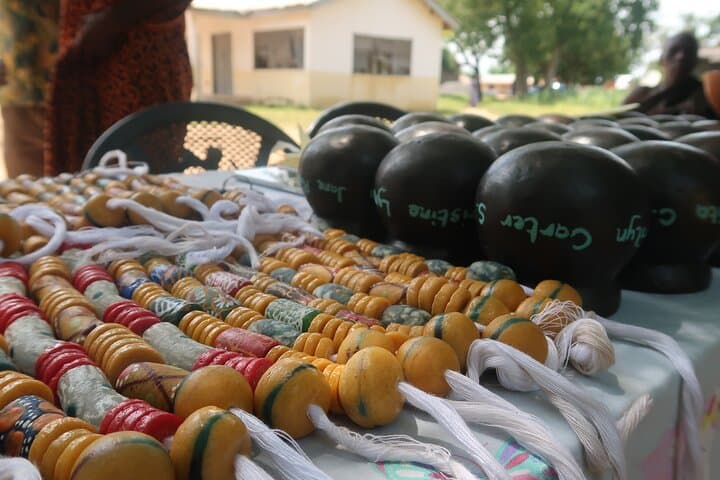
This region along Ghana’s lower Volta River has long been a crossroads: riverine transport shaped settlements, and glass bead-making—linked historically to trans-Saharan and coastal trade—remains a living craft here. Beads carry coded meanings: color, shape and arrangement signify age sets, rites of passage, wealth and identity. Geologically, the flat coastal plain is young—sands, lagoons and tidal channels that push and shift with the seasons, shaping the village’s daily life.
Practically, expect a full day (about eight hours) of light walking, seated demonstrations and hands-on craft time shaping molten glass or winding seed beads under artisan guidance. Bring sun protection and comfortable, closed-toe shoes for workshop areas, and set aside cash for lunch and small purchases. Photography is welcomed but ask before taking portraits; the naming ceremony is intimate and follows cultural protocols.
The tour blends observation with participation: you’ll leave with a new name, a bead or two you helped make, and a clearer sense of how craft, ceremony and riverine landscape sustain community life here. Plan for heat, respect local customs, and let the Volta’s current—literal and cultural—push your curiosity forward.
easy.
8 hours.
Light activity level — suitable for most people who can stand and walk short distances; minimal fitness required.
The tour is approximately eight hours and includes private transport, bottled water, bead workshop access and the naming ceremony; lunch is typically at your own expense.
The naming ceremony is a genuine cultural rite presented as a participatory experience; guests are welcomed but may observe rather than take a central role if they prefer.
Yes — guests usually take their handmade beads or small finished pieces home; larger purchases are available directly from artisans.
The tour is listed as suitable for all physical levels with light walking and seated activities; children are welcome but should be supervised around workshop furnaces.
The lower Volta region grew as a riverine trading corridor; bead-making here links coastal craft traditions with inland exchange routes stretching back centuries.
Coastal erosion and mangrove loss affect local livelihoods; small community projects increasingly focus on replanting mangroves and sustainable fishing practices.
Landtours LLC operates guided outdoor trips and adventures with an emphasis on safety, stewardship, and memorable experiences.
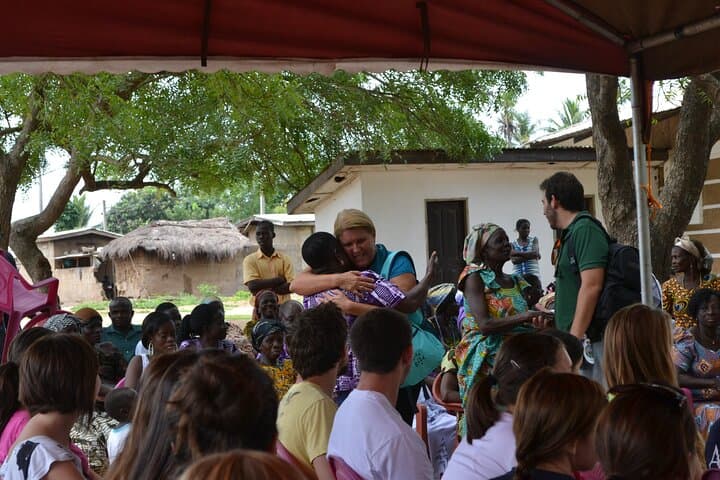
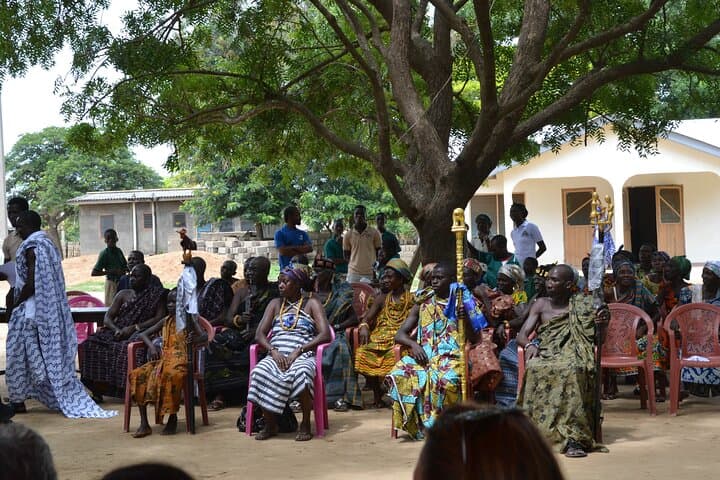
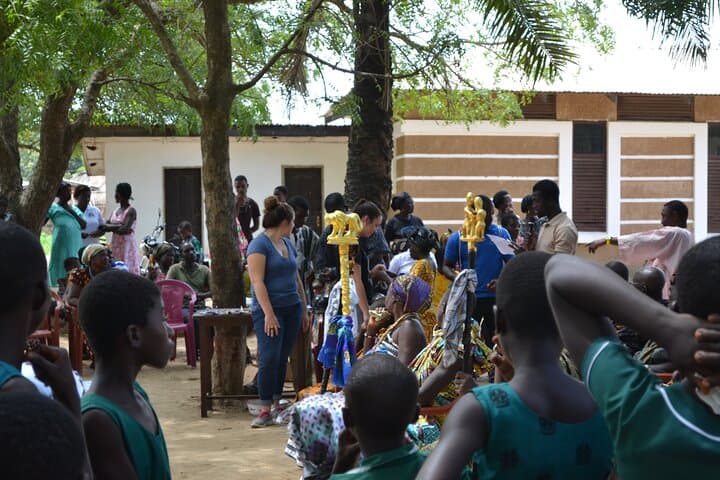
You arrive by air‑conditioned vehicle, wind changing from city exhaust to river-borne humidity as the road bends toward the lower Volta. Children peek from compound gates; drums gather like a call, then break into rhythm as you step onto compacted earth. The chief and elders receive guests beneath a simple pavilion, and the village recognizes newcomers with song and a naming ceremony that folds you into local custom.
You arrive by air‑conditioned vehicle, wind changing from city exhaust to river-borne humidity as the road bends toward the lower Volta. Children peek from compound gates; drums gather like a call, then break into rhythm as you step onto compacted earth. The chief and elders receive guests beneath a simple pavilion, and the village recognizes newcomers with song and a naming ceremony that folds you into local custom.
This region along Ghana’s lower Volta River has long been a crossroads: riverine transport shaped settlements, and glass bead-making—linked historically to trans-Saharan and coastal trade—remains a living craft here. Beads carry coded meanings: color, shape and arrangement signify age sets, rites of passage, wealth and identity. Geologically, the flat coastal plain is young—sands, lagoons and tidal channels that push and shift with the seasons, shaping the village’s daily life.
Practically, expect a full day (about eight hours) of light walking, seated demonstrations and hands-on craft time shaping molten glass or winding seed beads under artisan guidance. Bring sun protection and comfortable, closed-toe shoes for workshop areas, and set aside cash for lunch and small purchases. Photography is welcomed but ask before taking portraits; the naming ceremony is intimate and follows cultural protocols.
The tour blends observation with participation: you’ll leave with a new name, a bead or two you helped make, and a clearer sense of how craft, ceremony and riverine landscape sustain community life here. Plan for heat, respect local customs, and let the Volta’s current—literal and cultural—push your curiosity forward.