THE ADVENTURE COLLECTIVE® · Independent discovery and booking for outdoor travel

Spend a night on Odisha’s coast with community-run beach camping and support for Olive Ridley conservation. This practical two-day trip pairs simple seaside living with guided walks through casuarina forest and local seafood meals.
Spend a night on Odisha’s coast with community-run beach camping and support for Olive Ridley conservation. This practical two-day trip pairs simple seaside living with guided walks through casuarina forest and local seafood meals.
Dawn breaks on a low, wide shore and the first light finds tents pitched beneath a wind-sheared casuarina stand. Salt air pulls at the canvas; waves keep time. Guests move slowly—coffee, a short coastal walk, the hush of an early-morning fish boat returning with the day’s catch.
Verified experiences and guided adventures in the surrounding area.
Operated by Gilehrio · Bhubaneswar, Odisha
Dawn breaks on a low, wide shore and the first light finds tents pitched beneath a wind-sheared casuarina stand. Salt air pulls at the canvas; waves keep time. Guests move slowly—coffee, a short coastal walk, the hush of an early-morning fish boat returning with the day’s catch.
This two-day beach camping experience blends simple coastal living with community-led conservation. Odisha’s eastern coast is geologically young—flat alluvial plains and sandy spits shaped by the Bay of Bengal’s tides—and the casuarina plantations are human-planted windbreaks that now frame the shoreline. The local fishing culture has long coexisted with seasonal Olive Ridley sea turtle nesting; volunteers and conservationists often run patrols during the nesting months to protect nests from predators and light pollution.
Expect flat, sandy terrain with minimal elevation gain (typically under 20 m); walks of 2–4 km along beach and through planted forest are common. Nights are star-bright and, if timed with nesting season, may include an evening talk from conservation staff.
Practical guidance: bring reef-safe sunscreen, a wide-brim hat, and sturdy sandals for shifting sand; closed-toe shoes help on the forest trail. Hydration matters—carry at least 1.5 L per person for daytime hours. Respect turtle rules: no flash photography, keep lights low, and follow guides when near nesting zones. Meals are local—fresh fish curry and an authentic Odia breakfast—and basic campsite amenities (toilets, tents, sleeping bags) are provided. The experience suits light walkers and anyone comfortable sleeping outdoors for one night. Timing your visit outside monsoon months improves comfort and safety.
easy.
2 days (overnight).
Light walking ability; able to walk 2–4 km on sand and uneven forest paths
The itinerary is rated easy and suitable for most ages, but check with operators about mobility needs; sand walking can be tiring for some.
Sightings depend on timing—nesting peaks vary by beach and season; the trip supports conservation efforts but cannot guarantee turtle encounters.
Camps include basic tents, sleeping bags, and toilets; expect rustic, no-frills accommodations focused on outdoor experience.
Meals are local and include fish-based options; operators can often accommodate vegetarian diets if requested during booking.
This stretch of Odisha coast has long been a fishing landscape with links to regional maritime trade; local communities maintain time-honored fishing practices and coastal festivals.
Local conservation teams monitor nesting sites and run low-light patrols; visitors are asked to minimize disturbance and follow guidance to reduce impact on turtle nesting.
Gilehrio operates guided outdoor trips and adventures with an emphasis on safety, stewardship, and memorable experiences.
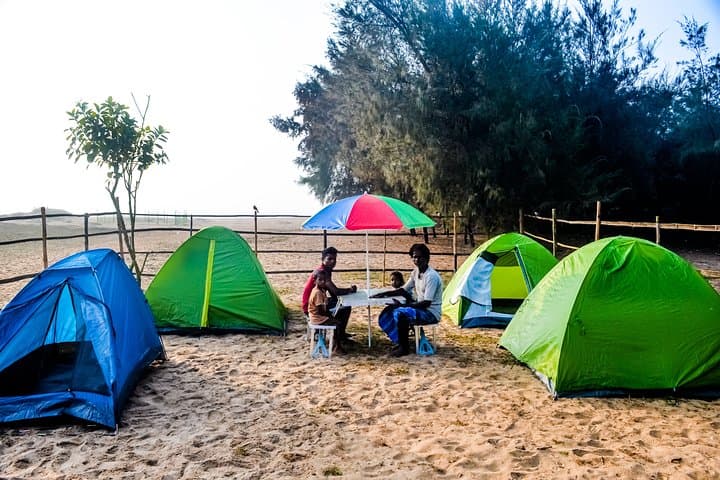
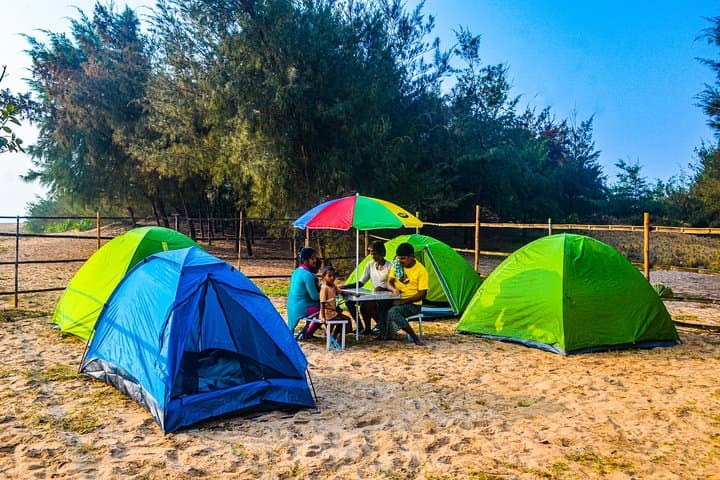
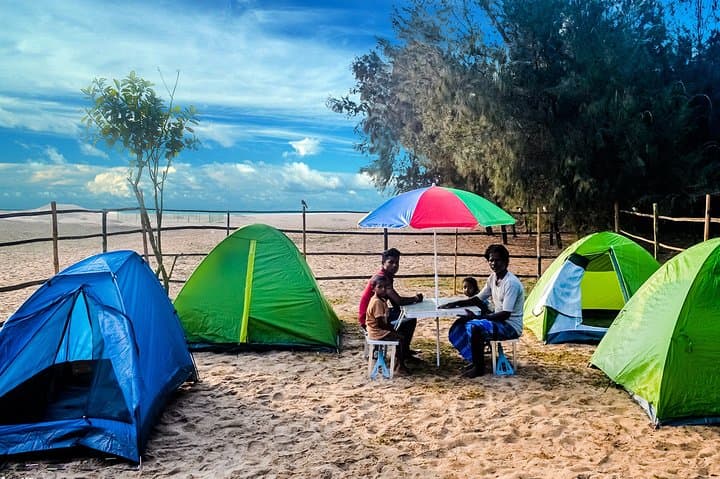
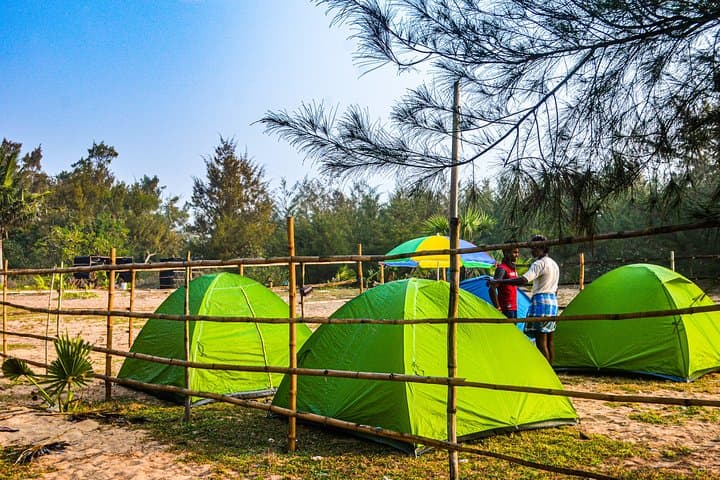
Dawn breaks on a low, wide shore and the first light finds tents pitched beneath a wind-sheared casuarina stand. Salt air pulls at the canvas; waves keep time. Guests move slowly—coffee, a short coastal walk, the hush of an early-morning fish boat returning with the day’s catch.
Dawn breaks on a low, wide shore and the first light finds tents pitched beneath a wind-sheared casuarina stand. Salt air pulls at the canvas; waves keep time. Guests move slowly—coffee, a short coastal walk, the hush of an early-morning fish boat returning with the day’s catch.
This two-day beach camping experience blends simple coastal living with community-led conservation. Odisha’s eastern coast is geologically young—flat alluvial plains and sandy spits shaped by the Bay of Bengal’s tides—and the casuarina plantations are human-planted windbreaks that now frame the shoreline. The local fishing culture has long coexisted with seasonal Olive Ridley sea turtle nesting; volunteers and conservationists often run patrols during the nesting months to protect nests from predators and light pollution.
Expect flat, sandy terrain with minimal elevation gain (typically under 20 m); walks of 2–4 km along beach and through planted forest are common. Nights are star-bright and, if timed with nesting season, may include an evening talk from conservation staff.
Practical guidance: bring reef-safe sunscreen, a wide-brim hat, and sturdy sandals for shifting sand; closed-toe shoes help on the forest trail. Hydration matters—carry at least 1.5 L per person for daytime hours. Respect turtle rules: no flash photography, keep lights low, and follow guides when near nesting zones. Meals are local—fresh fish curry and an authentic Odia breakfast—and basic campsite amenities (toilets, tents, sleeping bags) are provided. The experience suits light walkers and anyone comfortable sleeping outdoors for one night. Timing your visit outside monsoon months improves comfort and safety.