THE ADVENTURE COLLECTIVE® · Independent discovery and booking for outdoor travel

Ride from countryside ranches to the wide sands of Macao Beach on a three-hour guided horseback tour in Punta Cana. Learn about local crops like cacao and coffee while trotting along farmland and shoreline.
Ride from countryside ranches to the wide sands of Macao Beach on a three-hour guided horseback tour in Punta Cana. Learn about local crops like cacao and coffee while trotting along farmland and shoreline.
A morning on horseback in Punta Cana begins with the low rumble of hooves on packed sand and the sea wind tugging at your shirt. Riders push out from a small ranch, cross scrubby farmland where banana palms lean like patient hosts, and arrive at Macao Beach—a wide crescent where the Atlantic dares you to come closer.
Verified experiences and guided adventures in the surrounding area.
Operated by Gillary Tours · Punta Cana, La Altagracia
A morning on horseback in Punta Cana begins with the low rumble of hooves on packed sand and the sea wind tugging at your shirt. Riders push out from a small ranch, cross scrubby farmland where banana palms lean like patient hosts, and arrive at Macao Beach—a wide crescent where the Atlantic dares you to come closer.
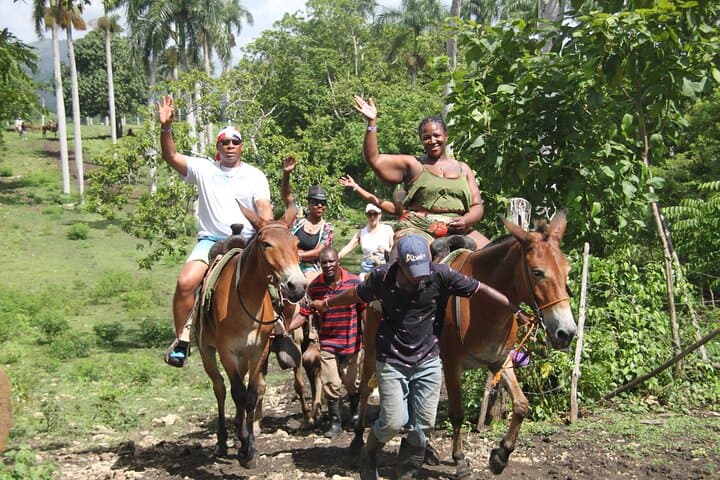
This route threads together local agriculture and shoreline. The region sits on limestone bedrock shaped by coral reef uplift; farmers here grow bananas, mangos, coffee and cacao, crops tied to a colonial history of export and smallholder craft. Guides will point out tobacco drying racks and explain how raw cacao becomes simple, rustic “natural chocolate.” The pace is unhurried: walk, occasional trot, time to listen to surf and birds.
Culturally, these rides offer a window into Dominicans’ coastal-rural life — informal markets, horses as working partners, and family farms that supply hotels. Expect sun, salt, and the scent of tropical fruit in the air.
Practically, this is a three-hour, beginner-friendly excursion. Wear long shorts or quick-dry pants, closed-toe shoes, and bring sunscreen and water. Helmets and a brief safety orientation are typically provided; listen to the guide’s cues and keep a safe gap between horses. Morning departures avoid the hottest sun and give better beach footing. For photographers, low tide offers the best reflections and open sand. This tour is an accessible way to combine light riding skills with coastal scenery and local agricultural insight.
easy.
3 hours.
Suitable for beginners and travelers in average physical shape; ability to mount and sit in a saddle for several hours is required.
No, this tour is designed for beginners and includes a safety briefing; guides match pace to the group's comfort.
Most operators provide helmets and basic safety gear—confirm at booking if you require a specific size.
Shuttle pickup in Punta Cana/Bávaro is commonly included; check your reservation and pickup point details.
Children are often allowed but policies vary; many operators require children to be able to sit securely and may limit ages—verify at booking.
La Altagracia province has agricultural roots dating to colonial export crops; many local farms continue small-scale cacao and coffee traditions.
Stay on designated trails and avoid disturbing dune vegetation; local guides often support community conservation and responsible beach use.
Gillary Tours operates guided outdoor trips and adventures with an emphasis on safety, stewardship, and memorable experiences.
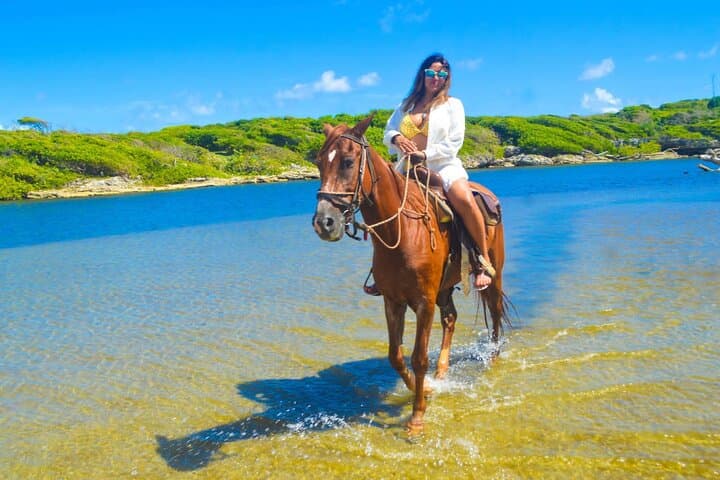
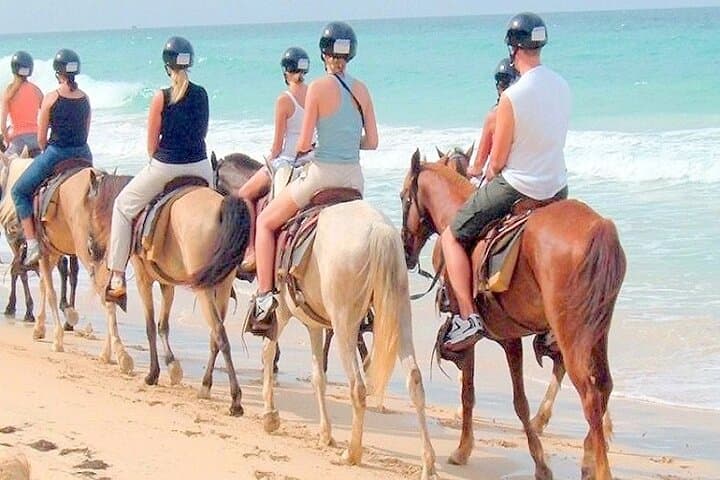
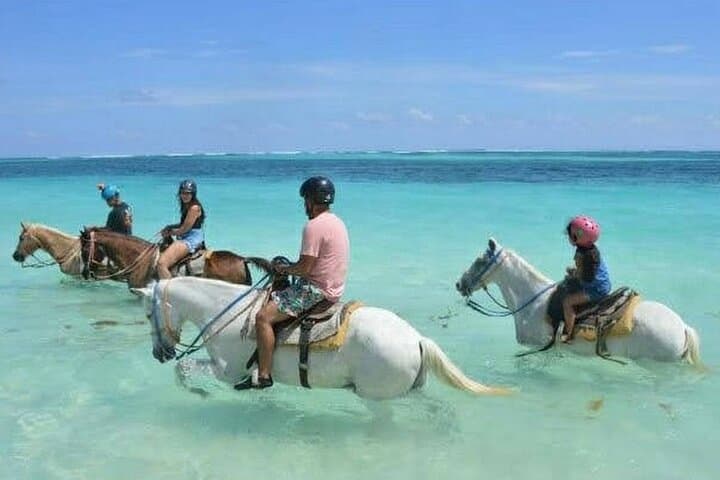
A morning on horseback in Punta Cana begins with the low rumble of hooves on packed sand and the sea wind tugging at your shirt. Riders push out from a small ranch, cross scrubby farmland where banana palms lean like patient hosts, and arrive at Macao Beach—a wide crescent where the Atlantic dares you to come closer.
A morning on horseback in Punta Cana begins with the low rumble of hooves on packed sand and the sea wind tugging at your shirt. Riders push out from a small ranch, cross scrubby farmland where banana palms lean like patient hosts, and arrive at Macao Beach—a wide crescent where the Atlantic dares you to come closer.
This route threads together local agriculture and shoreline. The region sits on limestone bedrock shaped by coral reef uplift; farmers here grow bananas, mangos, coffee and cacao, crops tied to a colonial history of export and smallholder craft. Guides will point out tobacco drying racks and explain how raw cacao becomes simple, rustic “natural chocolate.” The pace is unhurried: walk, occasional trot, time to listen to surf and birds.
Culturally, these rides offer a window into Dominicans’ coastal-rural life — informal markets, horses as working partners, and family farms that supply hotels. Expect sun, salt, and the scent of tropical fruit in the air.
Practically, this is a three-hour, beginner-friendly excursion. Wear long shorts or quick-dry pants, closed-toe shoes, and bring sunscreen and water. Helmets and a brief safety orientation are typically provided; listen to the guide’s cues and keep a safe gap between horses. Morning departures avoid the hottest sun and give better beach footing. For photographers, low tide offers the best reflections and open sand. This tour is an accessible way to combine light riding skills with coastal scenery and local agricultural insight.