THE ADVENTURE COLLECTIVE® · Independent discovery and booking for outdoor travel

A three-day, non-technical climb to Bazarduzu (4,466m) that combines high-altitude hiking, remote village culture in Khinalig and a summit with sweeping Caucasus views. Plan for steep gains, variable weather and required permits.
A three-day, non-technical climb to Bazarduzu (4,466m) that combines high-altitude hiking, remote village culture in Khinalig and a summit with sweeping Caucasus views. Plan for steep gains, variable weather and required permits.
A cold dawn breaks over high scree and wind-carved ridgelines as a single line of hikers leaves a 5-season camp for Bazarduzu’s summit. The trail climbs through alpine meadows, past stony moraines and finally into a raw, skeletal world where the air thins and the horizon tilts toward Russia. Guides set a steady pace; breath and boot strikes become the rhythm of the day.
Verified experiences and guided adventures in the surrounding area.
Operated by Mountain Host Azerbaijan · Quba, Quba District
A cold dawn breaks over high scree and wind-carved ridgelines as a single line of hikers leaves a 5-season camp for Bazarduzu’s summit. The trail climbs through alpine meadows, past stony moraines and finally into a raw, skeletal world where the air thins and the horizon tilts toward Russia. Guides set a steady pace; breath and boot strikes become the rhythm of the day.
Bazarduzu (4,466 m) is Azerbaijan’s highest point, a limestone-and-granite crest on the Greater Caucasus that has separated cultures and climates for centuries. The route threads Shahdag National Park’s uplands, passes remote villages like Khinalig—one of the region’s oldest continuous settlements—and reveals both Soviet-era boundary posts and older pastoral routes. Geologically the peak is folded Caucasus: steep ridges, rocky slabs and seasonal snowfields that hold late into summer.
Expect a non-technical but demanding ascent: long uphill kilometers, 1,150 m of elevation gain on summit day, and exposed, rocky slopes that require attention to footing. Weather can switch fast; afternoon cloud buildups and wind are common. Local hosts offer simple mountain meals and a chance to learn about highland livelihoods—sheep paths, summer pastures and layered stone houses.
Practical guidance: acclimatize with the overnight at 3,306 m, carry layered insulation, and plan for early starts to avoid afternoon wind. Permits must be arranged in advance and a passport photo is required. With the right fitness and gear, the summit rewards climbers with a broad, high-country panorama and the particular stillness of a border ridge.
challenging.
3 days.
High aerobic fitness and experience with long uphill days at altitude; able to carry a 10–15 kg pack.
No — the itinerary is listed as non-technical; standard high‑altitude hiking gear is sufficient, though microspikes or crampons may be useful depending on snow.
Summit day climbs ~1,150 m over ~4.1 km and typically takes 5–6 hours up and 2 hours back to camp; it’s steep and sustained but not technical.
Guides obtain permits from government organizations; travelers must provide passport details and a photo about 20 days in advance.
Fit beginners with prior multi-day hiking experience can join, but a high level of fitness is required and the operator advises against participation for those with cardiovascular or spinal issues.
Bazarduzu sits on the Azerbaijan–Russia border and has long been part of regional pastoral routes; Khinalig preserves highland vernacular culture.
Shahdag National Park protections require permits; practice leave‑no‑trace in fragile alpine meadows and follow guide instructions to limit erosion and disturbance.
Mountain Host Azerbaijan operates guided outdoor trips and adventures with an emphasis on safety, stewardship, and memorable experiences.
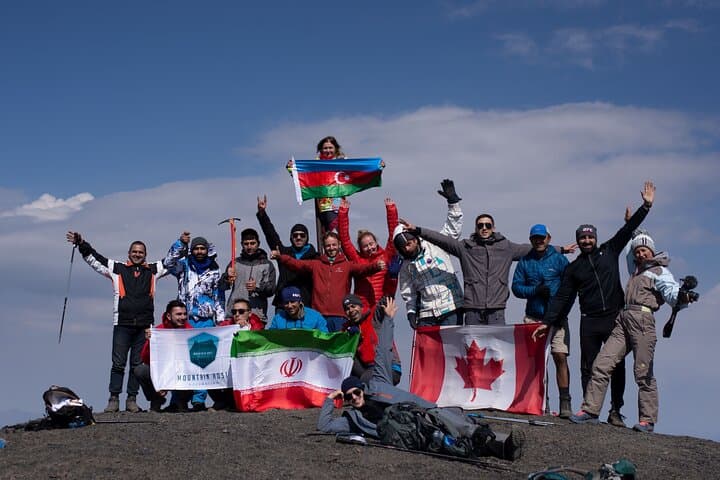
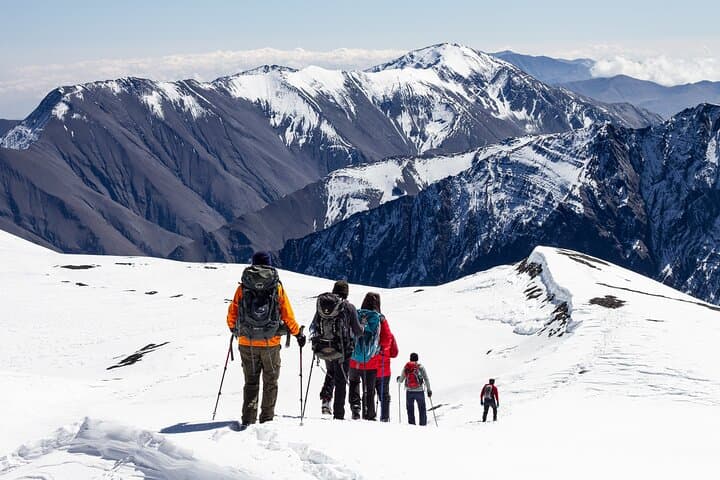
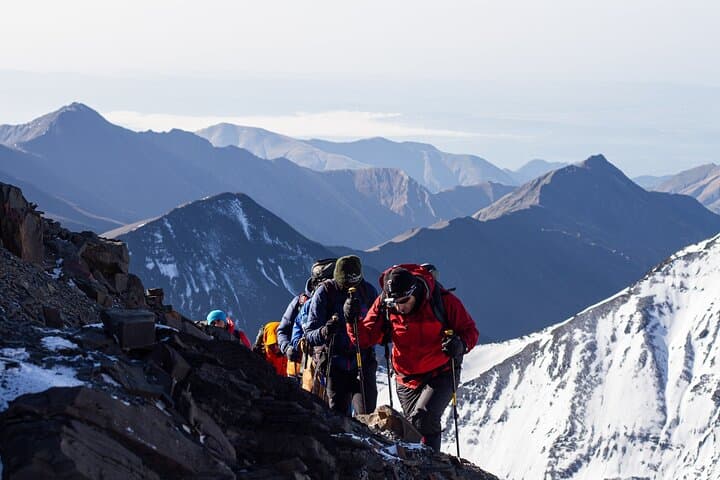
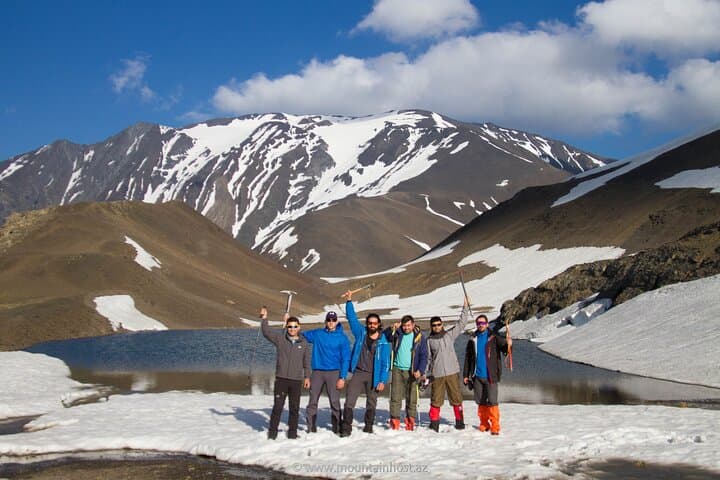
A cold dawn breaks over high scree and wind-carved ridgelines as a single line of hikers leaves a 5-season camp for Bazarduzu’s summit. The trail climbs through alpine meadows, past stony moraines and finally into a raw, skeletal world where the air thins and the horizon tilts toward Russia. Guides set a steady pace; breath and boot strikes become the rhythm of the day.
A cold dawn breaks over high scree and wind-carved ridgelines as a single line of hikers leaves a 5-season camp for Bazarduzu’s summit. The trail climbs through alpine meadows, past stony moraines and finally into a raw, skeletal world where the air thins and the horizon tilts toward Russia. Guides set a steady pace; breath and boot strikes become the rhythm of the day.
Bazarduzu (4,466 m) is Azerbaijan’s highest point, a limestone-and-granite crest on the Greater Caucasus that has separated cultures and climates for centuries. The route threads Shahdag National Park’s uplands, passes remote villages like Khinalig—one of the region’s oldest continuous settlements—and reveals both Soviet-era boundary posts and older pastoral routes. Geologically the peak is folded Caucasus: steep ridges, rocky slabs and seasonal snowfields that hold late into summer.
Expect a non-technical but demanding ascent: long uphill kilometers, 1,150 m of elevation gain on summit day, and exposed, rocky slopes that require attention to footing. Weather can switch fast; afternoon cloud buildups and wind are common. Local hosts offer simple mountain meals and a chance to learn about highland livelihoods—sheep paths, summer pastures and layered stone houses.
Practical guidance: acclimatize with the overnight at 3,306 m, carry layered insulation, and plan for early starts to avoid afternoon wind. Permits must be arranged in advance and a passport photo is required. With the right fitness and gear, the summit rewards climbers with a broad, high-country panorama and the particular stillness of a border ridge.