THE ADVENTURE COLLECTIVE® · Independent discovery and booking for outdoor travel

Float through Bay Mau’s coconut channels in a round basket boat, learn traditional fishing techniques, and try coconut-leaf crafts with local guides. This easy, 1–2 hour trip offers close-up nature, short paddles and cultural insights near Hoi An.
Float through Bay Mau’s coconut channels in a round basket boat, learn traditional fishing techniques, and try coconut-leaf crafts with local guides. This easy, 1–2 hour trip offers close-up nature, short paddles and cultural insights near Hoi An.
You push off a narrow channel and the world simplifies to the slap of oars and a ring of green: trunks rising like columns, leaves whispering above. The round basket boat rocks gently as a local guide takes the tiller; you learn the rhythm of the river, how to brace, how to spin, how the current nudges the craft downstream.
Verified experiences and guided adventures in the surrounding area.
Operated by tourhoiancity · Hoi An, Quang Nam
You push off a narrow channel and the world simplifies to the slap of oars and a ring of green: trunks rising like columns, leaves whispering above. The round basket boat rocks gently as a local guide takes the tiller; you learn the rhythm of the river, how to brace, how to spin, how the current nudges the craft downstream.
Bay Mau Coconut Forest occupies tidal waterways near Cam Thanh, just a few kilometres from Hoi An’s ancient town. Once a shelter and supply area during the French resistance, the grove now supports a living culture of small-scale fishing, crab traps, and coconut crafts. Geologically it’s an alluvial plain where river and sea meet—silted channels, shallow mudflats and dense palm stands that slow the wind and sharpen the light.
Expect an intimate, low-impact float: shallow, slow-moving water, short guided routes and hands-on demonstrations of traditional fishing and coconut-leaf weaving. Guides often pull up on quiet banks to show local gear and offer fresh coconut or grilled shrimp.
Practical notes: tours run 1–2 hours and are physically easy but require balance and basic mobility to step in and out of the round boats. Bring sun protection, insect repellent, and a dry bag; sandals are fine but secure footwear is better for landings. Morning trips are cooler and quieter; tides affect how much shoreline you’ll see. The experience pairs well with a visit to Hoi An’s old town—plan transport back and leave time for a late afternoon stroll through the lantern-lit streets.
easy.
1–2 hours.
Suitable for most fitness levels; requires basic balance and the ability to step into a low, round boat.
Most tours last 1–2 hours, including boat time and brief stops for demonstrations and snacks.
Yes; the activity is easy and family-friendly, though boarding the round boat requires supervision and basic mobility.
Expect occasional splashes when rowing and when landing; wearing quick-dry clothing and using a dry bag is recommended.
Some tours include simple snacks like fresh coconut or grilled seafood, but a full meal is usually not provided—check your booking details.
Bay Mau served as a shelter and operational area during resistance efforts in the colonial and war periods, and local stories persist in guides’ accounts.
The area is sensitive to tourism pressure—stick to designated channels, avoid littering and choose operators who support local communities and low-impact practices.
tourhoiancity operates guided outdoor trips and adventures with an emphasis on safety, stewardship, and memorable experiences.
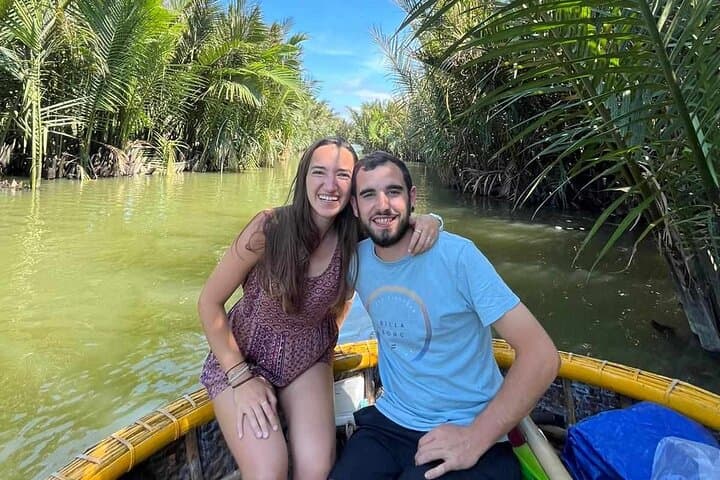
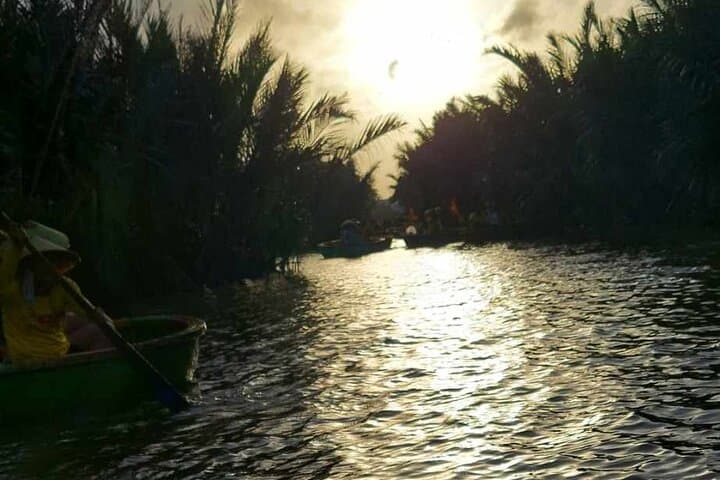


You push off a narrow channel and the world simplifies to the slap of oars and a ring of green: trunks rising like columns, leaves whispering above. The round basket boat rocks gently as a local guide takes the tiller; you learn the rhythm of the river, how to brace, how to spin, how the current nudges the craft downstream.
You push off a narrow channel and the world simplifies to the slap of oars and a ring of green: trunks rising like columns, leaves whispering above. The round basket boat rocks gently as a local guide takes the tiller; you learn the rhythm of the river, how to brace, how to spin, how the current nudges the craft downstream.
Bay Mau Coconut Forest occupies tidal waterways near Cam Thanh, just a few kilometres from Hoi An’s ancient town. Once a shelter and supply area during the French resistance, the grove now supports a living culture of small-scale fishing, crab traps, and coconut crafts. Geologically it’s an alluvial plain where river and sea meet—silted channels, shallow mudflats and dense palm stands that slow the wind and sharpen the light.
Expect an intimate, low-impact float: shallow, slow-moving water, short guided routes and hands-on demonstrations of traditional fishing and coconut-leaf weaving. Guides often pull up on quiet banks to show local gear and offer fresh coconut or grilled shrimp.
Practical notes: tours run 1–2 hours and are physically easy but require balance and basic mobility to step in and out of the round boats. Bring sun protection, insect repellent, and a dry bag; sandals are fine but secure footwear is better for landings. Morning trips are cooler and quieter; tides affect how much shoreline you’ll see. The experience pairs well with a visit to Hoi An’s old town—plan transport back and leave time for a late afternoon stroll through the lantern-lit streets.