THE ADVENTURE COLLECTIVE® · Independent discovery and booking for outdoor travel

Bake a traditional German tree cake over an open campfire beneath a botanical-garden pavilion on Hawaii’s Big Island. This 90-minute hands-on class blends technique, tasting, and a compact local history—rain or shine.
Bake a traditional German tree cake over an open campfire beneath a botanical-garden pavilion on Hawaii’s Big Island. This 90-minute hands-on class blends technique, tasting, and a compact local history—rain or shine.
You step into an open-sided pavilion that smells of wet earth, tropical foliage, and the sharp, sweet promise of butter and sugar. A small campfire hisses beneath a simple spit; instructors hand you a wooden dowel and the pliant ribbon of Baumkuchen dough. The fire invites a slow, patient rhythm—rotate, brown, savor—the cake building layers like the rings of a tree.
Verified experiences and guided adventures in the surrounding area.
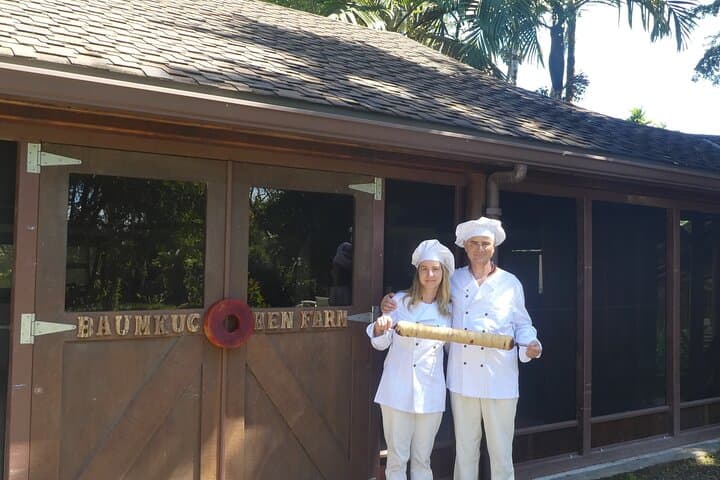
Operated by Baumkuchen Farm · Hilo, Hawaii
You step into an open-sided pavilion that smells of wet earth, tropical foliage, and the sharp, sweet promise of butter and sugar. A small campfire hisses beneath a simple spit; instructors hand you a wooden dowel and the pliant ribbon of Baumkuchen dough. The fire invites a slow, patient rhythm—rotate, brown, savor—the cake building layers like the rings of a tree.
Baumkuchen is a German-born “tree cake” whose concentric layers are made by brushing batter over a rotating spit. In this Hawaiian setting the class pairs that European technique with Pacific weather: volcanic soil feeds the surrounding garden, trade winds tease the pavilion roof, and local stories of immigrant cooks and plantation kitchens color the tasting notes. You’ll hear a quick history of Hawaii–Germany culinary contacts and get small tastings before you bake.
The geology of the Big Island matters here; the lush botanical microclimates created by volcanic ridges make outdoor cooking possible year-round but also bring sudden showers. Culturally the class is low-key and communal—a hands-on demo that leans educational more than theatrical.
Practical guidance: plan for 90 minutes of standing and light work, wear closed-toe shoes and a light rain layer, and arrive early to claim parking beside the gazebo. The pavilion provides shelter if it rains; the host supplies sticks and basic toppings, but bring a reusable container if you want to take leftovers. Expect a family-friendly, accessible experience with room for mobility aids and kids on laps.
This is a short, sensory class that pairs a simple fire craft with history and a sweet reward you eat warm from the stick.
easy.
1.5 hours.
Minimal fitness required; participants should be able to stand and rotate a stick for short intervals.
Yes—infants can sit on laps and older children can participate; supervision is required near the open fire.
The pavilion provides shelter and the class proceeds unless conditions are unsafe; hosts note the activity is rain-tolerant.
Yes—dough, sticks, and basic toppings are supplied; check with the operator about special dietary requests in advance.
The listing indicates wheelchair access to the site and pavilion; contact the operator with specific mobility questions prior to booking.
Baumkuchen traces to central European spit cakes; the class pairs that technique with narratives about immigrant cooks and Hawaii’s plantation-era food exchanges.
The venue sits within a cultivated garden where hosts encourage leave-no-trace practices; bring reusable containers and follow disposal guidance to minimize waste.
Baumkuchen Farm operates guided outdoor trips and adventures with an emphasis on safety, stewardship, and memorable experiences.
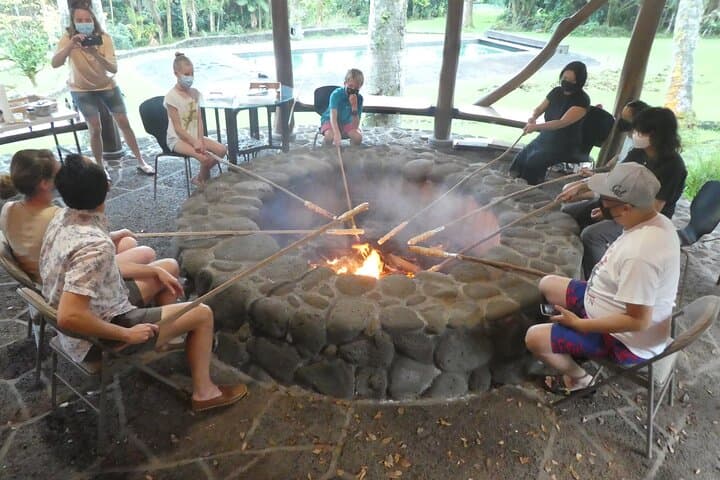
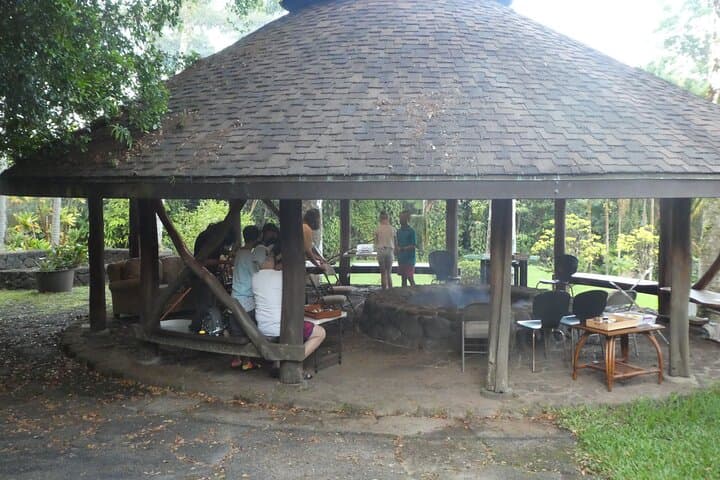
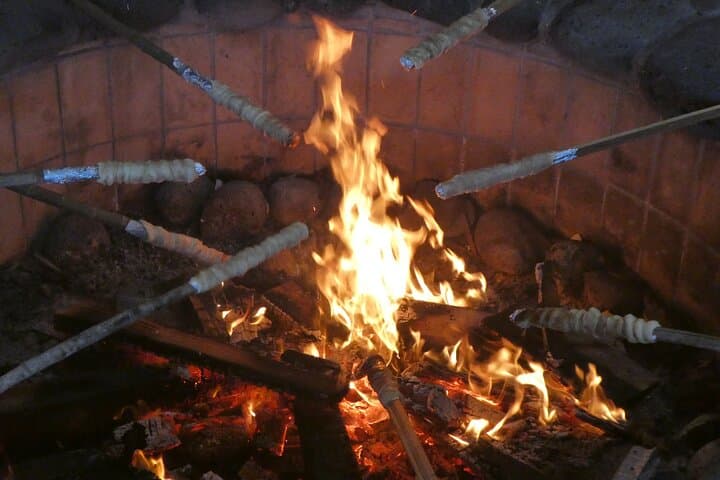
You step into an open-sided pavilion that smells of wet earth, tropical foliage, and the sharp, sweet promise of butter and sugar. A small campfire hisses beneath a simple spit; instructors hand you a wooden dowel and the pliant ribbon of Baumkuchen dough. The fire invites a slow, patient rhythm—rotate, brown, savor—the cake building layers like the rings of a tree.
You step into an open-sided pavilion that smells of wet earth, tropical foliage, and the sharp, sweet promise of butter and sugar. A small campfire hisses beneath a simple spit; instructors hand you a wooden dowel and the pliant ribbon of Baumkuchen dough. The fire invites a slow, patient rhythm—rotate, brown, savor—the cake building layers like the rings of a tree.
Baumkuchen is a German-born “tree cake” whose concentric layers are made by brushing batter over a rotating spit. In this Hawaiian setting the class pairs that European technique with Pacific weather: volcanic soil feeds the surrounding garden, trade winds tease the pavilion roof, and local stories of immigrant cooks and plantation kitchens color the tasting notes. You’ll hear a quick history of Hawaii–Germany culinary contacts and get small tastings before you bake.
The geology of the Big Island matters here; the lush botanical microclimates created by volcanic ridges make outdoor cooking possible year-round but also bring sudden showers. Culturally the class is low-key and communal—a hands-on demo that leans educational more than theatrical.
Practical guidance: plan for 90 minutes of standing and light work, wear closed-toe shoes and a light rain layer, and arrive early to claim parking beside the gazebo. The pavilion provides shelter if it rains; the host supplies sticks and basic toppings, but bring a reusable container if you want to take leftovers. Expect a family-friendly, accessible experience with room for mobility aids and kids on laps.
This is a short, sensory class that pairs a simple fire craft with history and a sweet reward you eat warm from the stick.