THE ADVENTURE COLLECTIVE® · Independent discovery and booking for outdoor travel

Morning light and low roads: a five‑hour ride from Battambang that threads small workshops, family farms, and Ek Phnom temple while stopping to taste local snacks. Ideal for travelers who want cultural immersion without a strenuous ride.
Morning light and low roads: a five‑hour ride from Battambang that threads small workshops, family farms, and Ek Phnom temple while stopping to taste local snacks. Ideal for travelers who want cultural immersion without a strenuous ride.
You set off at first light, wheels crunching on packed dirt as rice paddies open like pages on either side. The guide pedals beside you, pointing out a blacksmith at his anvil, the steady rhythm of hammer on metal punctuating the morning air. The route is low and human-scaled: family farms, a primary school, and small workshops where sticky rice is rolled into bamboo and banana is dried by hand.
Verified experiences and guided adventures in the surrounding area.
Operated by Battambang tours by bun · Battambang, Battambang Province
You set off at first light, wheels crunching on packed dirt as rice paddies open like pages on either side. The guide pedals beside you, pointing out a blacksmith at his anvil, the steady rhythm of hammer on metal punctuating the morning air. The route is low and human-scaled: family farms, a primary school, and small workshops where sticky rice is rolled into bamboo and banana is dried by hand.
This short loop moves through a landscape shaped by alluvial plains and irrigation canals—rice country that has fed Khmer kingdoms for centuries. Ek Phnom, an 11th–12th century temple built before Angkor Wat, anchors the route with stone lintels that tell an older story of faith and regional trade. Cultural notes come easily on this ride: methods of rice cultivation, the role of fish paste in Khmer cuisine, and the resilience of communities that still produce food and tools by hand.
Expect slow rural roads (some unpaved), short stops at family-run workshops, and hands-on tasting—khrolan (sticky rice in bamboo), freshly made rice paper, banana chips, and potent fish paste. The tour blends casual cycling with interpretive stops rather than hard athletic effort.
Practical guidance: bring a helmet and sun protection, start hydrated, and keep a small amount of cash for local purchases or donations. The pace is relaxed, suitable for most riders who can handle short stretches of uneven surface. Timing your visit for the cooler morning hours gives you softer light for photos and more comfortable temperatures for sampling street-side snacks.
easy.
5 hours.
Suitable for most people who can ride a bike on flat, uneven roads for a few hours; minimal endurance required.
This is an easy, mostly flat ride suitable for beginners and casual cyclists; you should be comfortable on a bike for about five hours including stops.
The tour includes tasting samples and admission to Ek Phnom; additional snacks or donations to families are extra cash purchases.
The route focuses on small rural tracks and low-traffic roads, but there may be short stretches near town with more vehicles—follow your guide’s instructions.
Yes for older children who ride confidently; check age and safety requirements with the operator and ensure appropriate helmets.
Ek Phnom predates Angkor Wat in style and use; the temple’s carved lintels and bricks reflect the region’s 11th–12th century Khmer architecture and local devotional practices.
This landscape depends on seasonal water management and smallholder agriculture; respect local practices, avoid littering, and support family-run producers directly.
Battambang tours by bun operates guided outdoor trips and adventures with an emphasis on safety, stewardship, and memorable experiences.
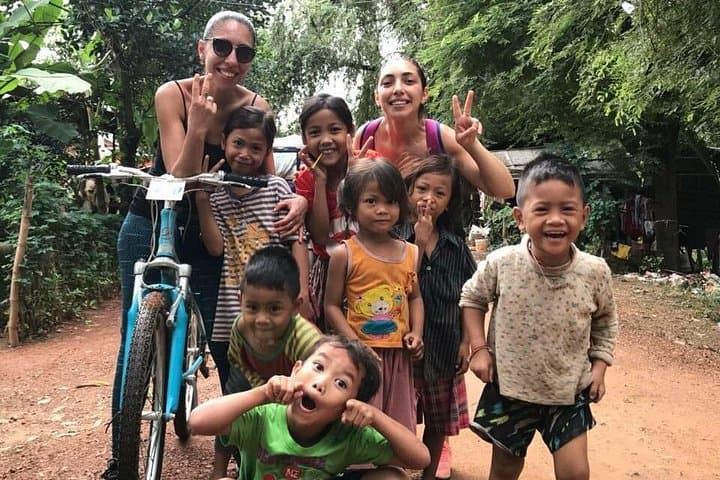


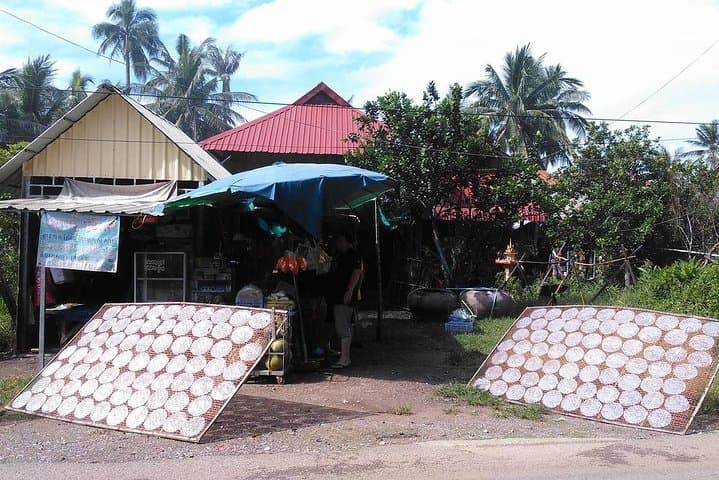
You set off at first light, wheels crunching on packed dirt as rice paddies open like pages on either side. The guide pedals beside you, pointing out a blacksmith at his anvil, the steady rhythm of hammer on metal punctuating the morning air. The route is low and human-scaled: family farms, a primary school, and small workshops where sticky rice is rolled into bamboo and banana is dried by hand.
You set off at first light, wheels crunching on packed dirt as rice paddies open like pages on either side. The guide pedals beside you, pointing out a blacksmith at his anvil, the steady rhythm of hammer on metal punctuating the morning air. The route is low and human-scaled: family farms, a primary school, and small workshops where sticky rice is rolled into bamboo and banana is dried by hand.
This short loop moves through a landscape shaped by alluvial plains and irrigation canals—rice country that has fed Khmer kingdoms for centuries. Ek Phnom, an 11th–12th century temple built before Angkor Wat, anchors the route with stone lintels that tell an older story of faith and regional trade. Cultural notes come easily on this ride: methods of rice cultivation, the role of fish paste in Khmer cuisine, and the resilience of communities that still produce food and tools by hand.
Expect slow rural roads (some unpaved), short stops at family-run workshops, and hands-on tasting—khrolan (sticky rice in bamboo), freshly made rice paper, banana chips, and potent fish paste. The tour blends casual cycling with interpretive stops rather than hard athletic effort.
Practical guidance: bring a helmet and sun protection, start hydrated, and keep a small amount of cash for local purchases or donations. The pace is relaxed, suitable for most riders who can handle short stretches of uneven surface. Timing your visit for the cooler morning hours gives you softer light for photos and more comfortable temperatures for sampling street-side snacks.