THE ADVENTURE COLLECTIVE® · Independent discovery and booking for outdoor travel

A two-day circuit from Siem Reap that pairs Battambang’s inventive Bamboo Train, Phnom Sampeau’s bat emergence and hands-on countryside visits. Practical, paced and rich in local crafts and landscapes.
A two-day circuit from Siem Reap that pairs Battambang’s inventive Bamboo Train, Phnom Sampeau’s bat emergence and hands-on countryside visits. Practical, paced and rich in local crafts and landscapes.
The road unfurls between rice paddies as your private car pushes west from Siem Reap, the afternoon light laying a slow gold over flat Khmer farmland. You arrive in Battambang — a low, lived-in city framed by karst bluffs — and step into a day that alternates gentle motion and abrupt natural spectacle.
Verified experiences and guided adventures in the surrounding area.
Operated by Bayon Guide · Battambang, Battambang Province
The road unfurls between rice paddies as your private car pushes west from Siem Reap, the afternoon light laying a slow gold over flat Khmer farmland. You arrive in Battambang — a low, lived-in city framed by karst bluffs — and step into a day that alternates gentle motion and abrupt natural spectacle.
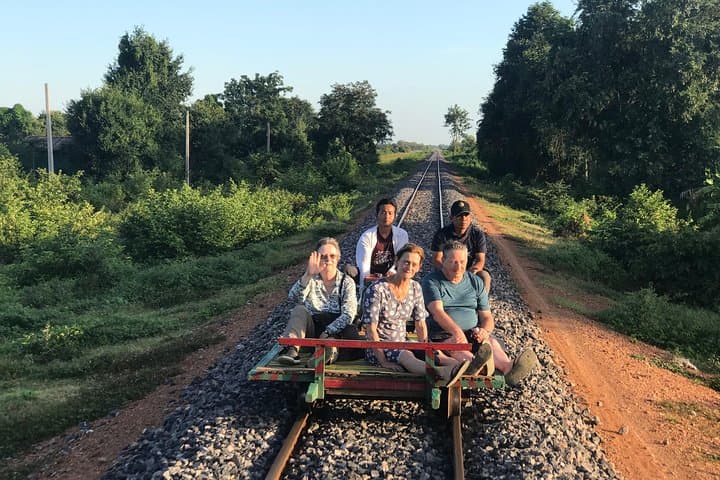
Phnom Sampeau’s limestone slopes hold caves and the bat colonies that pour out at dusk, a living river of tiny wings that reorients the valley as day yields to night. The Bamboo Train in Ou Sralao is a quick, tactile lesson in local ingenuity: a plywood platform on axles that hums along narrow tracks, the countryside inhaling and exhaling around you. Between these highlights you’ll meet families producing rice noodles, rice paper and fish paste — craft and seasonality more meaningful when shown than read.
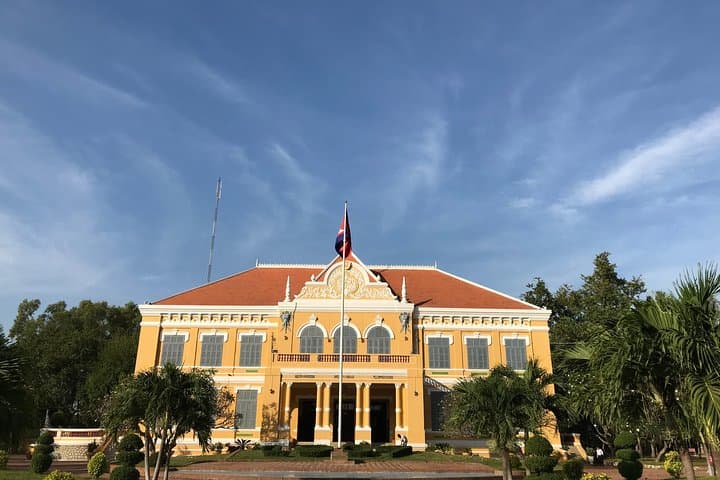
Battambang’s history is visible in its French-colonial facades and in the Ta Dambong statue, reminders of layered sovereignty and rural resilience. Geologically, the area’s low karst hills puncture flat alluvial plains, concentrating caves and wildlife at their bases.
Practical guidance: the tour combines long private drives (about 3.5 hours each way) with short, mostly easy walks; expect uneven cave paths and village surfaces. Bring a lightweight rain jacket for sudden showers, sturdy walking shoes and mosquito protection for evenings near water. Plan arrival in daylight for the bamboo train and reserve late afternoon for Phnom Sampeau’s bat exodus when the spectacle is most reliable.
moderate.
2 days (approx. 48 hours).
Comfortable for travelers who can handle multiple short walks, stairs in caves, and long vehicle transfers; basic mobility required.
Expect about 3.5 to 4 hours each way by private, air-conditioned vehicle depending on traffic and stops.
The bamboo train is a simple local transport experience with short rides; operators are experienced, but children should be supervised and belongings secured.
The bat emergence at Phnom Sampeau is seasonal and weather-dependent, but most clear evenings between dry-season months produce a strong emergence.
Breakfast and bottled water are included; plan to pay for additional lunches, dinners and market snacks during the tour.
Battambang combines French-colonial architecture with a long rural history; it was a contested region during 20th-century conflicts and retains distinct provincial culture.
Respect cave habitats and avoid flash photography near bat exits; support local producers by buying small quantities rather than large packaged goods.
Bayon Guide operates guided outdoor trips and adventures with an emphasis on safety, stewardship, and memorable experiences.
The road unfurls between rice paddies as your private car pushes west from Siem Reap, the afternoon light laying a slow gold over flat Khmer farmland. You arrive in Battambang — a low, lived-in city framed by karst bluffs — and step into a day that alternates gentle motion and abrupt natural spectacle.
The road unfurls between rice paddies as your private car pushes west from Siem Reap, the afternoon light laying a slow gold over flat Khmer farmland. You arrive in Battambang — a low, lived-in city framed by karst bluffs — and step into a day that alternates gentle motion and abrupt natural spectacle.
Phnom Sampeau’s limestone slopes hold caves and the bat colonies that pour out at dusk, a living river of tiny wings that reorients the valley as day yields to night. The Bamboo Train in Ou Sralao is a quick, tactile lesson in local ingenuity: a plywood platform on axles that hums along narrow tracks, the countryside inhaling and exhaling around you. Between these highlights you’ll meet families producing rice noodles, rice paper and fish paste — craft and seasonality more meaningful when shown than read.
Battambang’s history is visible in its French-colonial facades and in the Ta Dambong statue, reminders of layered sovereignty and rural resilience. Geologically, the area’s low karst hills puncture flat alluvial plains, concentrating caves and wildlife at their bases.
Practical guidance: the tour combines long private drives (about 3.5 hours each way) with short, mostly easy walks; expect uneven cave paths and village surfaces. Bring a lightweight rain jacket for sudden showers, sturdy walking shoes and mosquito protection for evenings near water. Plan arrival in daylight for the bamboo train and reserve late afternoon for Phnom Sampeau’s bat exodus when the spectacle is most reliable.