THE ADVENTURE COLLECTIVE® · Independent discovery and booking for outdoor travel

Take a full-day loop from Siem Reap to Battambang to see Phnom Sampov, experience the bamboo train, visit Khmer Rouge memorials, and watch millions of bats pour from a cave at dusk. This practical guide covers what to expect, timing, and how to prepare.
Take a full-day loop from Siem Reap to Battambang to see Phnom Sampov, experience the bamboo train, visit Khmer Rouge memorials, and watch millions of bats pour from a cave at dusk. This practical guide covers what to expect, timing, and how to prepare.
You arrive before dusk, the air heavy with rice-scent and diesel, and the countryside rolls out like a practiced hand brushing green fields. The road eases into Battambang’s Black Man Roundabout, then threads past temple stupas, Khmer-era monuments and wooden houses on stilts. By late afternoon the entrance to the Bat Cave hums—millions of bats lining the mouth, then launching in a living ribbon that dares the sky.
Verified experiences and guided adventures in the surrounding area.
Operated by Cambodian Tours And Taxi With Lucky · Battambang, Battambang Province
You arrive before dusk, the air heavy with rice-scent and diesel, and the countryside rolls out like a practiced hand brushing green fields. The road eases into Battambang’s Black Man Roundabout, then threads past temple stupas, Khmer-era monuments and wooden houses on stilts. By late afternoon the entrance to the Bat Cave hums—millions of bats lining the mouth, then launching in a living ribbon that dares the sky.
Battambang sits on a low limestone outcrop and broad floodplain that made it a strategic rice hub under both French colonial rule and more recent regimes. Phnom Sampov’s cliffs are karst limestone carved by rain over millennia; caves here hold both natural formations and painful history from the Khmer Rouge era. Culture in Battambang is hands-on—rural markets, rice paddies feeding local families, and the bamboo train, a pragmatic remnant of local ingenuity that became a photographic must.
On this one-day circuit you’ll move between reflective sites (Killing Fields, Peace Gallery) and kinetic ones (bamboo rail, bat emergence). Practical note: the day is long—expect 10–12 hours with several short walks and one steep stair descent into a memorial cave. Pack a reusable water bottle, wear closed-toe shoes for uneven paths, and bring a light rain shell during the wet season. Timing matters: the bat exodus is best seen at dusk, so plan your photo window and give yourself time to walk the hilltop temple before sunset.
Respect memorial sites—quiet and modest dress are required—and leave no trace at wildlife caves. With basic preparation this trip balances cultural weight and raw natural spectacle, all within a day from Siem Reap.
easy.
12 hours.
Suitable for most fitness levels; involves short walks, some stairs, and boarding a light rail carriage on uneven surfaces.
Expect about two to two-and-a-half hours each way by air-conditioned vehicle depending on traffic and road conditions.
Bats typically exit daily around dusk, but exact timing and volume vary by season and weather; guides position you at the best viewing spot for that night.
Most day-trip itineraries include a lunch stop but not all meals; check the tour details—there is usually a one-hour lunch break in Battambang.
The tour notes stroller accessibility for short drives, but sites include stairs and uneven ground; infants should be carried for cave descents and bat viewing areas.
Battambang’s low limestone hills and fertile floodplains made it a colonial-era rice center; 20th-century conflict left memorials that document Khmer Rouge atrocities.
The bat colony is sensitive to disturbance—viewing from designated areas and avoiding flash photography helps minimize impact; support local guides who practice responsible tourism.
Cambodian Tours And Taxi With Lucky operates guided outdoor trips and adventures with an emphasis on safety, stewardship, and memorable experiences.
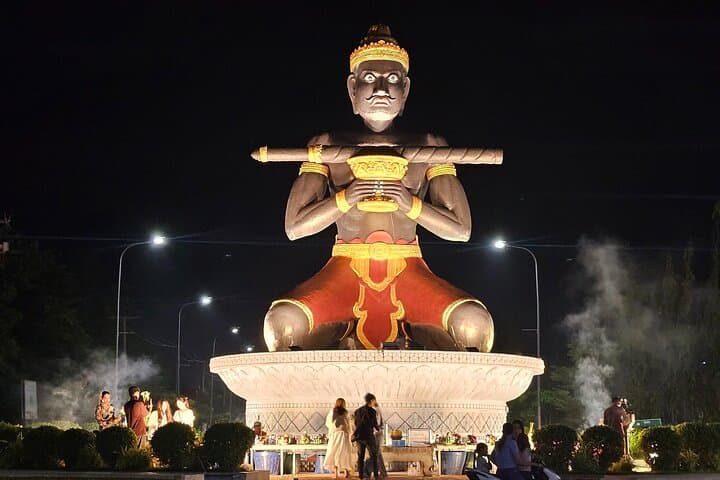
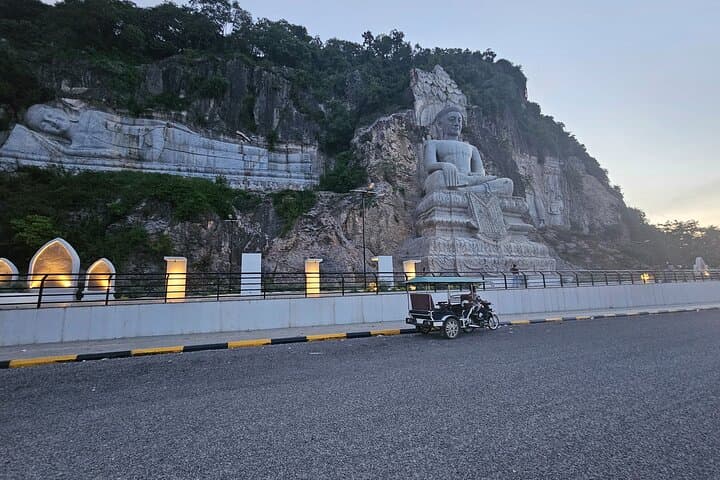
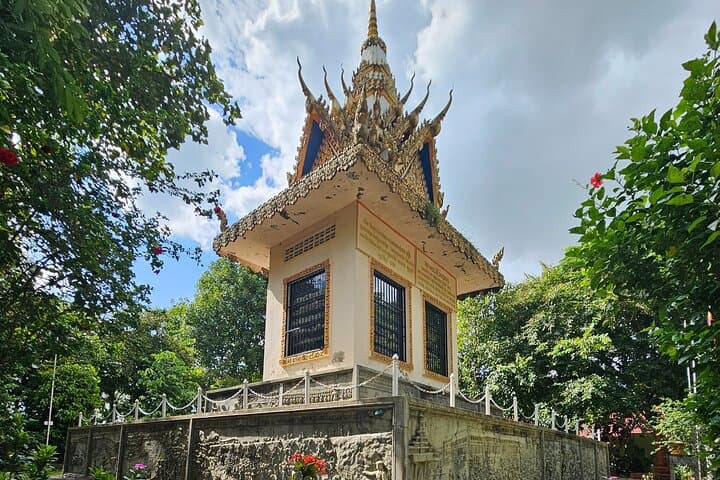
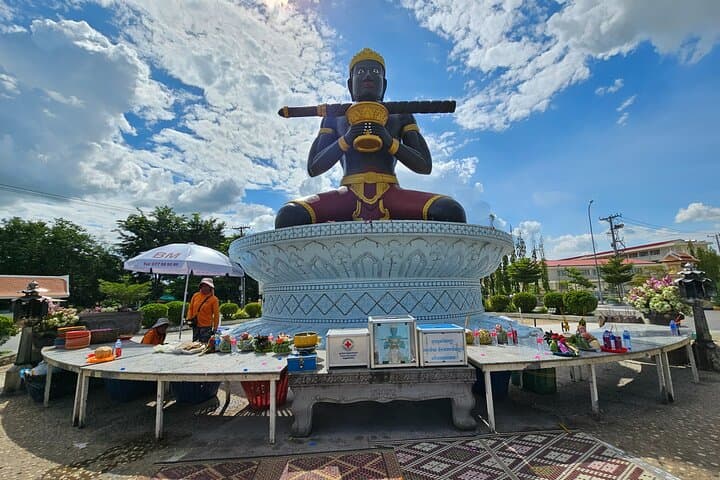
You arrive before dusk, the air heavy with rice-scent and diesel, and the countryside rolls out like a practiced hand brushing green fields. The road eases into Battambang’s Black Man Roundabout, then threads past temple stupas, Khmer-era monuments and wooden houses on stilts. By late afternoon the entrance to the Bat Cave hums—millions of bats lining the mouth, then launching in a living ribbon that dares the sky.
You arrive before dusk, the air heavy with rice-scent and diesel, and the countryside rolls out like a practiced hand brushing green fields. The road eases into Battambang’s Black Man Roundabout, then threads past temple stupas, Khmer-era monuments and wooden houses on stilts. By late afternoon the entrance to the Bat Cave hums—millions of bats lining the mouth, then launching in a living ribbon that dares the sky.
Battambang sits on a low limestone outcrop and broad floodplain that made it a strategic rice hub under both French colonial rule and more recent regimes. Phnom Sampov’s cliffs are karst limestone carved by rain over millennia; caves here hold both natural formations and painful history from the Khmer Rouge era. Culture in Battambang is hands-on—rural markets, rice paddies feeding local families, and the bamboo train, a pragmatic remnant of local ingenuity that became a photographic must.
On this one-day circuit you’ll move between reflective sites (Killing Fields, Peace Gallery) and kinetic ones (bamboo rail, bat emergence). Practical note: the day is long—expect 10–12 hours with several short walks and one steep stair descent into a memorial cave. Pack a reusable water bottle, wear closed-toe shoes for uneven paths, and bring a light rain shell during the wet season. Timing matters: the bat exodus is best seen at dusk, so plan your photo window and give yourself time to walk the hilltop temple before sunset.
Respect memorial sites—quiet and modest dress are required—and leave no trace at wildlife caves. With basic preparation this trip balances cultural weight and raw natural spectacle, all within a day from Siem Reap.