THE ADVENTURE COLLECTIVE® · Independent discovery and booking for outdoor travel

Glide past Paris landmarks with the Batobus hop-on hop-off ticket—frequent boats, panoramic decks, and flexible 1–2 day passes make riverside sightseeing easy. Learn when to ride, where to hop off, and what to pack for a relaxed day on the Seine.
Glide past Paris landmarks with the Batobus hop-on hop-off ticket—frequent boats, panoramic decks, and flexible 1–2 day passes make riverside sightseeing easy. Learn when to ride, where to hop off, and what to pack for a relaxed day on the Seine.
The Seine pulls you forward with a steady, indifferent patience as the Batobus slips downstream—open decks framing the Eiffel Tower while the city leans in. Morning light strips the façade of the Louvre; afternoon clouds pile above Notre-Dame’s silhouette. The ride reads like a linear city walk that refuses to rush you.
Verified experiences and guided adventures in the surrounding area.
Operated by My Travelons Ltd · Paris, Île-de-France
The Seine pulls you forward with a steady, indifferent patience as the Batobus slips downstream—open decks framing the Eiffel Tower while the city leans in. Morning light strips the façade of the Louvre; afternoon clouds pile above Notre-Dame’s silhouette. The ride reads like a linear city walk that refuses to rush you.
The Seine has been Paris’s lifeline since Roman times, a transport corridor for goods and ideas carved through limestone beds and silted terraces. Bridges here mark eras—medieval stone, 19th-century engineering—and riverbanks host cultural life from booksellers to café terraces. Onboard, audioguides sketch that history while your boat threads beneath archways worn smooth by centuries of traffic.
Expect urban geology: low, alluvial banks framed by stone quays and occasional exposed masonry. Culture arrives in the small things—the chant of market vendors on Île Saint‑Louis, sailors’ signals at the quays, and the steady hum of city life moving along the water.
Practical guidance: Batobus runs frequently (roughly every 15–30 minutes), with nine central stops covering major sites—ideal for a flexible 1–2 day sightseeing plan. Choose early or late slots to avoid mid-day crowds; open decks are best for photos but can be breezy. Tickets come as 1- or 2-day unlimited passes, and boats offer heated cabins in cooler months plus onboard Wi‑Fi. Bring a light layer, plan hop-off windows of at least 45–60 minutes at major stops, and keep small change or a card for nearby cafés and bookstalls. The Seine invites exploration at river pace—carry curiosity and steady footwear, and let the current set your itinerary.
easy.
1–2 hours.
Suitable for all fitness levels; activity is low-impact but includes short walks to and from stops.
Tickets are sold as unlimited 1‑day or 2‑day passes; they allow boarding at any stop during the valid calendar days.
Boats typically run every 15–30 minutes depending on season and time of day—frequency increases in summer.
Most Batobus boats provide step-free access and heated indoor seating, but accessibility can vary by stop—check ahead for specific quay facilities.
Yes—an audioguide is available via a web app in multiple languages, and some informational signage is displayed onboard.
The Seine has been central to Paris since Roman Lutetia, serving as a commercial artery and a cultural boundary between neighborhoods.
Ongoing river-cleanup and biodiversity projects aim to improve water quality and native habitats—avoid littering and use provided bins to reduce impact.
My Travelons Ltd operates guided outdoor trips and adventures with an emphasis on safety, stewardship, and memorable experiences.
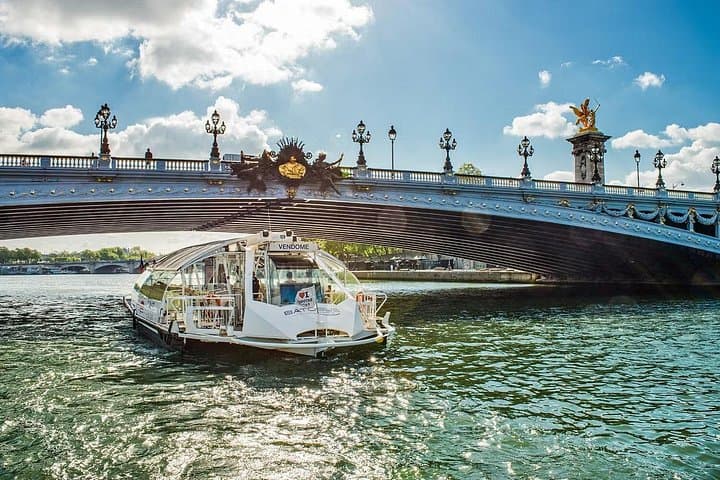
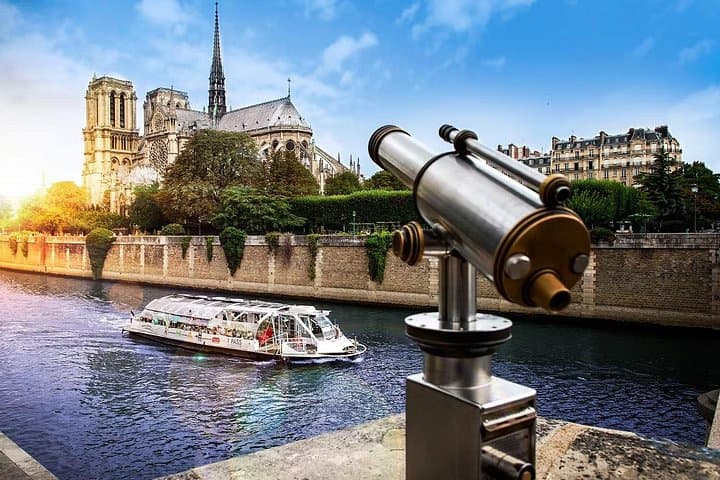
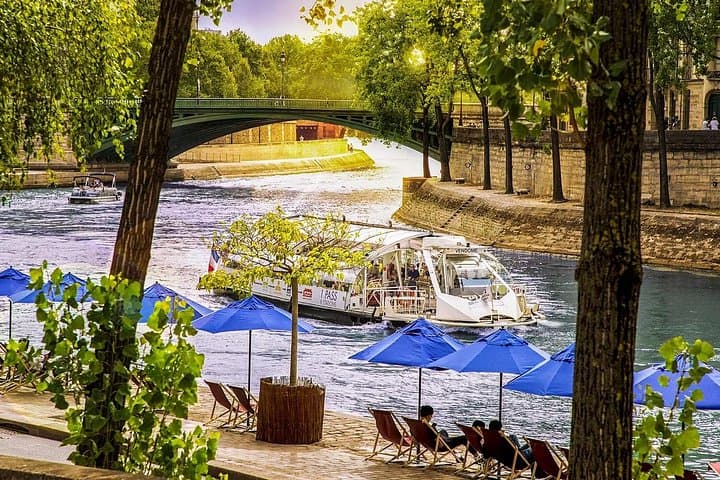
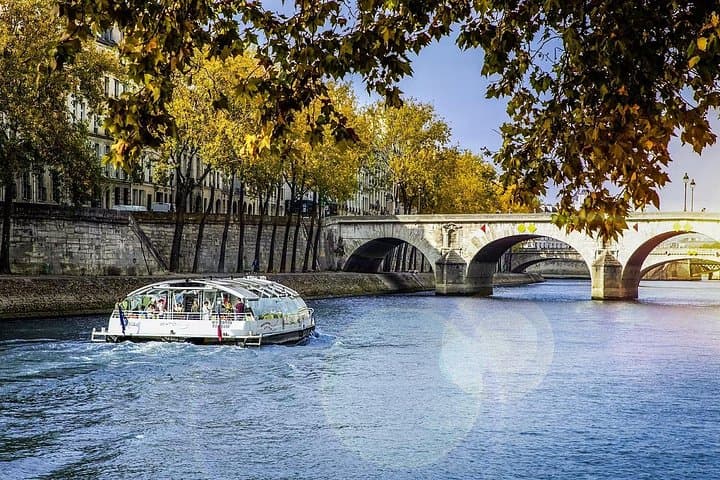
The Seine pulls you forward with a steady, indifferent patience as the Batobus slips downstream—open decks framing the Eiffel Tower while the city leans in. Morning light strips the façade of the Louvre; afternoon clouds pile above Notre-Dame’s silhouette. The ride reads like a linear city walk that refuses to rush you.
The Seine pulls you forward with a steady, indifferent patience as the Batobus slips downstream—open decks framing the Eiffel Tower while the city leans in. Morning light strips the façade of the Louvre; afternoon clouds pile above Notre-Dame’s silhouette. The ride reads like a linear city walk that refuses to rush you.
The Seine has been Paris’s lifeline since Roman times, a transport corridor for goods and ideas carved through limestone beds and silted terraces. Bridges here mark eras—medieval stone, 19th-century engineering—and riverbanks host cultural life from booksellers to café terraces. Onboard, audioguides sketch that history while your boat threads beneath archways worn smooth by centuries of traffic.
Expect urban geology: low, alluvial banks framed by stone quays and occasional exposed masonry. Culture arrives in the small things—the chant of market vendors on Île Saint‑Louis, sailors’ signals at the quays, and the steady hum of city life moving along the water.
Practical guidance: Batobus runs frequently (roughly every 15–30 minutes), with nine central stops covering major sites—ideal for a flexible 1–2 day sightseeing plan. Choose early or late slots to avoid mid-day crowds; open decks are best for photos but can be breezy. Tickets come as 1- or 2-day unlimited passes, and boats offer heated cabins in cooler months plus onboard Wi‑Fi. Bring a light layer, plan hop-off windows of at least 45–60 minutes at major stops, and keep small change or a card for nearby cafés and bookstalls. The Seine invites exploration at river pace—carry curiosity and steady footwear, and let the current set your itinerary.