THE ADVENTURE COLLECTIVE® · Independent discovery and booking for outdoor travel

Discover Bath’s Roman origins and Georgian grandeur on a small-group walking tour that blends architecture, stories, and local tips. Perfect for first-time visitors who want context, photos, and a route that balances famous sights with lesser-known corners.
Discover Bath’s Roman origins and Georgian grandeur on a small-group walking tour that blends architecture, stories, and local tips. Perfect for first-time visitors who want context, photos, and a route that balances famous sights with lesser-known corners.
You meet your guide on the broad sweep of Royal Crescent; morning light pools on honey-colored Bath Stone and the city hums with the low rush of the River Avon daring you to look over the parapet. The group steps off the pavement and into streets where scale and stone fix a sense of time—cobbles beneath your boots, classical façades above, and a guide whose voice folds local jokes into centuries of history.
Verified experiences and guided adventures in the surrounding area.
Operated by In and Beyond Bath · Bath, Somerset
You meet your guide on the broad sweep of Royal Crescent; morning light pools on honey-colored Bath Stone and the city hums with the low rush of the River Avon daring you to look over the parapet. The group steps off the pavement and into streets where scale and stone fix a sense of time—cobbles beneath your boots, classical façades above, and a guide whose voice folds local jokes into centuries of history.
Bath grew from a natural thermal spring used by the Romans into an 18th-century social magnet rebuilt almost entirely from oolitic limestone. Walks here thread Roman engineering, Palladian and Georgian architecture, and literary life—Jane Austen’s Bath rubbing shoulders with John Wood’s geometries. Geology matters: the warm springs that made the city famous bubble through limestone that craftsmen quarried to build the crescents and terraces you’ll study up-close.
Expect a gently paced, 2–2.25 hour route of roughly 1.5–3 km on mostly flat streets with short flights of steps and cobbles. Highlights usually include the Roman Baths (external views unless booked separately), the Royal Crescent, The Circus, Pulteney Bridge and quieter corners such as the Cross Bath and small private squares. Guides mix archival anecdotes with practical pointers—where to linger for photos, which cafes source local ciders, and the least crowded viewpoints.
Practical: wear sturdy shoes for cobbles, layer for variable weather, and bring a small water bottle; public toilets are available but not every block. Tours are small-group and conversational—ask about architecture, social history, or the engineering behind the hot springs before the group moves on.
easy.
2–2.25 hours.
Suitable for most fitness levels; involves continuous walking at an easy pace and standing for short talks
No, entrance to the Roman Baths is not included; the tour provides external views and commentary—book museum tickets separately if you wish to go inside.
The route is generally accessible along main streets, but cobbles and occasional steps mean you should check with the operator in advance for specific accessibility needs.
Groups are kept small—typically 2–8 people—for a more personal experience and opportunity to ask questions.
Yes; the tour is family-friendly and suitable for older children who can walk for two hours; strollers are manageable on most sections.
Bath’s core developed around natural thermal springs first used by the Romans; much of the city was remade in the 18th century with Bath Stone and grand Georgian planning.
Visitors are encouraged to stay on designated paths and support local businesses; preservation of stone façades and reduced foot-traffic wear are local priorities.
In and Beyond Bath operates guided outdoor trips and adventures with an emphasis on safety, stewardship, and memorable experiences.
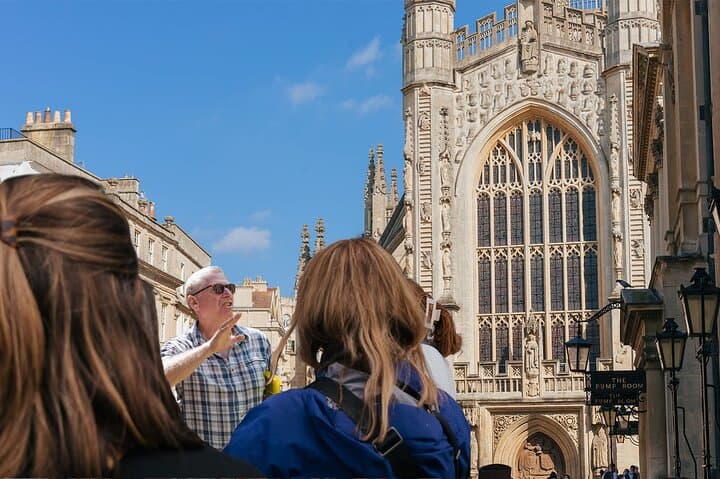
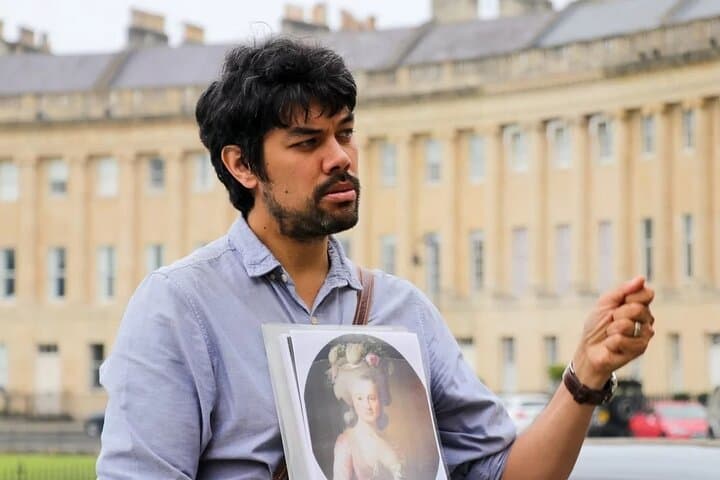
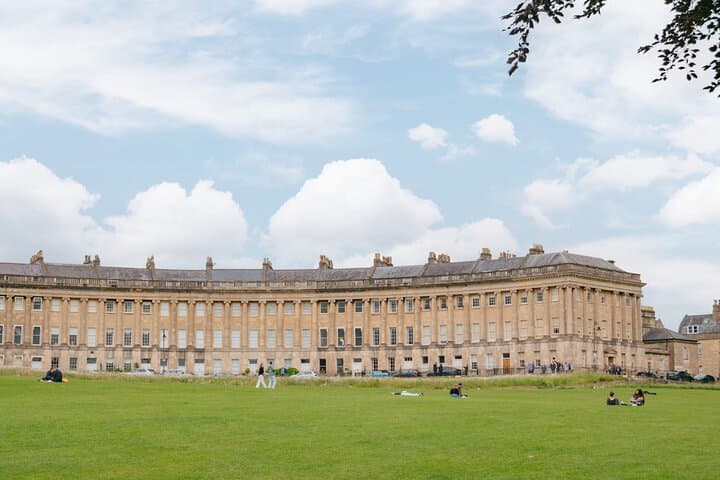

You meet your guide on the broad sweep of Royal Crescent; morning light pools on honey-colored Bath Stone and the city hums with the low rush of the River Avon daring you to look over the parapet. The group steps off the pavement and into streets where scale and stone fix a sense of time—cobbles beneath your boots, classical façades above, and a guide whose voice folds local jokes into centuries of history.
You meet your guide on the broad sweep of Royal Crescent; morning light pools on honey-colored Bath Stone and the city hums with the low rush of the River Avon daring you to look over the parapet. The group steps off the pavement and into streets where scale and stone fix a sense of time—cobbles beneath your boots, classical façades above, and a guide whose voice folds local jokes into centuries of history.
Bath grew from a natural thermal spring used by the Romans into an 18th-century social magnet rebuilt almost entirely from oolitic limestone. Walks here thread Roman engineering, Palladian and Georgian architecture, and literary life—Jane Austen’s Bath rubbing shoulders with John Wood’s geometries. Geology matters: the warm springs that made the city famous bubble through limestone that craftsmen quarried to build the crescents and terraces you’ll study up-close.
Expect a gently paced, 2–2.25 hour route of roughly 1.5–3 km on mostly flat streets with short flights of steps and cobbles. Highlights usually include the Roman Baths (external views unless booked separately), the Royal Crescent, The Circus, Pulteney Bridge and quieter corners such as the Cross Bath and small private squares. Guides mix archival anecdotes with practical pointers—where to linger for photos, which cafes source local ciders, and the least crowded viewpoints.
Practical: wear sturdy shoes for cobbles, layer for variable weather, and bring a small water bottle; public toilets are available but not every block. Tours are small-group and conversational—ask about architecture, social history, or the engineering behind the hot springs before the group moves on.