THE ADVENTURE COLLECTIVE® · Independent discovery and booking for outdoor travel

A self-guided, phone-based treasure hunt that turns Bath into a puzzle: cryptic clues, historic corners, and offbeat sights reveal the city at your pace. Perfect for small groups who want an active, social way to explore Georgian streets and riverside views.
A self-guided, phone-based treasure hunt that turns Bath into a puzzle: cryptic clues, historic corners, and offbeat sights reveal the city at your pace. Perfect for small groups who want an active, social way to explore Georgian streets and riverside views.
You start on a sunlit pavement with the River Avon running a slow, wry line through the city — it seems to dare you to look up, to read the stones. The game arrives on your phone like a cheerful guide: maps, a voice called Captain Bess, and a series of cryptic prompts that push you away from the tourist flow and into the small, telling details of Bath.
Verified experiences and guided adventures in the surrounding area.
Operated by Treasure Hunt Bath · Bath, Somerset
You start on a sunlit pavement with the River Avon running a slow, wry line through the city — it seems to dare you to look up, to read the stones. The game arrives on your phone like a cheerful guide: maps, a voice called Captain Bess, and a series of cryptic prompts that push you away from the tourist flow and into the small, telling details of Bath.
The route moves deliberately through Georgian crescents and alleyways that still smell faintly of brewing bread. Bath is a city built of stone with Roman bones: a hot spring fed the baths that named the place, and two centuries later the 18th-century architects draped the town in classical rhythm. The treasure hunt plays with that history, pointing out carved keystones, shopfront plaques, and odd inscriptions that most passersby skim past.
Beyond architecture there are urban stories: a riverside that has shaped trade, an abbey whose west front throws long shadows over cobbled squares, and a network of narrow lanes that once linked coach houses and craftsmen. The game teases out these layers while nudging you to pause — read a brass plaque, peer through a shop window, or linger on a bridge and watch the water measure the city.
Practically, this is self-paced and social-distanced by design. The app-less interface runs in your browser; activate with your booking reference and the route unfolds on your screen. Expect about two-and-a-half hours of steady walking with stops for clues, photos, and a coffee. Terrain is entirely paved urban streets with occasional steps and narrow passages; comfortable shoes and a charged phone are non-negotiable.
Hints are built in, so the experience works for varied groups: families, couples, solo explorers, or a pub-crawl-style afternoon with friends. Because you choose start time and pace, you can compress highlights into an hour and a half or spread the hunt across a lazy afternoon. Use quieter mornings for better photos and late afternoons to catch the city in warmer light.
Locals say these hunts reveal what guidebooks miss: a doorway with a forgotten inscription, a baker making morning buns, a tucked garden. Leave no trace, respect private spaces, and consider public transport back if your feet are tired — Bath’s compact center makes it easy to pivot from scavenger to café patron.
If you want to come away with more than answers, pause where the hunt tells you to, read the short stories it supplies, and let the city recalibrate from a checklist into a sequence of discoveries. The reward isn’t just solving clues; it’s seeing Bath rearrange itself as you walk — architecture, river, and people conspiring to tell you something new.
moderate.
2–3 hours.
Moderate fitness — able to walk at a steady pace for 2–3 hours with short stops
Activate your booking by visiting the provided activation link and entering your booking reference; the hunt opens in your phone browser—no app to download.
The central route is largely paved and accessible, though some narrow passages and steps may require alternate lines—check in advance if mobility is a concern.
The listed duration is about 2.5 hours, but you can move faster or pause longer; most groups average 2–3 hours including stops.
Yes; the game link can be shared with everyone in your party and functions like a group chat for splitting into teams or collaborating.
This particular hunt is in English; hints and stories are provided in English in the in-game content.
For a full refund cancel at least 24 hours before your scheduled start time; within 24 hours bookings are non-refundable.
Bath grew from a Roman spa into an 18th-century Georgian city; the hunt highlights layers of Roman, medieval, and Georgian presence tied to the hot springs and river trade.
The game uses digital clues to reduce paper and encourage low-impact exploration; visitors should stick to public ways and avoid entering private courtyards.
Treasure Hunt Bath operates guided outdoor trips and adventures with an emphasis on safety, stewardship, and memorable experiences.

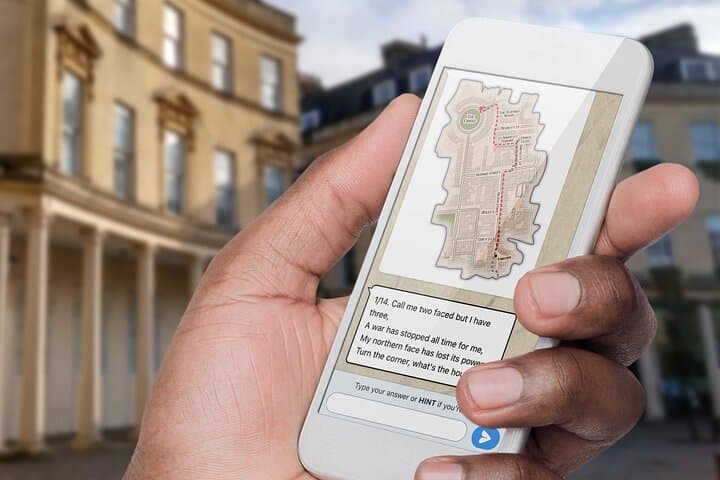

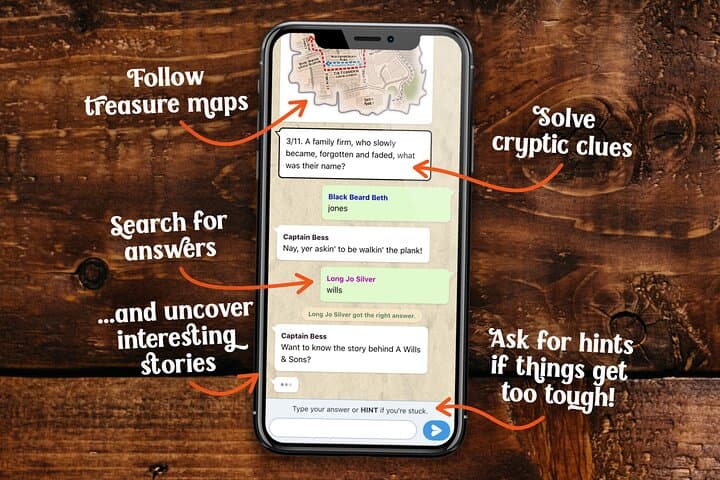
You start on a sunlit pavement with the River Avon running a slow, wry line through the city — it seems to dare you to look up, to read the stones. The game arrives on your phone like a cheerful guide: maps, a voice called Captain Bess, and a series of cryptic prompts that push you away from the tourist flow and into the small, telling details of Bath.
You start on a sunlit pavement with the River Avon running a slow, wry line through the city — it seems to dare you to look up, to read the stones. The game arrives on your phone like a cheerful guide: maps, a voice called Captain Bess, and a series of cryptic prompts that push you away from the tourist flow and into the small, telling details of Bath.
The route moves deliberately through Georgian crescents and alleyways that still smell faintly of brewing bread. Bath is a city built of stone with Roman bones: a hot spring fed the baths that named the place, and two centuries later the 18th-century architects draped the town in classical rhythm. The treasure hunt plays with that history, pointing out carved keystones, shopfront plaques, and odd inscriptions that most passersby skim past.
Beyond architecture there are urban stories: a riverside that has shaped trade, an abbey whose west front throws long shadows over cobbled squares, and a network of narrow lanes that once linked coach houses and craftsmen. The game teases out these layers while nudging you to pause — read a brass plaque, peer through a shop window, or linger on a bridge and watch the water measure the city.
Practically, this is self-paced and social-distanced by design. The app-less interface runs in your browser; activate with your booking reference and the route unfolds on your screen. Expect about two-and-a-half hours of steady walking with stops for clues, photos, and a coffee. Terrain is entirely paved urban streets with occasional steps and narrow passages; comfortable shoes and a charged phone are non-negotiable.
Hints are built in, so the experience works for varied groups: families, couples, solo explorers, or a pub-crawl-style afternoon with friends. Because you choose start time and pace, you can compress highlights into an hour and a half or spread the hunt across a lazy afternoon. Use quieter mornings for better photos and late afternoons to catch the city in warmer light.
Locals say these hunts reveal what guidebooks miss: a doorway with a forgotten inscription, a baker making morning buns, a tucked garden. Leave no trace, respect private spaces, and consider public transport back if your feet are tired — Bath’s compact center makes it easy to pivot from scavenger to café patron.
If you want to come away with more than answers, pause where the hunt tells you to, read the short stories it supplies, and let the city recalibrate from a checklist into a sequence of discoveries. The reward isn’t just solving clues; it’s seeing Bath rearrange itself as you walk — architecture, river, and people conspiring to tell you something new.