THE ADVENTURE COLLECTIVE® · Independent discovery and booking for outdoor travel

Walk Bath’s honey-colored streets with an award-winning photographer and learn smartphone photography techniques at the Roman Baths, Royal Crescent and Bath Abbey. This two-hour small-group tour pairs practical tips with local insights to help you take memorable images of a UNESCO city.
Walk Bath’s honey-colored streets with an award-winning photographer and learn smartphone photography techniques at the Roman Baths, Royal Crescent and Bath Abbey. This two-hour small-group tour pairs practical tips with local insights to help you take memorable images of a UNESCO city.
You start on a cobbled street as late morning light slips across honey-colored stone, your guide an award-winning travel photographer who points out a frame you hadn’t noticed: a rain-slick gutter reflecting the Circus.
Verified experiences and guided adventures in the surrounding area.
Operated by I Phone Walking Tours of Bath · Bath, Somerset
You start on a cobbled street as late morning light slips across honey-colored stone, your guide an award-winning travel photographer who points out a frame you hadn’t noticed: a rain-slick gutter reflecting the Circus.
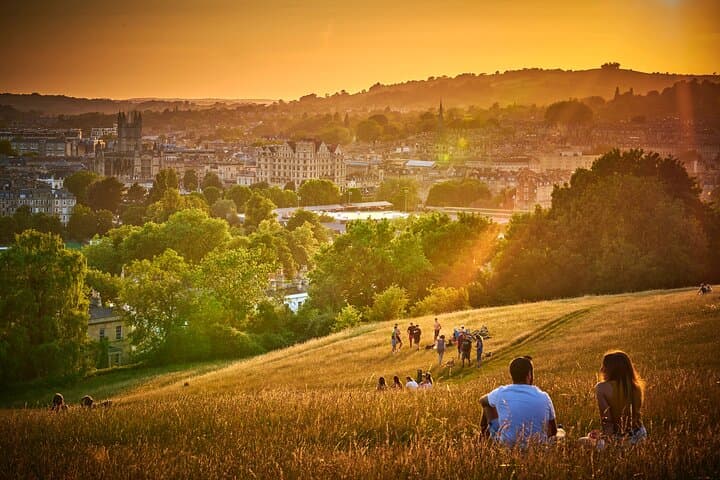
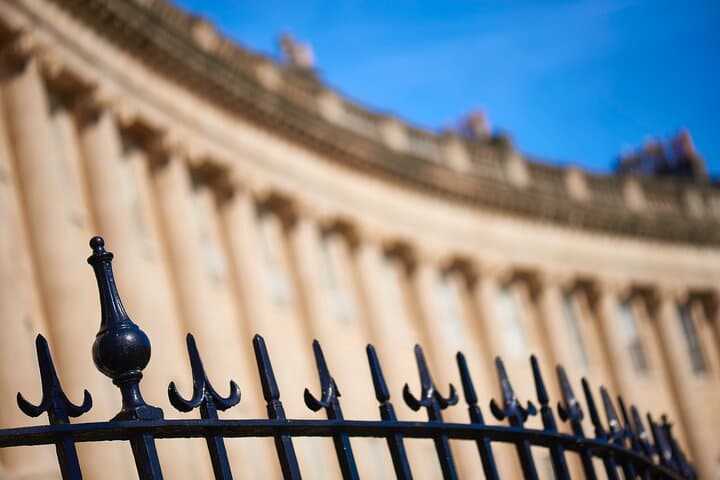
The route moves through Bath’s compact center—Roman Baths, Pulteney Bridge, The Royal Crescent, the Circus and Bath Abbey—each structure offering different line, light and texture. The city’s Roman origins and 18th-century Georgian expansion shape the angles you’ll learn to exploit; Bath’s stone, quarried nearby, shifts warm tones through the day and creates predictable highlights and shadows for composition.
Beyond architecture the tour gives local color: market stalls on Broad Street, the River Avon threading under Pulteney Bridge, and the subtle layers of history visible in façades and plaques. The guide will show smartphone techniques—composition, exposure control, simple editing—that work on narrow lanes as well as open crescents.
Practical guidance: bring a charged phone, a small power bank, and shoes for 1.5–2 miles of mostly paved walking with occasional steps. Expect a relaxed pace with stops of 10–15 minutes at key viewpoints; entry to paid sites like the Roman Baths is not included unless arranged separately. If you want quieter photos, schedule early morning or late afternoon light; weekends and summer bring larger crowds.
This tour is accessible to most abilities, offers wheelchair-friendly surfaces through the city center, and suits anyone wanting to come away with stronger photographic instincts and a fresh visual take on a compact World Heritage city.
easy.
2 hours.
Light walking ability; most of the route is on paved streets with low elevation change so normal mobility is sufficient.
No—this walking tour focuses on exterior photography and commentary; entrance tickets to paid attractions are not included and must be purchased separately.
Yes—the route uses primarily paved city-center surfaces that are accessible, but let the operator know of specific needs during booking to confirm arrangements.
This is a small-group experience and can be arranged as a private tour; expect a personalized pace and hands-on instruction from the guide.
No advanced skills required—basic familiarity with your phone’s camera app helps, and the guide will demonstrate simple composition and editing techniques.
Bath is a UNESCO World Heritage city whose Roman-built baths and 18th-century Georgian architecture—shaped by architects such as John Wood—define its distinctive streets and sightlines.
Bath’s stonework is sensitive to wear and pollution; stick to public paths, avoid touching carved surfaces, and support local conservation by following guide instructions to minimize impact.
I Phone Walking Tours of Bath operates guided outdoor trips and adventures with an emphasis on safety, stewardship, and memorable experiences.
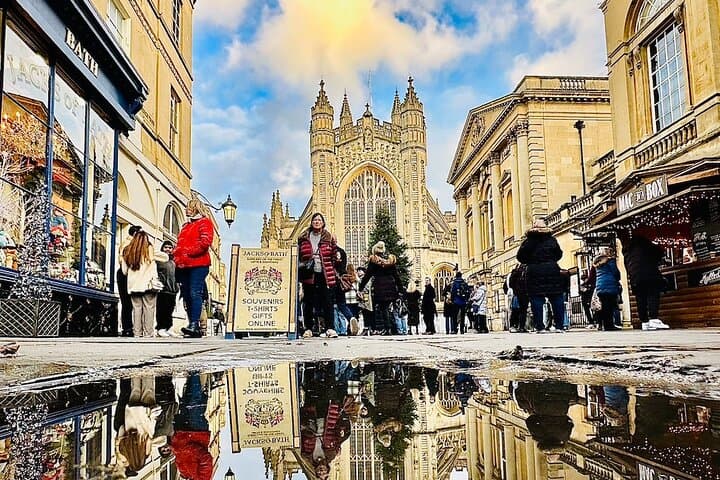
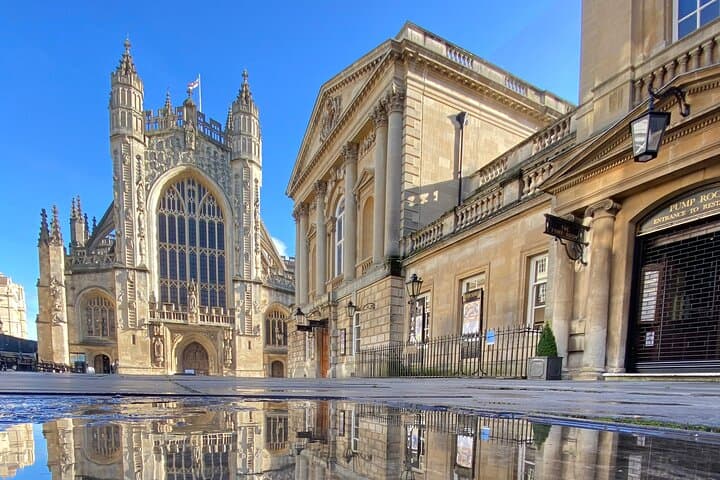
You start on a cobbled street as late morning light slips across honey-colored stone, your guide an award-winning travel photographer who points out a frame you hadn’t noticed: a rain-slick gutter reflecting the Circus.
You start on a cobbled street as late morning light slips across honey-colored stone, your guide an award-winning travel photographer who points out a frame you hadn’t noticed: a rain-slick gutter reflecting the Circus.
The route moves through Bath’s compact center—Roman Baths, Pulteney Bridge, The Royal Crescent, the Circus and Bath Abbey—each structure offering different line, light and texture. The city’s Roman origins and 18th-century Georgian expansion shape the angles you’ll learn to exploit; Bath’s stone, quarried nearby, shifts warm tones through the day and creates predictable highlights and shadows for composition.
Beyond architecture the tour gives local color: market stalls on Broad Street, the River Avon threading under Pulteney Bridge, and the subtle layers of history visible in façades and plaques. The guide will show smartphone techniques—composition, exposure control, simple editing—that work on narrow lanes as well as open crescents.
Practical guidance: bring a charged phone, a small power bank, and shoes for 1.5–2 miles of mostly paved walking with occasional steps. Expect a relaxed pace with stops of 10–15 minutes at key viewpoints; entry to paid sites like the Roman Baths is not included unless arranged separately. If you want quieter photos, schedule early morning or late afternoon light; weekends and summer bring larger crowds.
This tour is accessible to most abilities, offers wheelchair-friendly surfaces through the city center, and suits anyone wanting to come away with stronger photographic instincts and a fresh visual take on a compact World Heritage city.