THE ADVENTURE COLLECTIVE® · Independent discovery and booking for outdoor travel

Explore Bath’s Georgian streets and enter Bath Abbey with a Blue Badge guide on a 120-minute walk that blends geology, Roman springs and Georgian society into a lively city narrative.
Explore Bath’s Georgian streets and enter Bath Abbey with a Blue Badge guide on a 120-minute walk that blends geology, Roman springs and Georgian society into a lively city narrative.
You step off the busy lane and into a corridor of warm, honey-coloured stone: Georgian terraces rise like stage sets, the River Avon murmurs nearby and a Blue Badge guide waits with a map and a ready story.
Verified experiences and guided adventures in the surrounding area.
Operated by Bath Walking Tours · Bath, Somerset
You step off the busy lane and into a corridor of warm, honey-coloured stone: Georgian terraces rise like stage sets, the River Avon murmurs nearby and a Blue Badge guide waits with a map and a ready story.
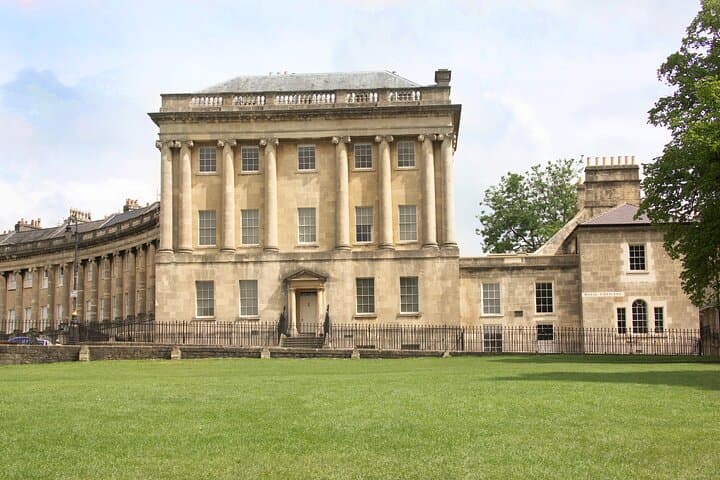
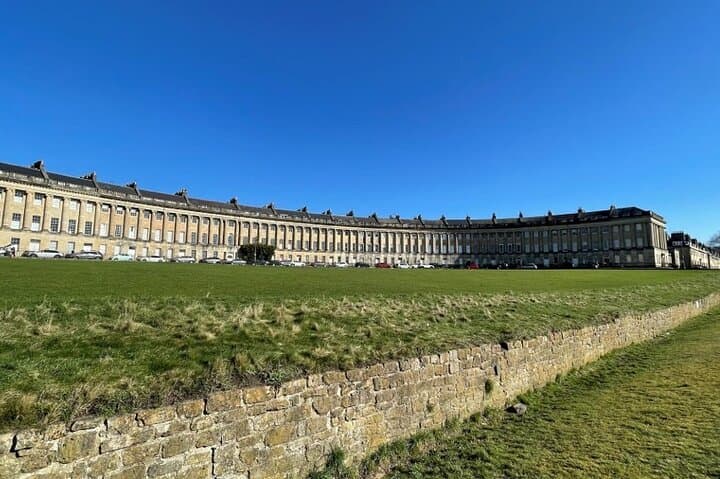
This 120-minute public walk threads through Bath’s defining sights—the Royal Crescent, Circus, Pulteney Bridge and the Pump Room—before a focused 30-minute guided entry to Bath Abbey. The city’s story is geological as much as human: the thermal springs that made Bath unique bubble from oolitic limestone formed on nearby hills, and Romans first dug channels here to harness the water. The elegant crescents and squares arrived in the 18th century, driven by social rituals and architects who shaped Bath’s uniform stone façade.
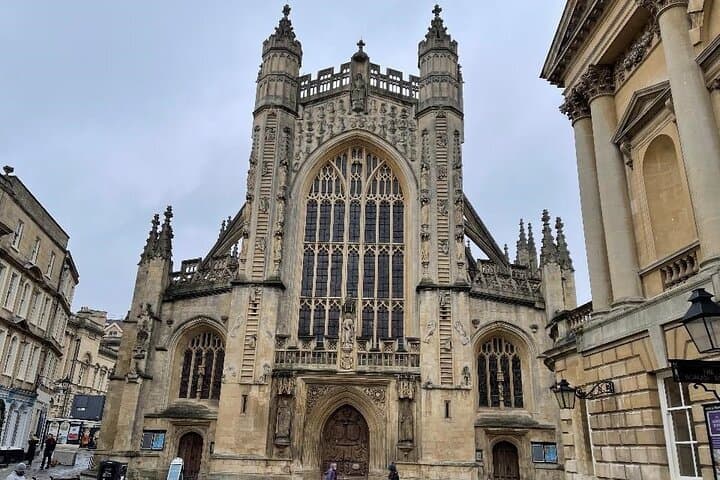
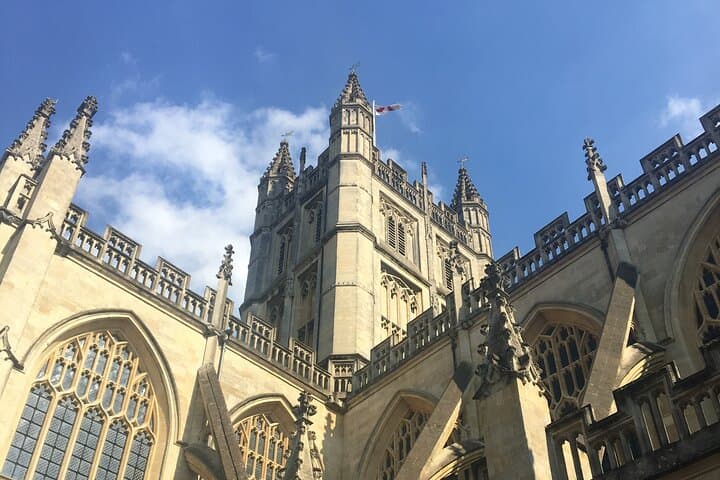
The Abbey itself reads like a chapter of English history: Gothic architecture, detailed stone carving and a long record of restoration and civic life. Guides link the visible features to the people who built and used them—royal visitors, Georgian society and the Roman-to-Regency evolution of place.
Practical side: the route covers mostly paved streets and cobbles, accessible to wheelchairs and prams, and is suitable for all fitness levels. Expect frequent stops for interpretation and photo opportunities; the Abbey visit is included. Wear comfortable shoes, prepare for changeable English weather and arrive 10–15 minutes before the start. Small-group size keeps the experience conversational—bring questions and a ready camera to capture Bath’s layered history and the glow of its stone.
easy.
2 hours.
Suitable for most fitness levels; involves standing and short walks on paved and cobbled surfaces.
Yes—this tour includes a 30-minute guided entry to Bath Abbey as part of the 120-minute itinerary.
Yes; the tour is advertised as wheelchair- and stroller-accessible and service animals are allowed.
Shared tours are limited to a maximum of 20 travelers to keep groups manageable and conversational.
For a full refund cancel at least 24 hours before the scheduled departure time; last-minute cancellations are generally non-refundable.
Bath grew around its hot springs with Roman and later Georgian development; 18th-century architects standardized the characteristic Bath stone façades that define the city today.
Bath manages visitor impact around sensitive historic sites; stick to marked paths, respect signs inside the Abbey and avoid touching conserved stonework to help preserve it.
Bath Walking Tours operates guided outdoor trips and adventures with an emphasis on safety, stewardship, and memorable experiences.
You step off the busy lane and into a corridor of warm, honey-coloured stone: Georgian terraces rise like stage sets, the River Avon murmurs nearby and a Blue Badge guide waits with a map and a ready story.
You step off the busy lane and into a corridor of warm, honey-coloured stone: Georgian terraces rise like stage sets, the River Avon murmurs nearby and a Blue Badge guide waits with a map and a ready story.
This 120-minute public walk threads through Bath’s defining sights—the Royal Crescent, Circus, Pulteney Bridge and the Pump Room—before a focused 30-minute guided entry to Bath Abbey. The city’s story is geological as much as human: the thermal springs that made Bath unique bubble from oolitic limestone formed on nearby hills, and Romans first dug channels here to harness the water. The elegant crescents and squares arrived in the 18th century, driven by social rituals and architects who shaped Bath’s uniform stone façade.
The Abbey itself reads like a chapter of English history: Gothic architecture, detailed stone carving and a long record of restoration and civic life. Guides link the visible features to the people who built and used them—royal visitors, Georgian society and the Roman-to-Regency evolution of place.
Practical side: the route covers mostly paved streets and cobbles, accessible to wheelchairs and prams, and is suitable for all fitness levels. Expect frequent stops for interpretation and photo opportunities; the Abbey visit is included. Wear comfortable shoes, prepare for changeable English weather and arrive 10–15 minutes before the start. Small-group size keeps the experience conversational—bring questions and a ready camera to capture Bath’s layered history and the glow of its stone.