THE ADVENTURE COLLECTIVE® · Independent discovery and booking for outdoor travel

Explore Bath’s layered past on a private two-hour walking tour that threads Roman springs, Georgian crescents and literary lanes. Perfect for travelers who want history, architecture and local insight delivered by a dedicated guide.
Explore Bath’s layered past on a private two-hour walking tour that threads Roman springs, Georgian crescents and literary lanes. Perfect for travelers who want history, architecture and local insight delivered by a dedicated guide.
A misty morning on the cobbles of Bath sets the scene: steam from a café, the River Avon threading bronze reflections beneath arched bridges, and a guide pointing out an unassuming doorway whose stones remember Roman sandals.
Verified experiences and guided adventures in the surrounding area.
Operated by Global Guide Services · Bath, Somerset
A misty morning on the cobbles of Bath sets the scene: steam from a café, the River Avon threading bronze reflections beneath arched bridges, and a guide pointing out an unassuming doorway whose stones remember Roman sandals.
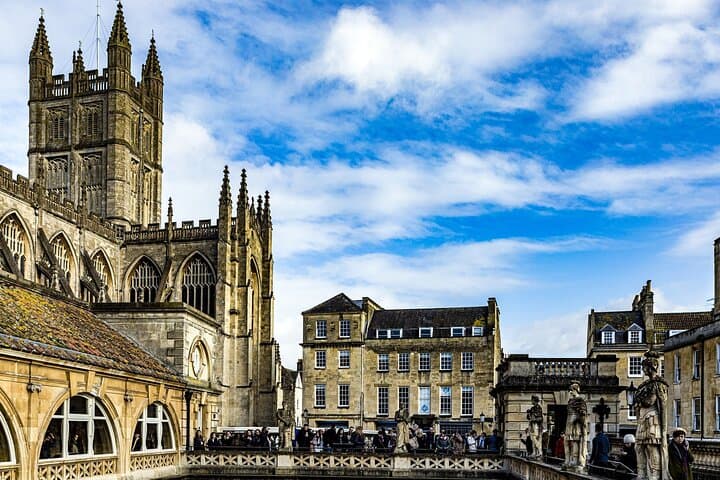
This two-hour private walking tour moves through layers of history. Visitors encounter the city's thermal springs—once the Roman spa town of Aquae Sulis—then pass medieval lanes that grew wealthy on the wool trade. The Georgian surge left its mark in the sweeping curve of the Royal Crescent and the honeyed Bath stone that defines the city’s skyline. Geologically, the city sits on Jurassic limestone with warm subterranean springs that shaped settlement patterns and gave rise to Bath’s unique social culture centered on bathing and leisure. Literary connections are visible too: Jane Austen’s novels and society life echo along the streets and gardens.
Culturally the tour emphasizes civic life from Roman ritual to Georgian social rituals and modern conservation: Bath is a UNESCO World Heritage city because of its intact urban plan and architecture.
Practical guidance: the walk covers roughly 1.5–2 miles on mixed cobbles and pavements with short stair sections—expect light hills and some uneven surfaces. Wear supportive walking shoes and bring a compact rain layer; even short showers are common. The tour is private and adaptable, letting guides tailor stops to interests—history, architecture, or local food. Public transport links are close; many hotels lie within a 10–20 minute walk of meeting points. Aim for morning slots to avoid peak crowds at the Roman Baths, and carry a contactless card for museum entry or café purchases. Keep a camera ready—the city rewards slow, observational walking.
easy.
2–2 hours.
Suitable for most fitness levels; requires standing and walking for two hours with brief hills and uneven surfaces.
The private walking tour runs approximately two hours and covers about 1.5–2 miles on city streets and cobbles with a few short stair sections.
The tour is family-friendly and geared to all fitness levels, but the cobbled surfaces and steps may be challenging for some mobility aids—contact the operator to discuss adaptations.
Standard itineraries do not include attraction entry fees; your guide can advise on tickets and timing, and many groups book Roman Baths admissions separately.
Meeting points are centrally located in Bath with nearby public transport and most hotels within a 10–20 minute walk; exact meeting details are provided at booking.
Bath grew from a Roman spa town built around natural hot springs and later became a centre of Georgian architecture and society, now protected as a UNESCO World Heritage Site.
Conservation focuses on protecting historic stone facades and managing visitor impact—stay on paths, avoid climbing on architecture, and support local independent businesses.
Global Guide Services operates guided outdoor trips and adventures with an emphasis on safety, stewardship, and memorable experiences.
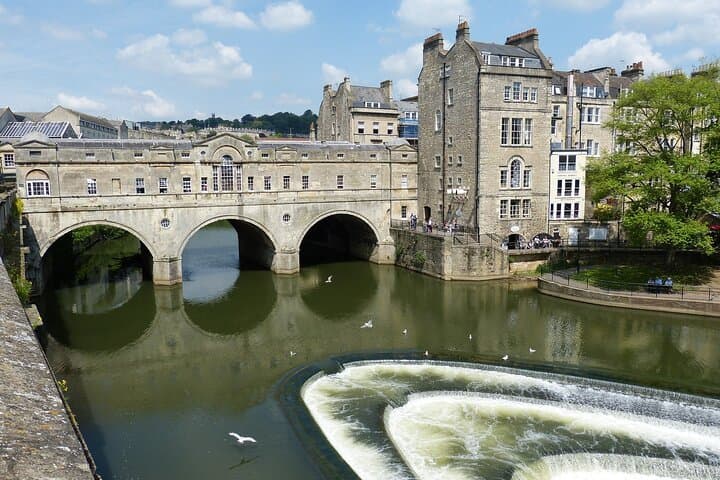
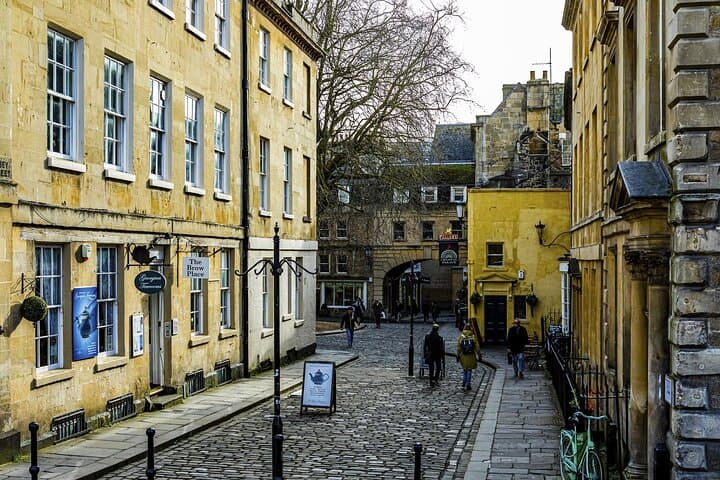
A misty morning on the cobbles of Bath sets the scene: steam from a café, the River Avon threading bronze reflections beneath arched bridges, and a guide pointing out an unassuming doorway whose stones remember Roman sandals.
A misty morning on the cobbles of Bath sets the scene: steam from a café, the River Avon threading bronze reflections beneath arched bridges, and a guide pointing out an unassuming doorway whose stones remember Roman sandals.
This two-hour private walking tour moves through layers of history. Visitors encounter the city's thermal springs—once the Roman spa town of Aquae Sulis—then pass medieval lanes that grew wealthy on the wool trade. The Georgian surge left its mark in the sweeping curve of the Royal Crescent and the honeyed Bath stone that defines the city’s skyline. Geologically, the city sits on Jurassic limestone with warm subterranean springs that shaped settlement patterns and gave rise to Bath’s unique social culture centered on bathing and leisure. Literary connections are visible too: Jane Austen’s novels and society life echo along the streets and gardens.
Culturally the tour emphasizes civic life from Roman ritual to Georgian social rituals and modern conservation: Bath is a UNESCO World Heritage city because of its intact urban plan and architecture.
Practical guidance: the walk covers roughly 1.5–2 miles on mixed cobbles and pavements with short stair sections—expect light hills and some uneven surfaces. Wear supportive walking shoes and bring a compact rain layer; even short showers are common. The tour is private and adaptable, letting guides tailor stops to interests—history, architecture, or local food. Public transport links are close; many hotels lie within a 10–20 minute walk of meeting points. Aim for morning slots to avoid peak crowds at the Roman Baths, and carry a contactless card for museum entry or café purchases. Keep a camera ready—the city rewards slow, observational walking.