THE ADVENTURE COLLECTIVE® · Independent discovery and booking for outdoor travel

Spend a day from Winchester exploring Bath’s Roman Baths and Georgian crescents, then drive into the honey-stone villages of the southern Cotswolds. This private full-day tour combines guided city walking with independent time at key sights and easy village strolls.
Spend a day from Winchester exploring Bath’s Roman Baths and Georgian crescents, then drive into the honey-stone villages of the southern Cotswolds. This private full-day tour combines guided city walking with independent time at key sights and easy village strolls.
You step onto a quiet Winchester pavement before dawn, the guide’s minivan humming as it slips onto the A34. Two hours later Bath appears: honey-stone terraces and the curve of the Royal Crescent catching the low light. The city’s Georgian façades give way to the steaming green water of the Roman Baths, where stone and steam still hold traces of two millennia of public life.
Verified experiences and guided adventures in the surrounding area.
Operated by Undiscovered Cotswolds · Winchester, Hampshire
You step onto a quiet Winchester pavement before dawn, the guide’s minivan humming as it slips onto the A34. Two hours later Bath appears: honey-stone terraces and the curve of the Royal Crescent catching the low light. The city’s Georgian façades give way to the steaming green water of the Roman Baths, where stone and steam still hold traces of two millennia of public life.
Bath grew where hot springs met Roman engineering; later Georgian builders reshaped the city with sweeping crescents and crescendos of Bath stone. The Cotswolds that follow are older in another way—Jurassic limestone folding into hills and dry valleys, quarried for the warm ashlar that gives villages like Lacock and Castle Combe their uniform glow. Lacock Abbey’s cloisters read like a film set; Castle Combe’s narrow lanes push you to walk slowly, noticing mullioned windows and tiny parish greens.
The day blends short guided walks with independent time at the Roman Baths and a pub lunch in Lacock. Expect cobbles, narrow streets, and short uphill stretches rather than long hikes; the tour covers roughly 2 hours driving to Bath, city walking and 60 minutes at the Baths, then a 30-minute drive to Lacock and a brief stop at Castle Combe before a two-hour return.
Practical guidance: wear stiff-soled walking shoes for cobbles, carry a waterproof layer, and bring a phone for your mobile ticket. Timings are tight—plan light lunches and keep water handy. The route is a compact introduction to southwest England’s history and stonework, built for curious walkers rather than serious trekkers.
moderate.
8 hours.
Suitable for people with a moderate level of fitness who can walk on uneven surfaces and manage short uphill sections.
Yes—winchester hotel pickup and drop-off are included; confirm your pickup point when booking.
Yes—entrance to the Roman Baths is included in the tour price for independent exploration during the allocated time.
The vehicle can accommodate collapsible wheelchairs with removable wheels, but some historic sites have steps and cobbles—assistants are required for boarding.
Lunch is taken in Lacock where there are small pubs and cafés—notify the operator of dietary needs when booking and plan on casual, locally sourced menus.
Bath was a Roman spa town built around hot springs; its Georgian facade is the result of 18th-century urban planning that celebrated classical symmetry. The Cotswolds grew from medieval wool wealth and local limestone building.
Historic stonework and fragile garden landscapes are sensitive to wear—stick to marked paths, avoid climbing on ruins, and support local businesses to help maintain village character.
Undiscovered Cotswolds operates guided outdoor trips and adventures with an emphasis on safety, stewardship, and memorable experiences.
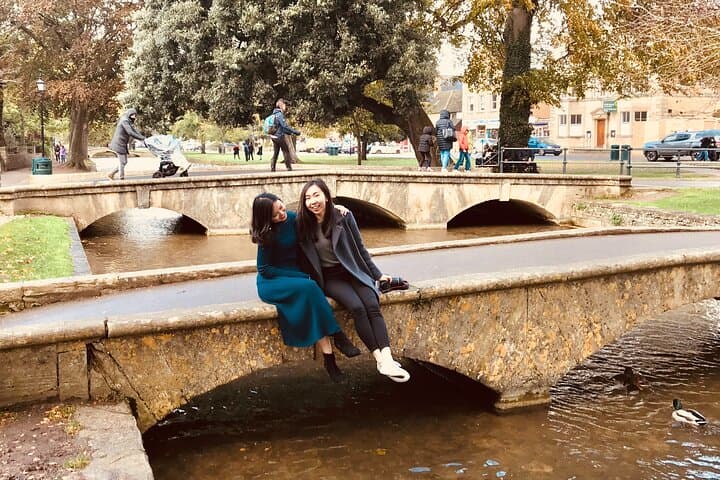


You step onto a quiet Winchester pavement before dawn, the guide’s minivan humming as it slips onto the A34. Two hours later Bath appears: honey-stone terraces and the curve of the Royal Crescent catching the low light. The city’s Georgian façades give way to the steaming green water of the Roman Baths, where stone and steam still hold traces of two millennia of public life.
You step onto a quiet Winchester pavement before dawn, the guide’s minivan humming as it slips onto the A34. Two hours later Bath appears: honey-stone terraces and the curve of the Royal Crescent catching the low light. The city’s Georgian façades give way to the steaming green water of the Roman Baths, where stone and steam still hold traces of two millennia of public life.
Bath grew where hot springs met Roman engineering; later Georgian builders reshaped the city with sweeping crescents and crescendos of Bath stone. The Cotswolds that follow are older in another way—Jurassic limestone folding into hills and dry valleys, quarried for the warm ashlar that gives villages like Lacock and Castle Combe their uniform glow. Lacock Abbey’s cloisters read like a film set; Castle Combe’s narrow lanes push you to walk slowly, noticing mullioned windows and tiny parish greens.
The day blends short guided walks with independent time at the Roman Baths and a pub lunch in Lacock. Expect cobbles, narrow streets, and short uphill stretches rather than long hikes; the tour covers roughly 2 hours driving to Bath, city walking and 60 minutes at the Baths, then a 30-minute drive to Lacock and a brief stop at Castle Combe before a two-hour return.
Practical guidance: wear stiff-soled walking shoes for cobbles, carry a waterproof layer, and bring a phone for your mobile ticket. Timings are tight—plan light lunches and keep water handy. The route is a compact introduction to southwest England’s history and stonework, built for curious walkers rather than serious trekkers.