THE ADVENTURE COLLECTIVE® · Independent discovery and booking for outdoor travel

Explore Batam by air‑conditioned bus with an English-speaking guide—visit mangrove boardwalks, Barelang Bridge and Harbourbay for sunset. This easy-paced private tour mixes short nature walks with market stops and seaside views.
Explore Batam by air‑conditioned bus with an English-speaking guide—visit mangrove boardwalks, Barelang Bridge and Harbourbay for sunset. This easy-paced private tour mixes short nature walks with market stops and seaside views.
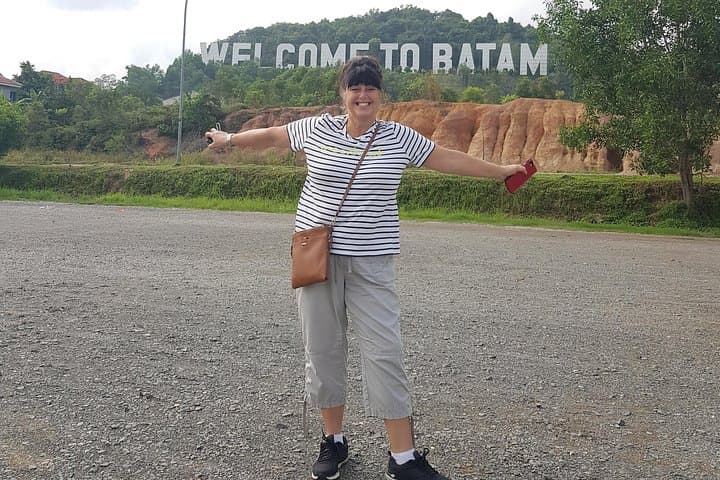
A warm, humid breeze meets the windshield as the bus pulls away from Batam Centre and Dora, an English-speaking guide, begins to lay out the day. Streets open into coastal panoramas; the sea pushes a steady rhythm against concrete and mangrove roots. The first stop, the Welcome to Batam Monument, provides a quick orientation—an introduction to an island shaped by shipping lanes, industry and the tide between Singapore and Indonesia.
Verified experiences and guided adventures in the surrounding area.
Operated by Dora · Batam, Riau Islands
A warm, humid breeze meets the windshield as the bus pulls away from Batam Centre and Dora, an English-speaking guide, begins to lay out the day. Streets open into coastal panoramas; the sea pushes a steady rhythm against concrete and mangrove roots. The first stop, the Welcome to Batam Monument, provides a quick orientation—an introduction to an island shaped by shipping lanes, industry and the tide between Singapore and Indonesia.
From there the route bends toward Nongsa and Pandang Tak Jemu, a mangrove conservation area where black and red mangroves earn their keep and troop-hopping monkeys watch visitors with practiced nonchalance. Geologically, Batam is low and volcanic in origin, its shoreline a mix of reclaimed industrial flats and natural creek mouths where sediment and sea meet. Culture here is pragmatic: markets like Penuin trade daily foods and herbal remedies; small warungs serve spicy ikan bakar and kopi O to offset long ferry schedules.
Later the bus crosses toward Barelang Bridge, an engineering landmark from the 1990s that marks the archipelago’s modern ambitions and the SIJORI economic links to neighboring Singapore. Harbourbay’s promenade makes for an evening watchpoint—on clear days Singapore’s skyline appears like a companion across the water.
Practical guidance: bring lightweight, breathable layers, insect protection for mangrove walks, and enough water for heat and humidity. Expect multiple short stops, modest walking on flat boardwalks or market alleys, and an easy-paced day that mixes urban snapshots with short nature forays. Photographers should time the Harbourbay stop for golden-hour light; those sensitive to heat should choose morning departures.
easy.
3–8 hours.
Suitable for all fitness levels; itinerary involves short, flat walks and market browsing.
Pickup logistics are arranged at booking—most itineraries coordinate pickup points near Batam Centre ferry terminal; confirm your arrival time when you reserve.
Walking is limited to short boardwalks, market lanes and viewpoints—expect mostly flat surfaces and brief on-foot stops.
Yes; many travelers take a morning ferry from Singapore to Batam and join a 3–8 hour private tour the same day, depending on ferry schedules.
Yes—Penuin Market and Harbourbay offer local snacks, dried seafood and small crafts; bring cash for quicker transactions.
Barelang Bridge, constructed in the 1990s, is a modern emblem of Batam’s push to link islands and boost regional trade under the SIJORI cooperation with Singapore.
Pandang Tak Jemu highlights local mangrove conservation efforts—visitors should stick to boardwalks, avoid feeding wildlife and respect signage to protect fragile root systems.
Dora operates guided outdoor trips and adventures with an emphasis on safety, stewardship, and memorable experiences.
A warm, humid breeze meets the windshield as the bus pulls away from Batam Centre and Dora, an English-speaking guide, begins to lay out the day. Streets open into coastal panoramas; the sea pushes a steady rhythm against concrete and mangrove roots. The first stop, the Welcome to Batam Monument, provides a quick orientation—an introduction to an island shaped by shipping lanes, industry and the tide between Singapore and Indonesia.
A warm, humid breeze meets the windshield as the bus pulls away from Batam Centre and Dora, an English-speaking guide, begins to lay out the day. Streets open into coastal panoramas; the sea pushes a steady rhythm against concrete and mangrove roots. The first stop, the Welcome to Batam Monument, provides a quick orientation—an introduction to an island shaped by shipping lanes, industry and the tide between Singapore and Indonesia.
From there the route bends toward Nongsa and Pandang Tak Jemu, a mangrove conservation area where black and red mangroves earn their keep and troop-hopping monkeys watch visitors with practiced nonchalance. Geologically, Batam is low and volcanic in origin, its shoreline a mix of reclaimed industrial flats and natural creek mouths where sediment and sea meet. Culture here is pragmatic: markets like Penuin trade daily foods and herbal remedies; small warungs serve spicy ikan bakar and kopi O to offset long ferry schedules.
Later the bus crosses toward Barelang Bridge, an engineering landmark from the 1990s that marks the archipelago’s modern ambitions and the SIJORI economic links to neighboring Singapore. Harbourbay’s promenade makes for an evening watchpoint—on clear days Singapore’s skyline appears like a companion across the water.
Practical guidance: bring lightweight, breathable layers, insect protection for mangrove walks, and enough water for heat and humidity. Expect multiple short stops, modest walking on flat boardwalks or market alleys, and an easy-paced day that mixes urban snapshots with short nature forays. Photographers should time the Harbourbay stop for golden-hour light; those sensitive to heat should choose morning departures.