THE ADVENTURE COLLECTIVE® · Independent discovery and booking for outdoor travel

An all-day guided hike from Puerto Natales to Mirador Base Torres: a demanding 18 km round-trip that climbs through lenga forest to a glacial lagoon and the iconic granite towers. Expect dramatic weather, steep scree sections, and unforgettable summit-side views.
An all-day guided hike from Puerto Natales to Mirador Base Torres: a demanding 18 km round-trip that climbs through lenga forest to a glacial lagoon and the iconic granite towers. Expect dramatic weather, steep scree sections, and unforgettable summit-side views.
You leave Puerto Natales before dawn, the minivan humming as the steppe slides past—flat, wind-scoured grasslands that give way to serrated silhouettes of the Paine massif. After roughly two hours the road narrows and the bus drops you at the trailhead. The guide gathers the group, hands out a quick briefing, and points to the old wooden bridge where the Ascencio River dares you across; downstream the water glares cold-blue and urgent.
Verified experiences and guided adventures in the surrounding area.
Operated by Typ Tour · Puerto Natales, Magallanes Region
You leave Puerto Natales before dawn, the minivan humming as the steppe slides past—flat, wind-scoured grasslands that give way to serrated silhouettes of the Paine massif. After roughly two hours the road narrows and the bus drops you at the trailhead. The guide gathers the group, hands out a quick briefing, and points to the old wooden bridge where the Ascencio River dares you across; downstream the water glares cold-blue and urgent.
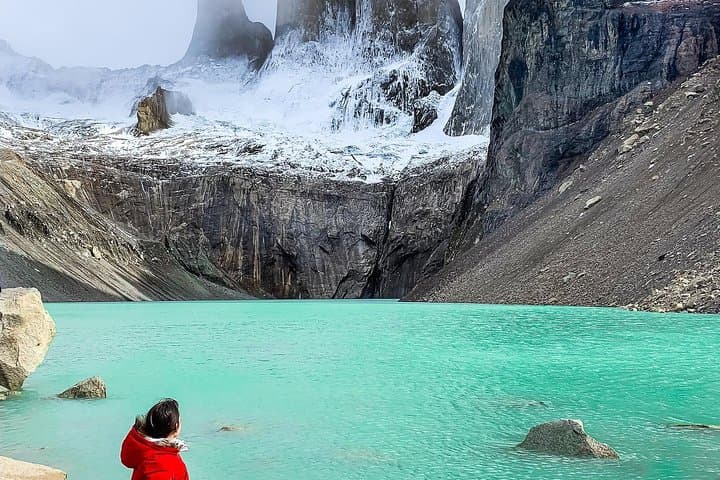
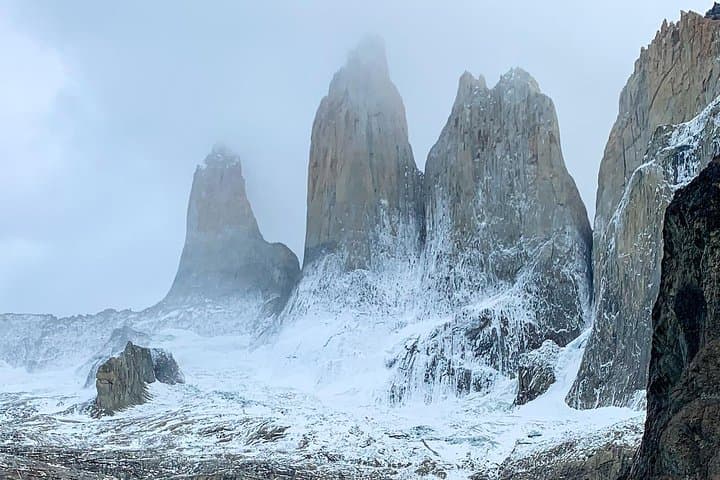
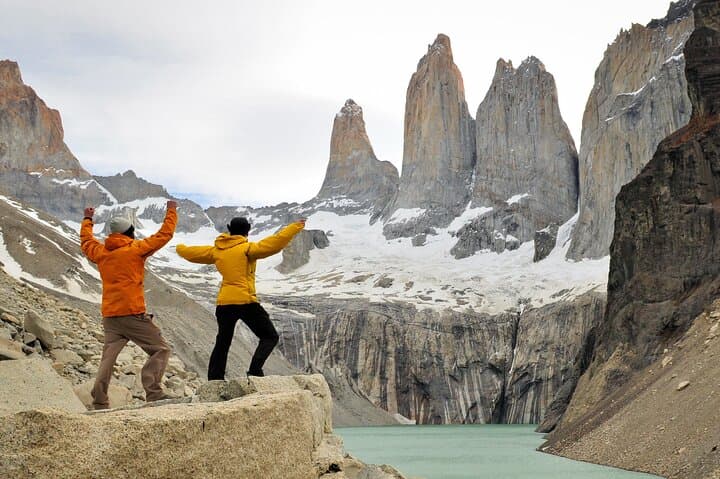
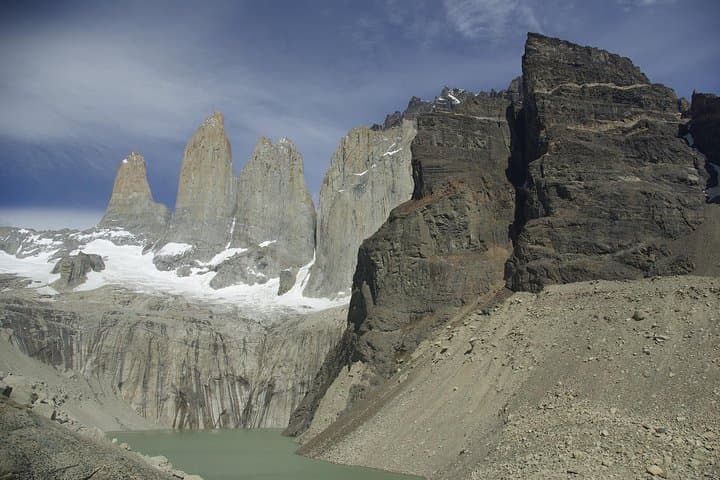
The path eases through a forest of lenga, trunks lacquered with lichen, each breath a sharp inhale of Patagonian air. For the first hour the trail is steady, then the slope steepens toward Camping El Chileno—an oasis of tents and windbreaks—and from there the track turns earnest. Stepping stones and exposed roots give way to loose scree; the trail lunges at the skyline. In about 30 minutes from the upper camp you arrive at Mirador Base Torres, 700 meters above the valley, where a glacial lagoon rests like a mirror and the three granite towers rise, austere and unblinking.
Geology writes itself here: the towers are the exposed cores of ancient magma intrusions, sharpened by glaciers and time into vertical monuments. The area is part of Torres del Paine National Park, created in the mid-20th century and now a UNESCO-recognized landscape, where gaucho history and scientific study meet in the wind. Local guides will point out Nido de Cóndores and La Peineta ridgelines, and explain how seasonal swells in the river and human traffic shape trail maintenance plans.
Practical footnotes matter: expect a demanding full day—roughly 18 km round-trip with about 800–900 m of elevation gain depending on starting point—and plan for 12–14 hours door-to-door including transfers from Puerto Natales. The operator supplies transport, a bilingual guide and trekking poles, and a boxed lunch to eat at the viewpoint. Weather can flip from bright sun to sleet in an hour; layers, waterproof gear and sturdy boots are non-negotiable.
Pace the climb, drink often (the air is dry), and keep an eye on foot placement on the final rocky pitches. Photography rewards patience: wait for low-angle light on the towers and for moraine patterns in the lagoon. Return follows the same route, the river pushing you back toward the bridge and, eventually, Puerto Natales—usually arriving in the evening. This is a classic Patagonia day: raw, physical, and uncompromisingly scenic—one that asks for preparation and repays it with a view you won’t forget.
challenging.
12–14 hours.
Suitable for hikers with good aerobic fitness and prior day-hike experience; regular hill walking and stair training recommended.
The hike is about 18 km round-trip with roughly 800–900 meters of elevation gain from the trailhead most operators use; plan for 12–14 hours including transfers.
Yes—this tour includes a bilingual (English/Spanish) guide, transport from Puerto Natales, trekking poles and a boxed lunch.
People need a moderate-to-good fitness level; those with knee, hip or serious cardiovascular issues are not recommended to join.
Waterproof, high-ankle hiking boots with good tread are best for muddy forest sections and the loose rock near the summit.
Yes—Torres del Paine charges an entrance fee (varies by season and nationality); confirm current rates and payment methods in advance.
Tours may be cancelled or rerouted for safety; operators typically allow refunds or rescheduling if poor weather prevents a safe hike.
Torres del Paine was established as a national park in the mid-20th century; its granite towers are the eroded cores of ancient magma intrusions reshaped by glaciers.
High visitor numbers stress fragile soils and vegetation; stick to the marked trail, pack out all waste, and follow guide instructions to minimize impact.
Typ Tour operates guided outdoor trips and adventures with an emphasis on safety, stewardship, and memorable experiences.
You leave Puerto Natales before dawn, the minivan humming as the steppe slides past—flat, wind-scoured grasslands that give way to serrated silhouettes of the Paine massif. After roughly two hours the road narrows and the bus drops you at the trailhead. The guide gathers the group, hands out a quick briefing, and points to the old wooden bridge where the Ascencio River dares you across; downstream the water glares cold-blue and urgent.
You leave Puerto Natales before dawn, the minivan humming as the steppe slides past—flat, wind-scoured grasslands that give way to serrated silhouettes of the Paine massif. After roughly two hours the road narrows and the bus drops you at the trailhead. The guide gathers the group, hands out a quick briefing, and points to the old wooden bridge where the Ascencio River dares you across; downstream the water glares cold-blue and urgent.
The path eases through a forest of lenga, trunks lacquered with lichen, each breath a sharp inhale of Patagonian air. For the first hour the trail is steady, then the slope steepens toward Camping El Chileno—an oasis of tents and windbreaks—and from there the track turns earnest. Stepping stones and exposed roots give way to loose scree; the trail lunges at the skyline. In about 30 minutes from the upper camp you arrive at Mirador Base Torres, 700 meters above the valley, where a glacial lagoon rests like a mirror and the three granite towers rise, austere and unblinking.
Geology writes itself here: the towers are the exposed cores of ancient magma intrusions, sharpened by glaciers and time into vertical monuments. The area is part of Torres del Paine National Park, created in the mid-20th century and now a UNESCO-recognized landscape, where gaucho history and scientific study meet in the wind. Local guides will point out Nido de Cóndores and La Peineta ridgelines, and explain how seasonal swells in the river and human traffic shape trail maintenance plans.
Practical footnotes matter: expect a demanding full day—roughly 18 km round-trip with about 800–900 m of elevation gain depending on starting point—and plan for 12–14 hours door-to-door including transfers from Puerto Natales. The operator supplies transport, a bilingual guide and trekking poles, and a boxed lunch to eat at the viewpoint. Weather can flip from bright sun to sleet in an hour; layers, waterproof gear and sturdy boots are non-negotiable.
Pace the climb, drink often (the air is dry), and keep an eye on foot placement on the final rocky pitches. Photography rewards patience: wait for low-angle light on the towers and for moraine patterns in the lagoon. Return follows the same route, the river pushing you back toward the bridge and, eventually, Puerto Natales—usually arriving in the evening. This is a classic Patagonia day: raw, physical, and uncompromisingly scenic—one that asks for preparation and repays it with a view you won’t forget.