THE ADVENTURE COLLECTIVE® · Independent discovery and booking for outdoor travel

A full-day guided trek from Puerto Natales to Base Las Torres that winds through lenga forest, glacial moraine and steep switchbacks to a jaw-dropping view of the three towers. Expect long climbs, variable weather and a 10–12 hour outing with box lunch included.
A full-day guided trek from Puerto Natales to Base Las Torres that winds through lenga forest, glacial moraine and steep switchbacks to a jaw-dropping view of the three towers. Expect long climbs, variable weather and a 10–12 hour outing with box lunch included.
You step out before dawn in Puerto Natales, the bus light slicing the Patagonian dark as the Andes silhouette grows. Two hours later the Asencio Valley opens: a river daring you downstream, lenga trees shivering with each gust, and a trail that climbs in close, rhythmical switchbacks toward the copper spires known as the Torres.
Verified experiences and guided adventures in the surrounding area.
Operated by TAC Turismo · Puerto Natales, Magallanes y la Antártica Chilena
You step out before dawn in Puerto Natales, the bus light slicing the Patagonian dark as the Andes silhouette grows. Two hours later the Asencio Valley opens: a river daring you downstream, lenga trees shivering with each gust, and a trail that climbs in close, rhythmical switchbacks toward the copper spires known as the Torres.
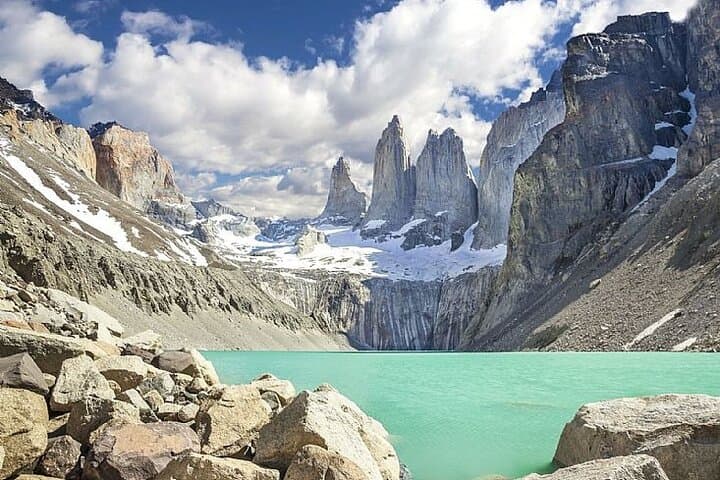
The route follows paths carved under former glaciers of Monte Almirante Nieto, across moraine and volcanic rock, with a long stand of lenga forest at Camping El Chileno. Geologically the towers are granite intrusions exposed by erosion — sheer vertical faces that rise from a glacial lake carved during the last ice age. Culturally, the massif has been a waypoint for gaucho history and modern Chilean conservation, and the national park — established in 1959 — protects both Andean fauna and fragile peatlands.
Expect 10–12 hours total, sustained ascents and descents, and sections where the trail narrows beside rushing streams. Your guide times breaks at the 700 m viewpoint and the lagoon at the eastern base, where box lunch and a long look are standard. The operators commonly provide crampons and a flashlight when conditions demand them; buy park entrance beforehand and carry your own layered clothing, water, and sturdy boots.
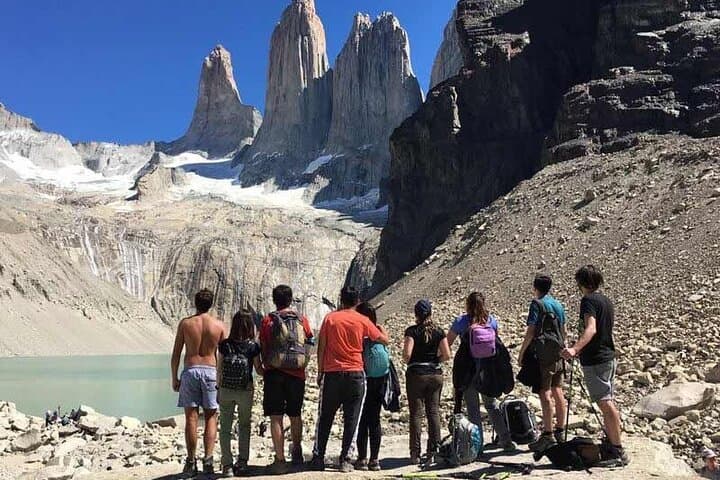
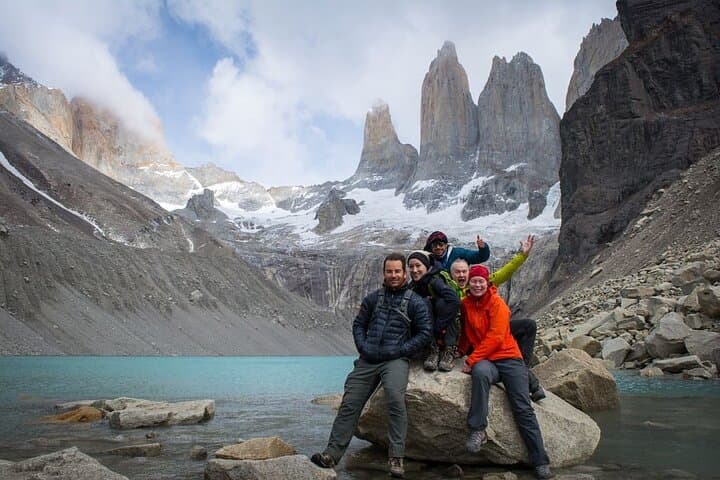
Plan for wind and quick weather changes, start early to avoid afternoon storms, and respect marked trails to protect cushion plants and nesting condors. The payoff is immediate: the three towers rising, light shifting across the lake, and a quiet so big it pushes you forward.
challenging.
10–12 hours.
Should be in good aerobic shape and comfortable with sustained uphill hiking and repeated elevation changes.
Yes — tickets are required and it's recommended to purchase them before the tour to avoid lines at the park gate.
The full outing is long (10–12 hours) with sustained uphill sections; it’s challenging but suitable for hikers with good fitness and prior day-hike experience.
Guides commonly carry trekking poles and can provide crampons if trail conditions require them, but bring your own poles and footwear when possible.
Operators may cancel or alter the itinerary for safety in severe weather; the cancellation policy typically allows refunds if the tour is cancelled due to weather.
Torres del Paine National Park was established in 1959 to protect the unique glacial-andes landscape and has long been part of regional gaucho culture.
The park enforces trail use and fire restrictions; stick to marked paths and pack out waste to protect fragile alpine vegetation and peatlands.
TAC Turismo operates guided outdoor trips and adventures with an emphasis on safety, stewardship, and memorable experiences.
You step out before dawn in Puerto Natales, the bus light slicing the Patagonian dark as the Andes silhouette grows. Two hours later the Asencio Valley opens: a river daring you downstream, lenga trees shivering with each gust, and a trail that climbs in close, rhythmical switchbacks toward the copper spires known as the Torres.
You step out before dawn in Puerto Natales, the bus light slicing the Patagonian dark as the Andes silhouette grows. Two hours later the Asencio Valley opens: a river daring you downstream, lenga trees shivering with each gust, and a trail that climbs in close, rhythmical switchbacks toward the copper spires known as the Torres.
The route follows paths carved under former glaciers of Monte Almirante Nieto, across moraine and volcanic rock, with a long stand of lenga forest at Camping El Chileno. Geologically the towers are granite intrusions exposed by erosion — sheer vertical faces that rise from a glacial lake carved during the last ice age. Culturally, the massif has been a waypoint for gaucho history and modern Chilean conservation, and the national park — established in 1959 — protects both Andean fauna and fragile peatlands.
Expect 10–12 hours total, sustained ascents and descents, and sections where the trail narrows beside rushing streams. Your guide times breaks at the 700 m viewpoint and the lagoon at the eastern base, where box lunch and a long look are standard. The operators commonly provide crampons and a flashlight when conditions demand them; buy park entrance beforehand and carry your own layered clothing, water, and sturdy boots.
Plan for wind and quick weather changes, start early to avoid afternoon storms, and respect marked trails to protect cushion plants and nesting condors. The payoff is immediate: the three towers rising, light shifting across the lake, and a quiet so big it pushes you forward.