THE ADVENTURE COLLECTIVE® · Independent discovery and booking for outdoor travel

A compact, private shore excursion that takes you from Cagliari to Su Nuraxi in Barumini—an accessible window into Sardinia’s Bronze Age past. Expect guided archaeology, a visit to Casa Zapata, and countryside views on a five-hour round trip.
A compact, private shore excursion that takes you from Cagliari to Su Nuraxi in Barumini—an accessible window into Sardinia’s Bronze Age past. Expect guided archaeology, a visit to Casa Zapata, and countryside views on a five-hour round trip.
You step off the ship and the warm Sardinian air greets you—salt from the harbor mingling with thyme and sun-baked earth as the van slips inland. In under an hour the coastline’s blue gives way to low limestone hills and fields where the land seems older than language. The silhouette of Su Nuraxi appears: concentric towers of grey stone rising from a Bronze Age plan that still commands the plateau.
Verified experiences and guided adventures in the surrounding area.
Operated by Bitan Daily Tours · Barumini, Sardinia
You step off the ship and the warm Sardinian air greets you—salt from the harbor mingling with thyme and sun-baked earth as the van slips inland. In under an hour the coastline’s blue gives way to low limestone hills and fields where the land seems older than language. The silhouette of Su Nuraxi appears: concentric towers of grey stone rising from a Bronze Age plan that still commands the plateau.
Su Nuraxi was constructed by the Nuragic people around the 17th century BCE; it later evolved into a complex village with workshops, paved streets and a rudimentary sewage system. Excavations led by Professor Giovanni Lilliu in the 1950s revealed how the site bridged prehistoric life and later Mediterranean contacts. Geologically, the area sits on Cenozoic sedimentary rock; the dry climate preserved masonry but left agricultural terraces thin and rocky.
Culturally, Barumini village and Casa Zapata—a 16th-century Aragonese house built over earlier ruins—show the layering of Sardinian life from Bronze Age chiefs to medieval nobles. Local guides interpret inscriptions, everyday artifacts and the probable civic role of the nuraghe complex.
Practical guidance: wear sturdy shoes for uneven stone and short walks between ruins, carry water and sun protection, and allow at least two hours on-site to explore with a guide. If you arrive by cruise, plan your disembarkation so you reach the meeting point within an hour of docking—short turnaround times are standard. The route is accessible by minivan and returns to Cagliari in time for re-boarding, making it an efficient, culturally rich shore excursion.
moderate.
5–6 hours.
Moderate fitness: able to walk on uneven ground for 1–2 hours and board a minivan for the transfers.
The drive is about 35–45 minutes each way depending on traffic and exact docking location; the full excursion lasts roughly five hours.
Yes—admission to Su Nuraxi and Casa Zapata is included as part of the tour price.
Children are welcome but must be accompanied by an adult; infant seats are available for the minivan and infants may be required to sit on laps.
The operator requires cruise details at booking and allows a one-hour window after docking to meet the guide; refunds aren’t issued if you miss the tour due to late arrival of the ship.
Su Nuraxi is a Nuragic complex begun around the 17th century BCE; intensive excavations by Giovanni Lilliu in the 1950s revealed its village layout and long occupation.
The site is a UNESCO World Heritage Site with visitor controls—stay on paths, avoid touching masonry, and follow guide instructions to limit erosion and preserve fragile features.
Bitan Daily Tours operates guided outdoor trips and adventures with an emphasis on safety, stewardship, and memorable experiences.
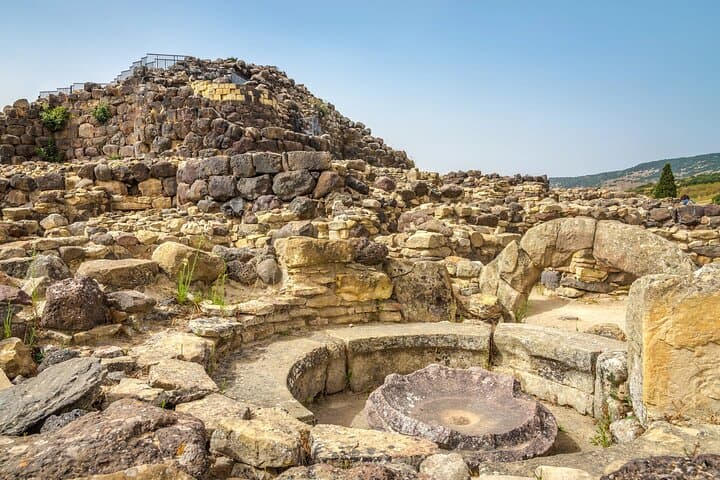
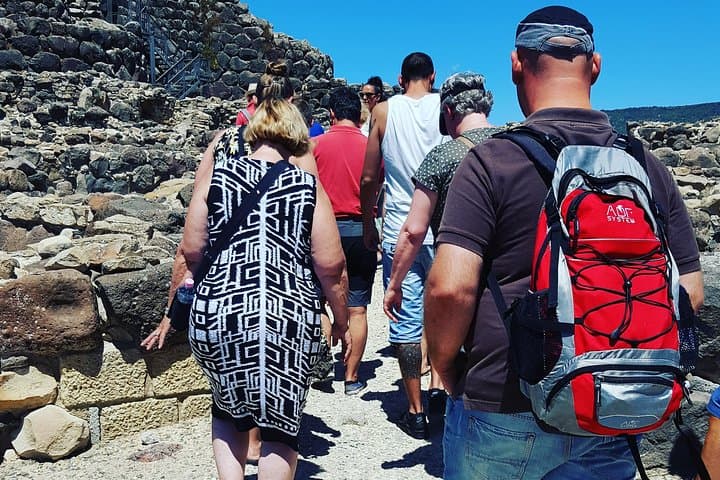
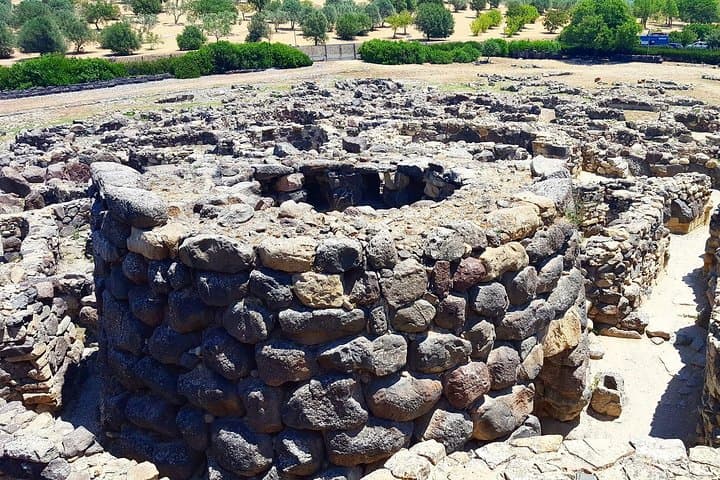
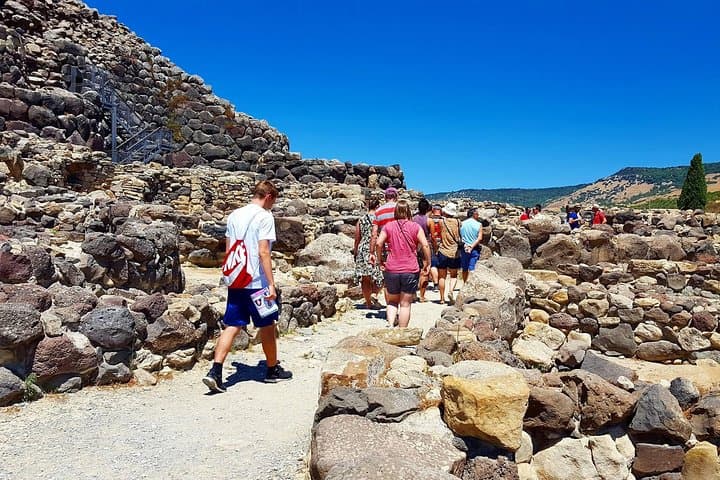
You step off the ship and the warm Sardinian air greets you—salt from the harbor mingling with thyme and sun-baked earth as the van slips inland. In under an hour the coastline’s blue gives way to low limestone hills and fields where the land seems older than language. The silhouette of Su Nuraxi appears: concentric towers of grey stone rising from a Bronze Age plan that still commands the plateau.
You step off the ship and the warm Sardinian air greets you—salt from the harbor mingling with thyme and sun-baked earth as the van slips inland. In under an hour the coastline’s blue gives way to low limestone hills and fields where the land seems older than language. The silhouette of Su Nuraxi appears: concentric towers of grey stone rising from a Bronze Age plan that still commands the plateau.
Su Nuraxi was constructed by the Nuragic people around the 17th century BCE; it later evolved into a complex village with workshops, paved streets and a rudimentary sewage system. Excavations led by Professor Giovanni Lilliu in the 1950s revealed how the site bridged prehistoric life and later Mediterranean contacts. Geologically, the area sits on Cenozoic sedimentary rock; the dry climate preserved masonry but left agricultural terraces thin and rocky.
Culturally, Barumini village and Casa Zapata—a 16th-century Aragonese house built over earlier ruins—show the layering of Sardinian life from Bronze Age chiefs to medieval nobles. Local guides interpret inscriptions, everyday artifacts and the probable civic role of the nuraghe complex.
Practical guidance: wear sturdy shoes for uneven stone and short walks between ruins, carry water and sun protection, and allow at least two hours on-site to explore with a guide. If you arrive by cruise, plan your disembarkation so you reach the meeting point within an hour of docking—short turnaround times are standard. The route is accessible by minivan and returns to Cagliari in time for re-boarding, making it an efficient, culturally rich shore excursion.