THE ADVENTURE COLLECTIVE® · Independent discovery and booking for outdoor travel

Step off the coast and into Bronze Age Sardinia: this half-day trip from Cagliari brings you to Su Nuraxi, the island’s most complete nuragic complex, with a guided tour of the ruins and the Casa Zapata Museum. Expect uneven stone paths, close-up architecture, and a concise lesson in an ancient island culture.
Step off the coast and into Bronze Age Sardinia: this half-day trip from Cagliari brings you to Su Nuraxi, the island’s most complete nuragic complex, with a guided tour of the ruins and the Casa Zapata Museum. Expect uneven stone paths, close-up architecture, and a concise lesson in an ancient island culture.
A narrow road slips away from Cagliari’s harbor traffic and the inland plain opens: low scrub, olive trees, and fields punctuated by ancient stones that seem to watch the passing van. By the time the bus pulls into Barumini, the silhouette of Su Nuraxi’s circular towers rises against a pale Sardinian sky — a cluster of dry-stone walls that still hold the shape of a community built three millennia ago.
Verified experiences and guided adventures in the surrounding area.
Operated by Escursì - experience sardinia · Barumini, Sardinia
A narrow road slips away from Cagliari’s harbor traffic and the inland plain opens: low scrub, olive trees, and fields punctuated by ancient stones that seem to watch the passing van. By the time the bus pulls into Barumini, the silhouette of Su Nuraxi’s circular towers rises against a pale Sardinian sky — a cluster of dry-stone walls that still hold the shape of a community built three millennia ago.
Su Nuraxi is the crown of the Nuragic civilization, whose stone towers and compact villages date largely to the Bronze Age (2nd–1st millennium B.C.). The complex’s towers, terraces and village traces reflect local geology and an economy tied to grazing and metalworking; UNESCO listed Su Nuraxi in 1997 for its outstanding archaeological value. Nearby, Casa Zapata Museum organizes finds and daily objects into archaeological, historical and ethnographic rooms that make modern Sardinian life feel like a living continuation of its past.
On this guided half-day tour you’ll move between monumental masonry and curated museum displays with local interpretation: the guide decodes architecture, explains excavation history and points out small details — stairways, storage niches, reused stones — that reveal how people lived here.
Practical notes: the site involves uneven stone paths and low steps; comfortable, grippy shoes are essential. The tour includes transfer from Piazza Yenne in Cagliari, lasts about four hours, and is best scheduled in the cooler morning or late afternoon in summer to avoid peak sun. Bring water, sun protection and respectful curiosity — photography is allowed but avoid climbing on masonry. The experience is short on climbing and long on context, ideal for travelers who want an accessible, interpretive window into Sardinia’s deep past.
easy.
4 hours.
Suitable for most fitness levels; requires steady footing for short walks over uneven ground.
The scheduled duration is about four hours including transfers; pickup and drop-off are from Piazza Yenne in Cagliari.
Su Nuraxi has uneven stone surfaces and low steps; full accessibility is limited — contact the operator for options and assistance.
The tour includes guided visits to Su Nuraxi and the Casa Zapata Museum; confirm ticketing details at booking as some entrance fees are managed locally.
Guides typically operate in the language specified at booking; check the tour listing for available languages and request special arrangements if needed.
Su Nuraxi represents the Nuragic civilization’s village-fortress model, with a central tower surrounded by an organized ring of houses and ancillary buildings; excavations here were among the first scientific digs on the island.
The complex is protected as a UNESCO World Heritage Site; visitors are asked to follow marked routes, avoid touching fragile masonry and minimize waste to reduce impact.
Escursì - experience sardinia operates guided outdoor trips and adventures with an emphasis on safety, stewardship, and memorable experiences.
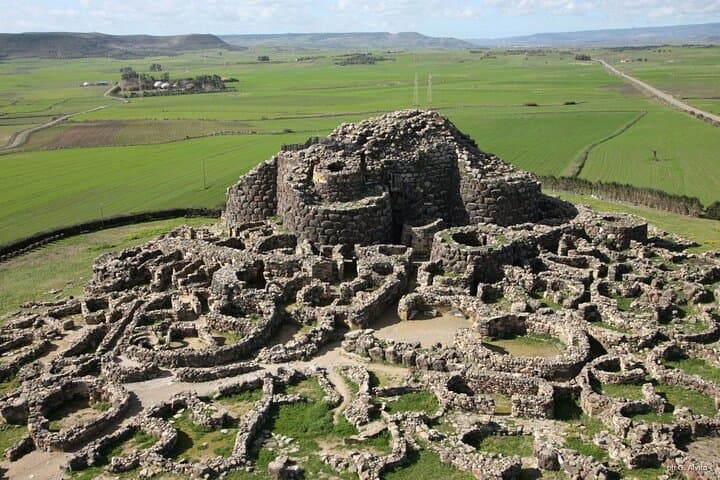
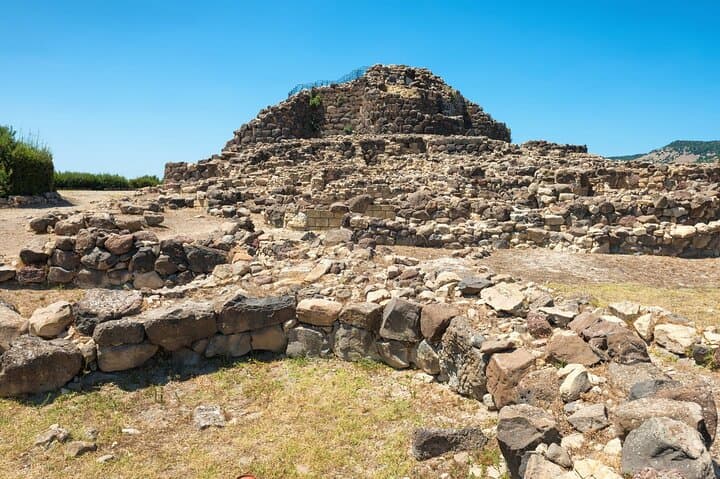
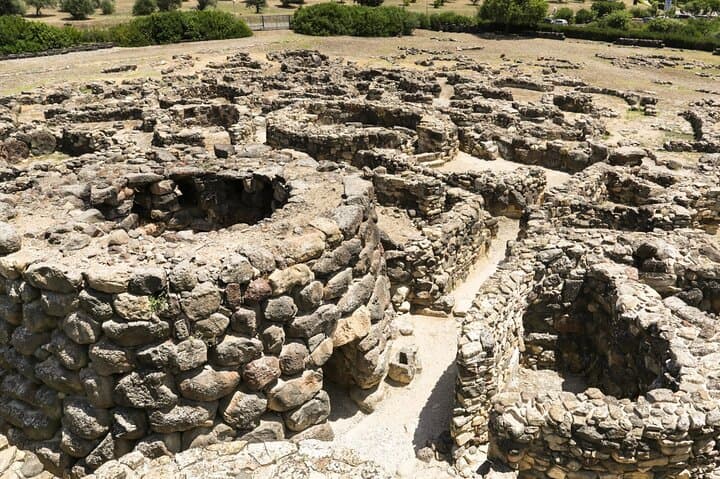
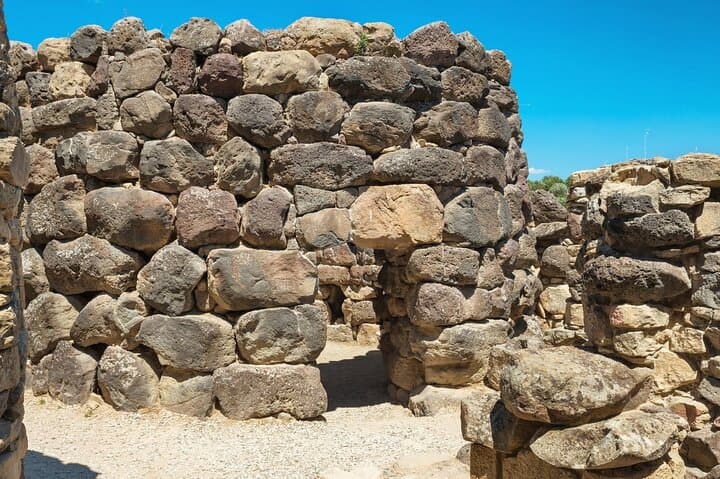
A narrow road slips away from Cagliari’s harbor traffic and the inland plain opens: low scrub, olive trees, and fields punctuated by ancient stones that seem to watch the passing van. By the time the bus pulls into Barumini, the silhouette of Su Nuraxi’s circular towers rises against a pale Sardinian sky — a cluster of dry-stone walls that still hold the shape of a community built three millennia ago.
A narrow road slips away from Cagliari’s harbor traffic and the inland plain opens: low scrub, olive trees, and fields punctuated by ancient stones that seem to watch the passing van. By the time the bus pulls into Barumini, the silhouette of Su Nuraxi’s circular towers rises against a pale Sardinian sky — a cluster of dry-stone walls that still hold the shape of a community built three millennia ago.
Su Nuraxi is the crown of the Nuragic civilization, whose stone towers and compact villages date largely to the Bronze Age (2nd–1st millennium B.C.). The complex’s towers, terraces and village traces reflect local geology and an economy tied to grazing and metalworking; UNESCO listed Su Nuraxi in 1997 for its outstanding archaeological value. Nearby, Casa Zapata Museum organizes finds and daily objects into archaeological, historical and ethnographic rooms that make modern Sardinian life feel like a living continuation of its past.
On this guided half-day tour you’ll move between monumental masonry and curated museum displays with local interpretation: the guide decodes architecture, explains excavation history and points out small details — stairways, storage niches, reused stones — that reveal how people lived here.
Practical notes: the site involves uneven stone paths and low steps; comfortable, grippy shoes are essential. The tour includes transfer from Piazza Yenne in Cagliari, lasts about four hours, and is best scheduled in the cooler morning or late afternoon in summer to avoid peak sun. Bring water, sun protection and respectful curiosity — photography is allowed but avoid climbing on masonry. The experience is short on climbing and long on context, ideal for travelers who want an accessible, interpretive window into Sardinia’s deep past.