THE ADVENTURE COLLECTIVE® · Independent discovery and booking for outdoor travel

Paddle into a limestone cathedral where the river becomes a dim corridor of stalactites and Mayan history. This half-day canoe tour from San Ignacio explores a ceremonial cave, ends with a swim and picnic, and offers a compact, guided look at Belize’s karst wilderness.
Paddle into a limestone cathedral where the river becomes a dim corridor of stalactites and Mayan history. This half-day canoe tour from San Ignacio explores a ceremonial cave, ends with a swim and picnic, and offers a compact, guided look at Belize’s karst wilderness.
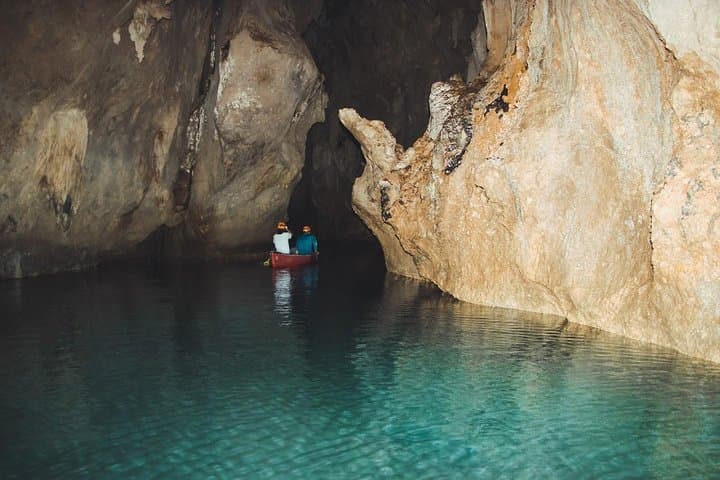
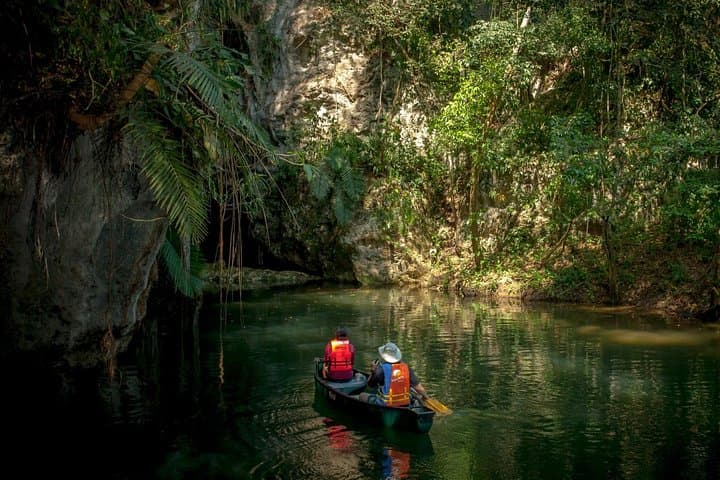
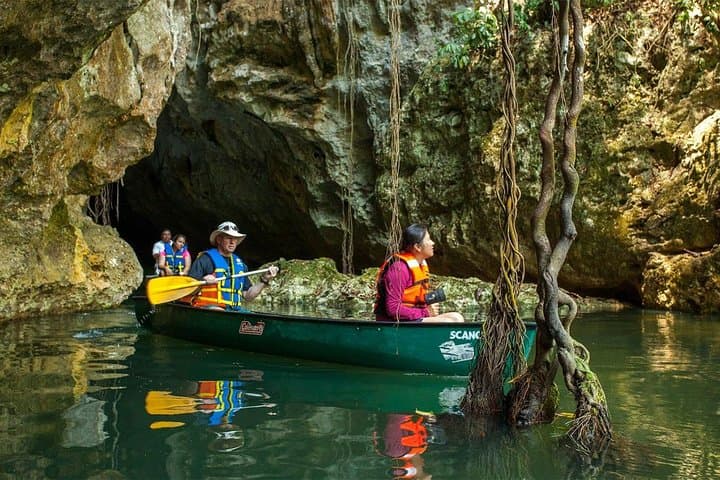
You push off into a green hush — the canoe slips into a tunnel of water and light, the jungle closing behind you until only the river and the low scrape of paddles remain. The cave roof lowers into a cathedral of stone: slick, ribbed ceilings drip into columns, and the boat's bow throws tiny reflections across ancient walls. At times the canyon squeezes, at times it opens to reveal a chamber large enough to echo. Guides keep the rhythm steady, pointing out crystalized flowstone and the ghostly outline of a stalagmite that looks like a Mayan altar.
Verified experiences and guided adventures in the surrounding area.
Operated by Tukan Shuttles & Adventures · San Ignacio, Cayo District
You push off into a green hush — the canoe slips into a tunnel of water and light, the jungle closing behind you until only the river and the low scrape of paddles remain. The cave roof lowers into a cathedral of stone: slick, ribbed ceilings drip into columns, and the boat's bow throws tiny reflections across ancient walls. At times the canyon squeezes, at times it opens to reveal a chamber large enough to echo. Guides keep the rhythm steady, pointing out crystalized flowstone and the ghostly outline of a stalagmite that looks like a Mayan altar.
Barton Creek Cave sits on karst limestone carved over millennia by a subterranean stream. Archaeologists first documented artifacts and human remains here in the late 20th century, confirming use as a ceremonial cave by the ancient Maya. In 1998 excavations turned up ceramics, a macabre necklace made from finger bones, and other ritual objects — evidence that this river was not just a passage but a place of offering and passage between worlds.
The trip itself is intimate: typical departures are a half-day, with morning and early-afternoon options that match Belize’s gentle climate. You’ll paddle about one mile of well-lit, guide-led passage inside an estimated 4.5-mile cave system, then return to the park for a swim and picnic if you choose. Along the approach the landscape changes — Mennonite farms open like patchwork fields, their straight lanes and wooden fences a contrast to the curving, secretive jungle surrounding the cave entrance.
Practical notes: tours include transport from San Ignacio accommodations, basic canoeing gear, snacks, and towels. Minimum height is 40 inches; guides stress honesty about medical conditions because the route visits remote areas. Group sizes are small — usually under ten — which limits impact and keeps the experience personal.
Plan for damp, cool interior air and squelchy, uneven footing at the shore. Wear quick-dry clothing and water shoes, pack insect repellent and sunscreen, and bring a waterproof camera or case: light inside the cave is limited and flashes can wash out delicate color. Timing matters; morning trips are easier on visibility and insects, while later departures give warmer air for the post-tour swim.
Respect the site: the cave’s geology and archaeological deposits are fragile. Stay with your guide, avoid touching formations, and follow local rules about photography near human remains. By traveling with a licensed operator you help sustain local stewardship programs — and you leave the cave ready for the next group to feel its chill, its hush, and the slow patience of stone.
moderate.
3–5 hours.
Light to moderate fitness; you should be able to sit and paddle for short stretches and climb slippery banks with help from guides.
Guided canoe passages cover roughly one mile inside Barton Creek Cave; the overall tour time including transport and park time is typically 3–5 hours.
No swimming is required to complete the cave canoe, though the tour often finishes with an optional swim and picnic at the park.
There is a minimum height requirement of 40 inches; operators list the tour as suitable for most fitness levels but check with guides about very young children.
Yes — guides provide a concise history of Mayan use and interpret geological features, but handling or touching archaeological material is not allowed.
Photography is allowed but use of strong flash may be discouraged in sensitive areas; follow your guide’s instructions to avoid disturbing features and artifacts.
Yes — pickup is available from many San Ignacio hotels and Airbnbs; properties outside town limits may incur an additional fee.
Barton Creek Cave was used by the Maya for ritual purposes; excavations in the late 20th century uncovered human remains, ceramics, and ritual objects that indicate ceremonial offerings.
The cave’s formations and archaeological deposits are fragile; guided tours, small group sizes, and strict no-touch rules help preserve the site for research and future visitors.
Tukan Shuttles & Adventures operates guided outdoor trips and adventures with an emphasis on safety, stewardship, and memorable experiences.
You push off into a green hush — the canoe slips into a tunnel of water and light, the jungle closing behind you until only the river and the low scrape of paddles remain. The cave roof lowers into a cathedral of stone: slick, ribbed ceilings drip into columns, and the boat's bow throws tiny reflections across ancient walls. At times the canyon squeezes, at times it opens to reveal a chamber large enough to echo. Guides keep the rhythm steady, pointing out crystalized flowstone and the ghostly outline of a stalagmite that looks like a Mayan altar.
You push off into a green hush — the canoe slips into a tunnel of water and light, the jungle closing behind you until only the river and the low scrape of paddles remain. The cave roof lowers into a cathedral of stone: slick, ribbed ceilings drip into columns, and the boat's bow throws tiny reflections across ancient walls. At times the canyon squeezes, at times it opens to reveal a chamber large enough to echo. Guides keep the rhythm steady, pointing out crystalized flowstone and the ghostly outline of a stalagmite that looks like a Mayan altar.
Barton Creek Cave sits on karst limestone carved over millennia by a subterranean stream. Archaeologists first documented artifacts and human remains here in the late 20th century, confirming use as a ceremonial cave by the ancient Maya. In 1998 excavations turned up ceramics, a macabre necklace made from finger bones, and other ritual objects — evidence that this river was not just a passage but a place of offering and passage between worlds.
The trip itself is intimate: typical departures are a half-day, with morning and early-afternoon options that match Belize’s gentle climate. You’ll paddle about one mile of well-lit, guide-led passage inside an estimated 4.5-mile cave system, then return to the park for a swim and picnic if you choose. Along the approach the landscape changes — Mennonite farms open like patchwork fields, their straight lanes and wooden fences a contrast to the curving, secretive jungle surrounding the cave entrance.
Practical notes: tours include transport from San Ignacio accommodations, basic canoeing gear, snacks, and towels. Minimum height is 40 inches; guides stress honesty about medical conditions because the route visits remote areas. Group sizes are small — usually under ten — which limits impact and keeps the experience personal.
Plan for damp, cool interior air and squelchy, uneven footing at the shore. Wear quick-dry clothing and water shoes, pack insect repellent and sunscreen, and bring a waterproof camera or case: light inside the cave is limited and flashes can wash out delicate color. Timing matters; morning trips are easier on visibility and insects, while later departures give warmer air for the post-tour swim.
Respect the site: the cave’s geology and archaeological deposits are fragile. Stay with your guide, avoid touching formations, and follow local rules about photography near human remains. By traveling with a licensed operator you help sustain local stewardship programs — and you leave the cave ready for the next group to feel its chill, its hush, and the slow patience of stone.