THE ADVENTURE COLLECTIVE® · Independent discovery and booking for outdoor travel

Canoe into a living piece of Mayan history on Barton Creek, then wander the trails of a private butterfly reserve on the Macal River. This full-day tour combines cave geology, river wildlife, and local cultural glimpses around San Ignacio.
Canoe into a living piece of Mayan history on Barton Creek, then wander the trails of a private butterfly reserve on the Macal River. This full-day tour combines cave geology, river wildlife, and local cultural glimpses around San Ignacio.
You push off from a muddy bank under a roof of vines and the world narrows to the sound of paddles and water against wood. The canoe slides into Barton Creek and the light changes again—filtered, green, held back by cathedral-high limestone. Stalactites hang like geological icicles and pallid stalagmites rise from the current as if the cave itself keeps time in slow, mineral breaths. The guide’s headlamp dots the chamber walls; beyond its cone the cave keeps a private dark.
Verified experiences and guided adventures in the surrounding area.
Operated by Tukan Shuttles & Adventures · San Ignacio, Cayo District
You push off from a muddy bank under a roof of vines and the world narrows to the sound of paddles and water against wood. The canoe slides into Barton Creek and the light changes again—filtered, green, held back by cathedral-high limestone. Stalactites hang like geological icicles and pallid stalagmites rise from the current as if the cave itself keeps time in slow, mineral breaths. The guide’s headlamp dots the chamber walls; beyond its cone the cave keeps a private dark.
Barton Creek was a Mayan ceremonial route. Archaeologists in the late 20th century mapped pottery and ritual artifacts in its chambers, evidence that this waterway was more than a travel corridor— it was a passage between worlds. Geologically, the cave is carved from Cretaceous limestone; floodwaters sculpted its vaulted ceilings and left behind the calcite curtains and flowstone you now trace with a canoe. From the river mouth you’ll glimpse the fringes of the Mennonite farms that shape Cayo’s cultural landscape—rows of produce and wooden stables that contrast the wildness of the Macal River.
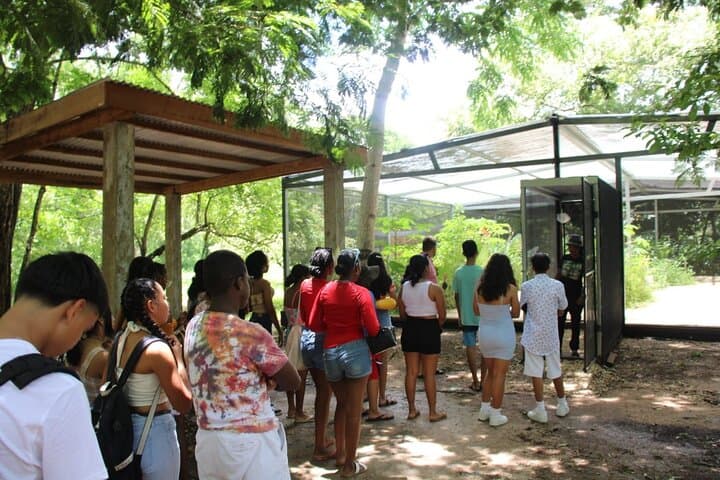
The second act of the day opens at Midas Belize Butterfly Farm, a 30-acre reserve where the river widens, sunlight meets leaf, and wings turn the air into motion. The farm’s trails thread through secondary forest habitat where toucans and quetzal call, iguanas warm on limestone, and otters slide from bank to current. Guides point out the lifecycle of butterflies and the native plantings that support them, framing the ecology that links cave, river, and forest.
Practical guidance sharpens the experience: the tour typically covers about one mile of navigable cave—part of a system measured at roughly 4.5 miles—with canoe travel and short trail walks at the butterfly reserve. Expect 4–8 hours depending on group size and pickup logistics; the operator supplies canoes, life jackets, helmets, and headlamps. Because cave floors and riverbanks can be slick, wear sturdy, closed-toe footwear you don’t mind getting wet, and bring a dry change of clothes. Bug spray and reef-safe sunscreen matter; silica and calcium can sting exposed skin when you brush low ceilings.
The route is suitable for most fitness levels but requires basic balance and the ability to sit in a canoe for stretches. Minimum group size is two and there is a 40-inch height rule for safety. Timing matters—morning departures are cooler and quieter—and photography works best with a fast lens and a willingness to embrace low-light conditions rather than fight them.
Between cave darkness and sunlit wings, the tour offers a compact, layered look at Cayo’s natural history: water that shaped rock, people who used the passage, and the living network of species that still depend on the Macal River. It’s a day designed for someone who wants context with their adrenaline and detail with their wonder.
moderate.
4–8 hours.
Good for travelers with basic mobility and balance; must be able to sit in a canoe and walk short uneven trails.
The tour includes roughly one mile of explored cave passage by canoe; the wider cave system measures about 4.5 miles but most operators keep to the navigable sections.
Yes—children over 40 inches in height can participate, but the tour requires canoe balance and adherence to safety gear; infants must sit on laps and specialized seats may be available.
The operator supplies canoe, life jacket, helmet, headlamp, lunch, refreshments, and towels for full-day tours.
Expect occasional splashes and the possibility of damp conditions in the cave and along riverbanks—bring a change of clothes.
Basic facilities are available at tour start points and the butterfly farm, but facilities inside the cave are obviously not available.
Yes—operators may cancel in unsafe weather or high water for safety; cancelation policies typically require 24 hours for a full refund.
The cave served as a ceremonial site for the ancient Maya; archaeological finds document offerings and pottery in submerged chambers.
The cave and reserve rely on responsible river management and limited-impact visitation; stay on trails, don’t touch formations, and avoid polluting the Macal River.
Tukan Shuttles & Adventures operates guided outdoor trips and adventures with an emphasis on safety, stewardship, and memorable experiences.
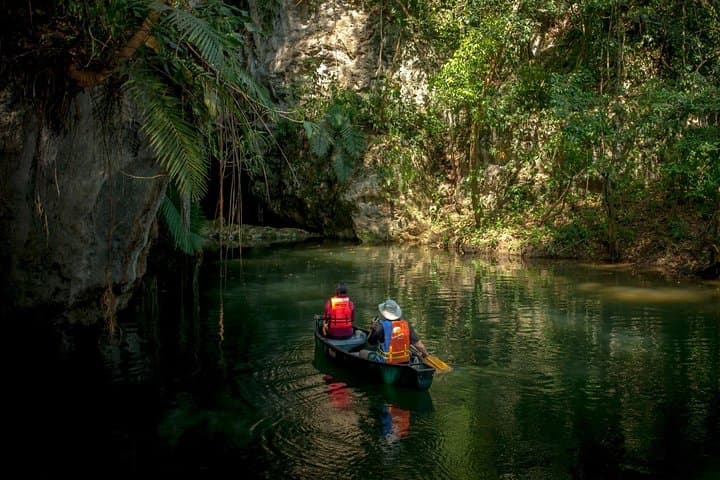
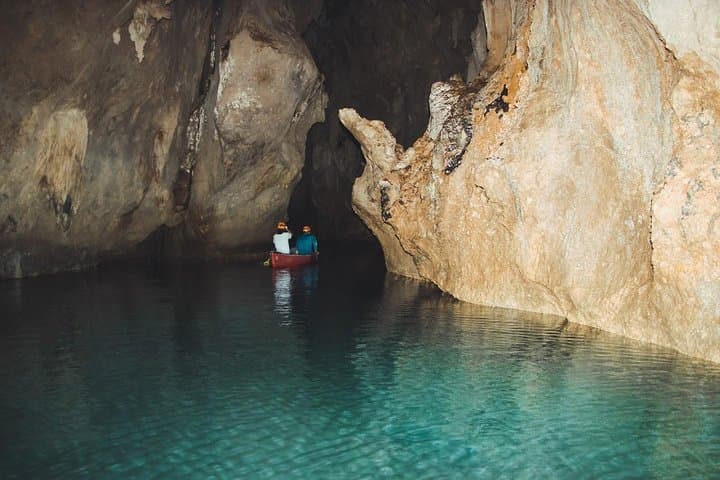
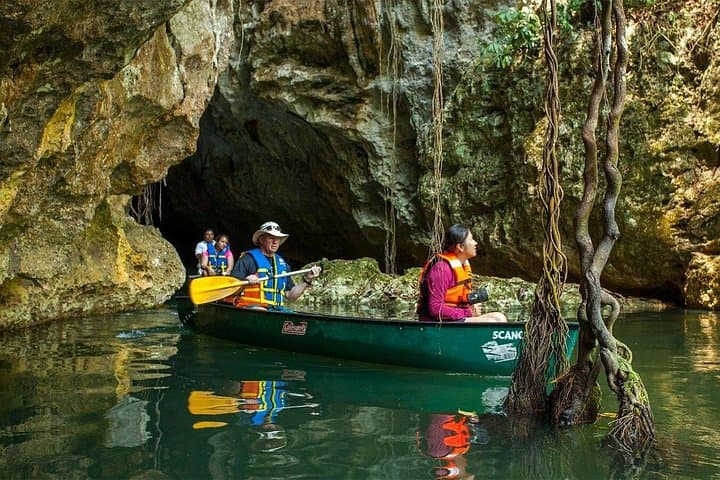
You push off from a muddy bank under a roof of vines and the world narrows to the sound of paddles and water against wood. The canoe slides into Barton Creek and the light changes again—filtered, green, held back by cathedral-high limestone. Stalactites hang like geological icicles and pallid stalagmites rise from the current as if the cave itself keeps time in slow, mineral breaths. The guide’s headlamp dots the chamber walls; beyond its cone the cave keeps a private dark.
You push off from a muddy bank under a roof of vines and the world narrows to the sound of paddles and water against wood. The canoe slides into Barton Creek and the light changes again—filtered, green, held back by cathedral-high limestone. Stalactites hang like geological icicles and pallid stalagmites rise from the current as if the cave itself keeps time in slow, mineral breaths. The guide’s headlamp dots the chamber walls; beyond its cone the cave keeps a private dark.
Barton Creek was a Mayan ceremonial route. Archaeologists in the late 20th century mapped pottery and ritual artifacts in its chambers, evidence that this waterway was more than a travel corridor— it was a passage between worlds. Geologically, the cave is carved from Cretaceous limestone; floodwaters sculpted its vaulted ceilings and left behind the calcite curtains and flowstone you now trace with a canoe. From the river mouth you’ll glimpse the fringes of the Mennonite farms that shape Cayo’s cultural landscape—rows of produce and wooden stables that contrast the wildness of the Macal River.
The second act of the day opens at Midas Belize Butterfly Farm, a 30-acre reserve where the river widens, sunlight meets leaf, and wings turn the air into motion. The farm’s trails thread through secondary forest habitat where toucans and quetzal call, iguanas warm on limestone, and otters slide from bank to current. Guides point out the lifecycle of butterflies and the native plantings that support them, framing the ecology that links cave, river, and forest.
Practical guidance sharpens the experience: the tour typically covers about one mile of navigable cave—part of a system measured at roughly 4.5 miles—with canoe travel and short trail walks at the butterfly reserve. Expect 4–8 hours depending on group size and pickup logistics; the operator supplies canoes, life jackets, helmets, and headlamps. Because cave floors and riverbanks can be slick, wear sturdy, closed-toe footwear you don’t mind getting wet, and bring a dry change of clothes. Bug spray and reef-safe sunscreen matter; silica and calcium can sting exposed skin when you brush low ceilings.
The route is suitable for most fitness levels but requires basic balance and the ability to sit in a canoe for stretches. Minimum group size is two and there is a 40-inch height rule for safety. Timing matters—morning departures are cooler and quieter—and photography works best with a fast lens and a willingness to embrace low-light conditions rather than fight them.
Between cave darkness and sunlit wings, the tour offers a compact, layered look at Cayo’s natural history: water that shaped rock, people who used the passage, and the living network of species that still depend on the Macal River. It’s a day designed for someone who wants context with their adrenaline and detail with their wonder.