THE ADVENTURE COLLECTIVE® · Independent discovery and booking for outdoor travel

A full-day excursion from Puerto Ayora that pairs a brisk 115 m hike to a 360º viewpoint with snorkeling around Pinnacle Rock. Expect volcanic landscapes, playful sea lions, and a long, early start with conservation-focused guides.
A full-day excursion from Puerto Ayora that pairs a brisk 115 m hike to a 360º viewpoint with snorkeling around Pinnacle Rock. Expect volcanic landscapes, playful sea lions, and a long, early start with conservation-focused guides.
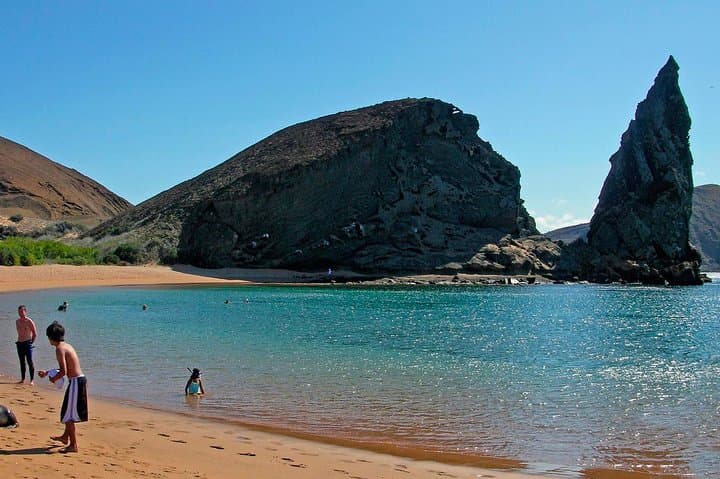
You step off the panga as the sun slips over the horizon and the silhouette of Pinnacle Rock slices the ocean into shadow and gold. Salt air and the thin rattle of small waves set the rhythm; guides move with practiced economy, distributing snorkeling gear and bottled water. The island itself waits like a small geologic stage—black lava flows, pale sand, and the stair-stepped volcanic spine that leads to the 115-meter viewpoint.
Verified experiences and guided adventures in the surrounding area.
Operated by Galapagos Tours Nature Galapagos & Ecuador · Puerto Ayora, Galápagos Province
You step off the panga as the sun slips over the horizon and the silhouette of Pinnacle Rock slices the ocean into shadow and gold. Salt air and the thin rattle of small waves set the rhythm; guides move with practiced economy, distributing snorkeling gear and bottled water. The island itself waits like a small geologic stage—black lava flows, pale sand, and the stair-stepped volcanic spine that leads to the 115-meter viewpoint.
Bartolome’s story is written in fire. The island is a young volcanic islet formed by lava flows and spatter cones—those bulbous, pocked mounds visible on the east side—evidence of fountains of viscous lava that cooled mid-flight. Charles Darwin visited the archipelago a century and a half ago; the same stark contrasts that intrigued him persist: volcanic rock, pioneer plants such as Tiquilia and Chamaesyce, and an ecosystem tightly adapted to salt, wind and isolation.
Culture here is practical and protective. The Galápagos National Park maintains strict rules—sticking to trails, no feeding wildlife, and limiting group sizes to minimize impact. Guides are bilingual and trained to interpret both the natural history and the island’s current conservation priorities.
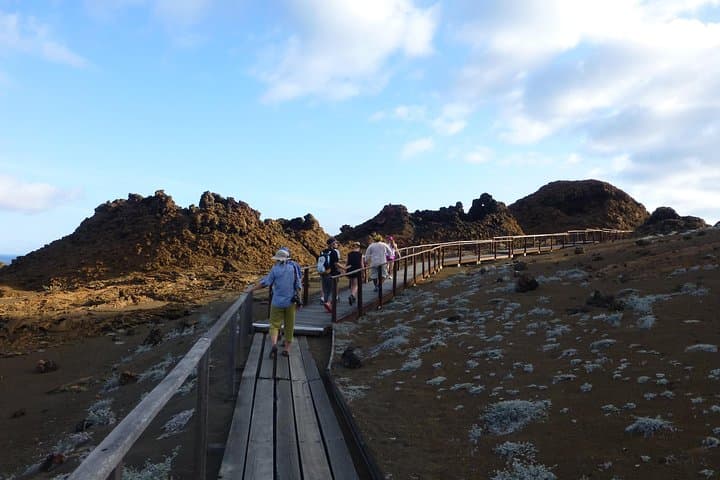
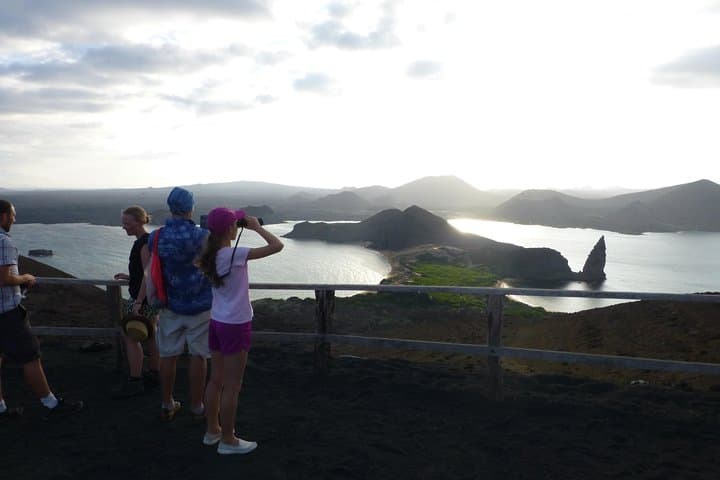
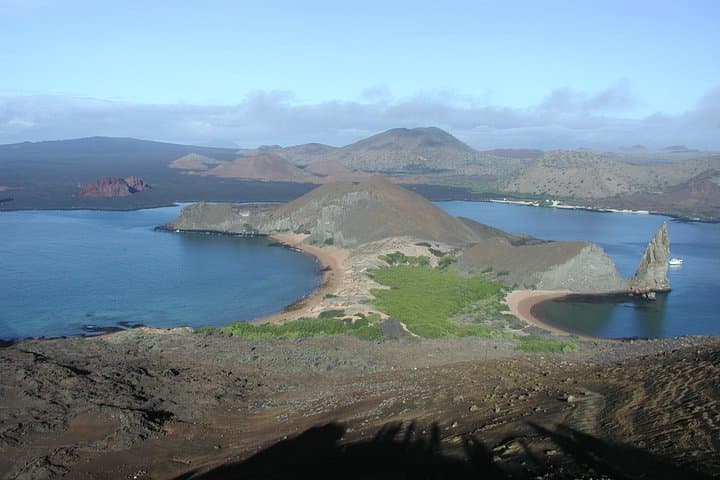
The walk to the summit is short and efficient: a switchback trail that gains roughly 115 meters over a few hundred meters of rocky, often uneven steps. It’s accessible for travelers with moderate fitness—brief breath catches at the switchbacks, then a sweeping 360º panorama rewards the climb: the curved black shelves of lava, the crescent white beaches, and the boats anchored in the channel. After the summit, the trip turns liquid: a guided snorkel near shallow reefs where sea lions cavort, black-tip reef sharks patrol, and Galápagos penguins occasionally dart beneath the surface.
Practical notes: tours depart very early (typically 6:00–6:30 a.m.) from Puerto Ayora; expect a full day returning late afternoon. The operator supplies a boxed lunch, snorkeling gear, towels and bilingual guides; wetsuits are not included. The trail is short but sun-exposed—reef-safe sunscreen, a wide-brim hat, and layered protection are essential. Bring a dry bag for camera gear and a refillable water bottle; hydration is key in equatorial sun.
For photographers, the light is best at first climb and on the boat approach; if you time it right, the island’s textures—glassy lava, powder sand and mottled vegetation—translate beautifully in side-light. Respect the wildlife distances that guides enforce; those encounters are the reason most travelers make the trip.
Whether you come for the volcanic forms, the underwater life, or that compact, high-reward scramble to the top, Bartolome is an island that makes geology readable and wildlife watchable in a single, rigorous day.
moderate.
10–11 hours.
Moderate—able to handle a short steep climb, several landings, and a snorkel session; comfortable standing on a small boat.
The trail to the top gains about 115 meters in elevation and takes 20–40 minutes depending on pace; it's short but includes uneven volcanic steps.
Yes—snorkel masks, fins and life vests are provided; wetsuits are not included so bring your own if you prefer one.
You should be a comfortable swimmer and able to snorkel in open water; life vests are available for additional safety.
Children are allowed but not recommended for ages 5 and under; younger kids should be closely supervised and able to swim.
The tour is rated moderate—short steep sections on the hike and the physicality of getting in and out of the zodiac/boat and snorkeling are the main demands.
Stay on marked trails, do not touch or feed wildlife, and follow your guide’s instructions; these rules protect both animals and visitors.
Bartolome is a relatively young volcanic islet formed by lava flows and spatter cones; its geology and isolation helped shape Darwin-era observations of endemism.
Tours operate under Galápagos National Park rules—group sizes, trail limits and no-touch policies are enforced to protect fragile habitats and species.
Galapagos Tours Nature Galapagos & Ecuador operates guided outdoor trips and adventures with an emphasis on safety, stewardship, and memorable experiences.
You step off the panga as the sun slips over the horizon and the silhouette of Pinnacle Rock slices the ocean into shadow and gold. Salt air and the thin rattle of small waves set the rhythm; guides move with practiced economy, distributing snorkeling gear and bottled water. The island itself waits like a small geologic stage—black lava flows, pale sand, and the stair-stepped volcanic spine that leads to the 115-meter viewpoint.
You step off the panga as the sun slips over the horizon and the silhouette of Pinnacle Rock slices the ocean into shadow and gold. Salt air and the thin rattle of small waves set the rhythm; guides move with practiced economy, distributing snorkeling gear and bottled water. The island itself waits like a small geologic stage—black lava flows, pale sand, and the stair-stepped volcanic spine that leads to the 115-meter viewpoint.
Bartolome’s story is written in fire. The island is a young volcanic islet formed by lava flows and spatter cones—those bulbous, pocked mounds visible on the east side—evidence of fountains of viscous lava that cooled mid-flight. Charles Darwin visited the archipelago a century and a half ago; the same stark contrasts that intrigued him persist: volcanic rock, pioneer plants such as Tiquilia and Chamaesyce, and an ecosystem tightly adapted to salt, wind and isolation.
Culture here is practical and protective. The Galápagos National Park maintains strict rules—sticking to trails, no feeding wildlife, and limiting group sizes to minimize impact. Guides are bilingual and trained to interpret both the natural history and the island’s current conservation priorities.
The walk to the summit is short and efficient: a switchback trail that gains roughly 115 meters over a few hundred meters of rocky, often uneven steps. It’s accessible for travelers with moderate fitness—brief breath catches at the switchbacks, then a sweeping 360º panorama rewards the climb: the curved black shelves of lava, the crescent white beaches, and the boats anchored in the channel. After the summit, the trip turns liquid: a guided snorkel near shallow reefs where sea lions cavort, black-tip reef sharks patrol, and Galápagos penguins occasionally dart beneath the surface.
Practical notes: tours depart very early (typically 6:00–6:30 a.m.) from Puerto Ayora; expect a full day returning late afternoon. The operator supplies a boxed lunch, snorkeling gear, towels and bilingual guides; wetsuits are not included. The trail is short but sun-exposed—reef-safe sunscreen, a wide-brim hat, and layered protection are essential. Bring a dry bag for camera gear and a refillable water bottle; hydration is key in equatorial sun.
For photographers, the light is best at first climb and on the boat approach; if you time it right, the island’s textures—glassy lava, powder sand and mottled vegetation—translate beautifully in side-light. Respect the wildlife distances that guides enforce; those encounters are the reason most travelers make the trip.
Whether you come for the volcanic forms, the underwater life, or that compact, high-reward scramble to the top, Bartolome is an island that makes geology readable and wildlife watchable in a single, rigorous day.