THE ADVENTURE COLLECTIVE® · Independent discovery and booking for outdoor travel

Explore Tucson’s Barrio Viejo with a local guide on a two-hour walking tour that pairs Spanish colonial history, Henry Trost architecture, and the largest cluster of mud-adobe homes in the U.S. Perfect for history lovers and urban hikers who prefer shade and stories to steep climbs.
Explore Tucson’s Barrio Viejo with a local guide on a two-hour walking tour that pairs Spanish colonial history, Henry Trost architecture, and the largest cluster of mud-adobe homes in the U.S. Perfect for history lovers and urban hikers who prefer shade and stories to steep climbs.
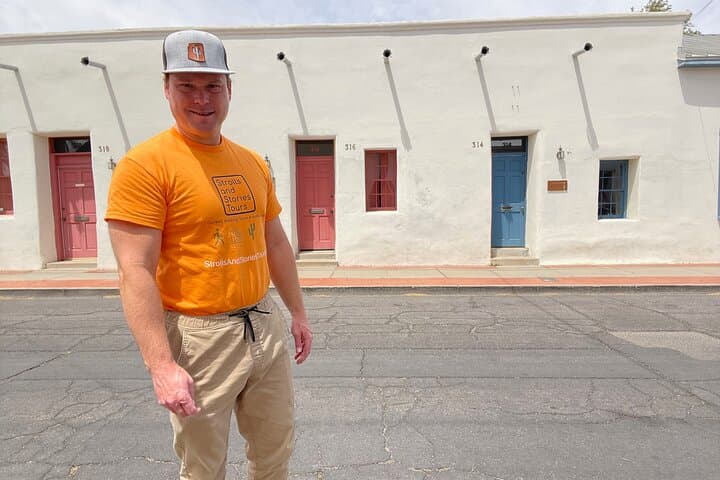
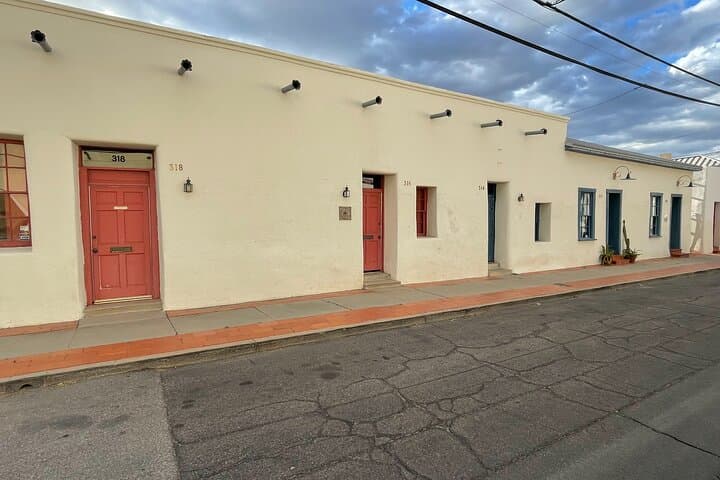
You step off Stone Avenue beneath a broad sign and the city exhales around you — rust-colored adobe walls, narrow sidewalks, and the distant bell of St. Augustine Cathedral. Scott, the guide, threads stories into the streets: Spanish colonial origins, Henry Trost’s masonry flourishes on Scott Avenue, and the stubborn, sun-hardened row houses that define Barrio Viejo.
Verified experiences and guided adventures in the surrounding area.
Operated by Strolls and Stories Tours · Tucson, Arizona
You step off Stone Avenue beneath a broad sign and the city exhales around you — rust-colored adobe walls, narrow sidewalks, and the distant bell of St. Augustine Cathedral. Scott, the guide, threads stories into the streets: Spanish colonial origins, Henry Trost’s masonry flourishes on Scott Avenue, and the stubborn, sun-hardened row houses that define Barrio Viejo.
This neighborhood sits on land shaped by the Sonoran Desert and a layered human history. Tucson began as the Presidio San Agustín in 1775; before that, millennia of Native presence and irrigated agriculture shaped the valley. Barrio Viejo preserves the largest contiguous cluster of mud-adobe homes in the U.S., reflecting Mexican, Anglo, Chinese and indigenous influences that fueled corner mercantiles and communal parks like Parque de Orlando y Diego Mendoza.
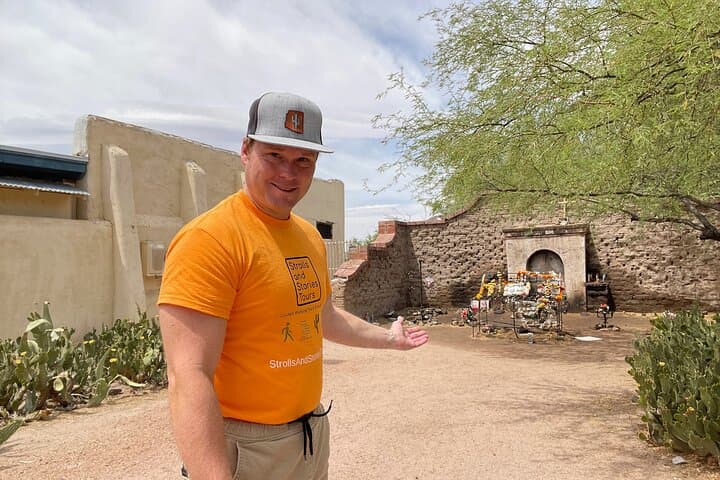
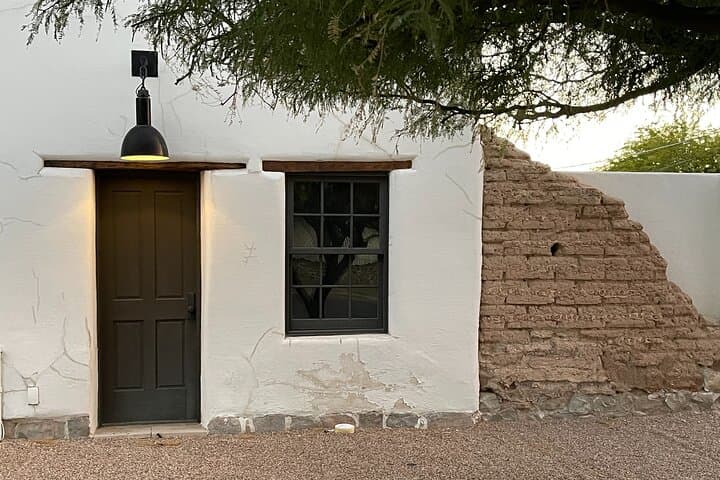
Walking here is as much about materials as stories: thick adobe walls that cool interiors, low-pitched roofs adapted for scarce rain, and the urban geology of baked clay and basalt beneath your feet. Cultural touchpoints — the El Tiradito wishing shrine, Teatro Carmen, and Trost-designed civic buildings — punctuate the route and invite questions about preservation, immigration, and 20th-century revitalization efforts.
Practical guidance: the tour is two hours of easy sidewalk walking (roughly 1.5–2 miles), beginning and ending at 104 S Stone Ave (La Placita Parking Garage). Morning or late-afternoon departures avoid peak heat; bring water, sun protection, and comfortable shoes. Photography is welcome but respect private residences and keep to public paths. Public transit runs nearby, service animals are allowed, and cancellations yield a full refund if made 24 hours ahead.
easy.
2 hours.
Suitable for most fitness levels; requires walking on paved sidewalks for up to two hours
The tour is two hours and covers about 1.5–2 miles at a relaxed, story-driven pace with stops for discussion and photos.
Meet in front of La Placita Parking Garage at 104 S Stone Ave; public restrooms and cafes are within a few blocks downtown.
The route is on public sidewalks with some curb cuts but may include narrow passages; contact the operator in advance to discuss specific accessibility needs.
Full refunds are available for cancellations made at least 24 hours before the scheduled departure.
Tucson began as the Presidio San Agustín del Tucsón in 1775; Barrio Viejo grew as a multicultural working-class neighborhood with Sonoran-style row houses adapted to desert life.
Ongoing preservation efforts balance adaptive reuse with protecting adobe structures; visitors should stick to public areas and avoid touching fragile earthen walls to help conserve them.
Strolls and Stories Tours operates guided outdoor trips and adventures with an emphasis on safety, stewardship, and memorable experiences.
You step off Stone Avenue beneath a broad sign and the city exhales around you — rust-colored adobe walls, narrow sidewalks, and the distant bell of St. Augustine Cathedral. Scott, the guide, threads stories into the streets: Spanish colonial origins, Henry Trost’s masonry flourishes on Scott Avenue, and the stubborn, sun-hardened row houses that define Barrio Viejo.
You step off Stone Avenue beneath a broad sign and the city exhales around you — rust-colored adobe walls, narrow sidewalks, and the distant bell of St. Augustine Cathedral. Scott, the guide, threads stories into the streets: Spanish colonial origins, Henry Trost’s masonry flourishes on Scott Avenue, and the stubborn, sun-hardened row houses that define Barrio Viejo.
This neighborhood sits on land shaped by the Sonoran Desert and a layered human history. Tucson began as the Presidio San Agustín in 1775; before that, millennia of Native presence and irrigated agriculture shaped the valley. Barrio Viejo preserves the largest contiguous cluster of mud-adobe homes in the U.S., reflecting Mexican, Anglo, Chinese and indigenous influences that fueled corner mercantiles and communal parks like Parque de Orlando y Diego Mendoza.
Walking here is as much about materials as stories: thick adobe walls that cool interiors, low-pitched roofs adapted for scarce rain, and the urban geology of baked clay and basalt beneath your feet. Cultural touchpoints — the El Tiradito wishing shrine, Teatro Carmen, and Trost-designed civic buildings — punctuate the route and invite questions about preservation, immigration, and 20th-century revitalization efforts.
Practical guidance: the tour is two hours of easy sidewalk walking (roughly 1.5–2 miles), beginning and ending at 104 S Stone Ave (La Placita Parking Garage). Morning or late-afternoon departures avoid peak heat; bring water, sun protection, and comfortable shoes. Photography is welcome but respect private residences and keep to public paths. Public transit runs nearby, service animals are allowed, and cancellations yield a full refund if made 24 hours ahead.