THE ADVENTURE COLLECTIVE® · Independent discovery and booking for outdoor travel

Cross Nahuel Huapi to Victoria Island and the Quetrihué Peninsula to walk the cinnamon-barked Arrayán forest and explore gentle island trails. This boat-based day trip pairs scenic navigation with short interpretive hikes and local history.
Cross Nahuel Huapi to Victoria Island and the Quetrihué Peninsula to walk the cinnamon-barked Arrayán forest and explore gentle island trails. This boat-based day trip pairs scenic navigation with short interpretive hikes and local history.
You push away from Puerto Pañuelo and the city sound falls behind you—the lake opens like a cold glass bowl, wind sketching white lines across Nahuel Huapi. The bow of the boat noses toward Victoria Island and, farther on, the Quetrihué Peninsula where the Arrayán trees keep their cinnamon-barked silence. For seven hours you travel across a landscape shaped by glaciers and time: islands and inlets, forested slopes, and a shoreline that insists you slow down and look.
Verified experiences and guided adventures in the surrounding area.
Operated by Azul Latina Travel · San Carlos de Bariloche, Río Negro
You push away from Puerto Pañuelo and the city sound falls behind you—the lake opens like a cold glass bowl, wind sketching white lines across Nahuel Huapi. The bow of the boat noses toward Victoria Island and, farther on, the Quetrihué Peninsula where the Arrayán trees keep their cinnamon-barked silence. For seven hours you travel across a landscape shaped by glaciers and time: islands and inlets, forested slopes, and a shoreline that insists you slow down and look.
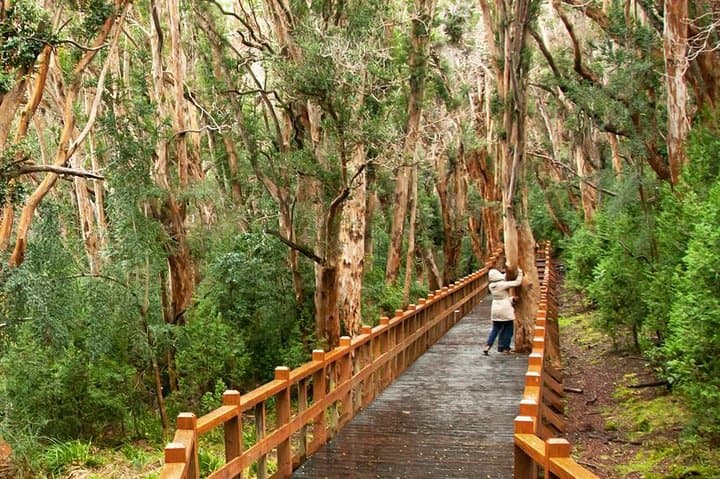
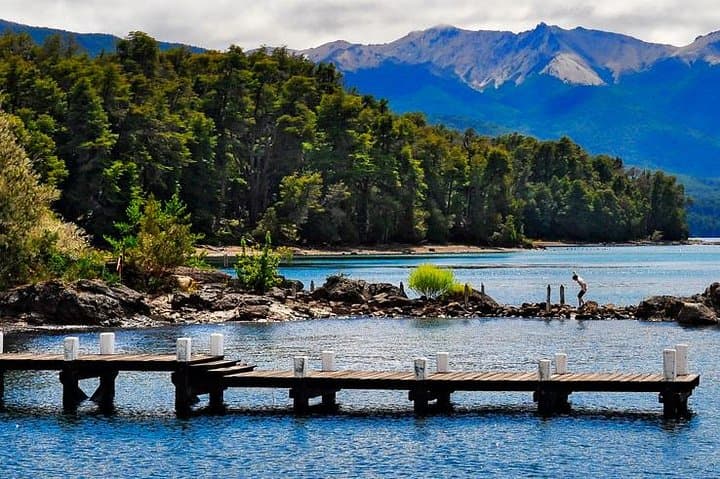
Victoria Island feels like a compact world: sheltered coves, low ridgelines and a handful of marked trails from short interpretive loops to ridge viewpoints. The island’s soils are the slow work of ice and meltwater; you’ll notice glacial erratics and terraces that tell the lake’s cold history. On Quetrihué, the Arrayán forest is the star—Luma apiculata grows here with smooth, cinnamon bark and a sprightly understory. Walking the raised boardwalk, you see how the forest organizes itself: trunks spaced like columns, moss and lichens taking possession of every fallen log. The species is culturally significant too—used historically by local Mapuche people for medicine and craft—and today the forest is protected to preserve its limited range.
The tour balances time on water with short walks. After about 30 minutes of navigation you land at Puerto Anchorena on Victoria Island where options range from a 1.5 km shoreline loop to a 4–6 km hike to panoramic overlooks (expect 50–150 m of elevation gain on steeper routes). On Quetrihué the boardwalk through the Arrayanes is largely flat but uneven in places; expect a 1–2 km round-trip on the main interpretive path. Guides provide natural and cultural context in English and Spanish, pointing out nesting waterfowl, the shape of the lake carved by ice, and vestiges of early settlements.
Practical edge: carry layered windproof clothing, sun protection and enough water for the day—services on the island are limited. Shoes with good tread handle muddy sections after rain. Accessibility is good for the boarding point and the main paths, but some viewpoint trails are steeper.
Why go: the route condenses Patagonia’s big elements—clear mountain lake, geological story, rare forest species and approachable trails—into a single, readable day. For photographers and naturalists alike it’s a tidy introduction to Nahuel Huapi’s quieter corners, with the safety and comfort of an organized vessel linking each highlight.
easy.
6–7 hours.
Casual fitness is sufficient—able to walk 2–6 km over mixed, mostly gentle terrain with short climbs
The navigation from Puerto Pañuelo to Victoria Island takes about 30 minutes each way, though total time on water depends on the itinerary and stops.
Mainboardwalk and some transport options are accessible, but certain viewpoints and island trails include steps and steeper sections—ask the operator about mobility needs when booking.
Only the VIP option includes lunch on board; otherwise bring snacks or purchase simple items if available—confirm before you go.
Yes—paths are family-friendly and infant seats are available, but supervise children on docks and boardwalk edges.
Guides provide commentary in Spanish and English; private tours may offer other languages on request.
The tour operates in most conditions; extreme weather may force changes. Check the operator’s policy and their communication the week before departure for exact pickup times.
The Arrayán stands are a rare remnant of a once more extensive forest; the Quetrihué Peninsula was set aside to protect these unusually concentrated specimens of Luma apiculata.
Visitors are asked to remain on boardwalks, avoid touching bark and carry out all waste—these measures protect sensitive soil and the forest’s limited regenerative ability.
Azul Latina Travel operates guided outdoor trips and adventures with an emphasis on safety, stewardship, and memorable experiences.
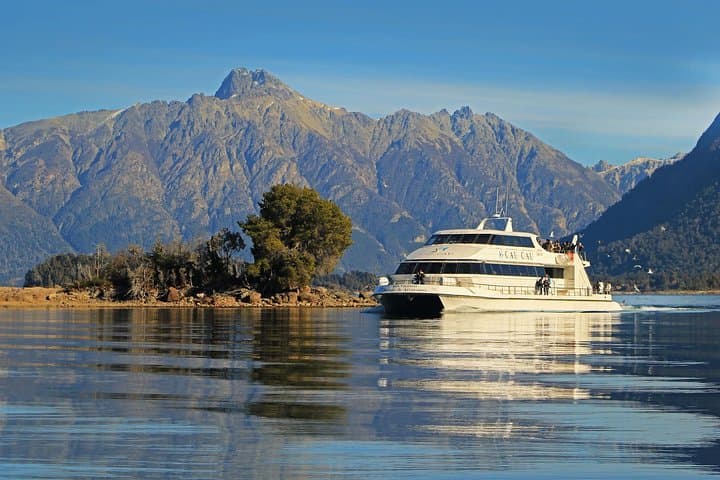
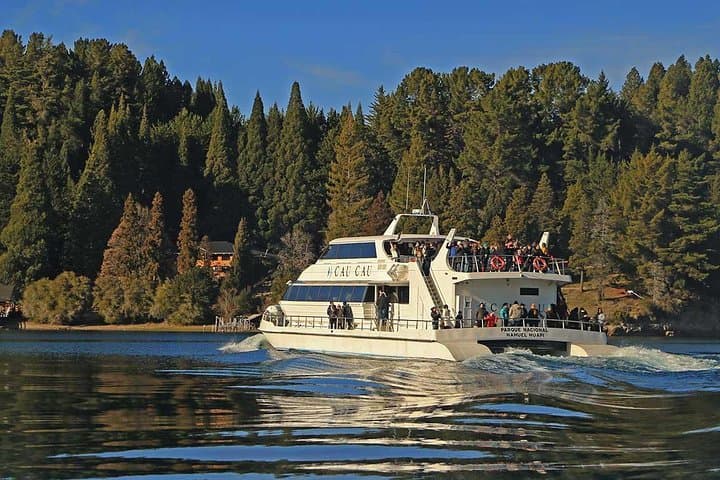
You push away from Puerto Pañuelo and the city sound falls behind you—the lake opens like a cold glass bowl, wind sketching white lines across Nahuel Huapi. The bow of the boat noses toward Victoria Island and, farther on, the Quetrihué Peninsula where the Arrayán trees keep their cinnamon-barked silence. For seven hours you travel across a landscape shaped by glaciers and time: islands and inlets, forested slopes, and a shoreline that insists you slow down and look.
You push away from Puerto Pañuelo and the city sound falls behind you—the lake opens like a cold glass bowl, wind sketching white lines across Nahuel Huapi. The bow of the boat noses toward Victoria Island and, farther on, the Quetrihué Peninsula where the Arrayán trees keep their cinnamon-barked silence. For seven hours you travel across a landscape shaped by glaciers and time: islands and inlets, forested slopes, and a shoreline that insists you slow down and look.
Victoria Island feels like a compact world: sheltered coves, low ridgelines and a handful of marked trails from short interpretive loops to ridge viewpoints. The island’s soils are the slow work of ice and meltwater; you’ll notice glacial erratics and terraces that tell the lake’s cold history. On Quetrihué, the Arrayán forest is the star—Luma apiculata grows here with smooth, cinnamon bark and a sprightly understory. Walking the raised boardwalk, you see how the forest organizes itself: trunks spaced like columns, moss and lichens taking possession of every fallen log. The species is culturally significant too—used historically by local Mapuche people for medicine and craft—and today the forest is protected to preserve its limited range.
The tour balances time on water with short walks. After about 30 minutes of navigation you land at Puerto Anchorena on Victoria Island where options range from a 1.5 km shoreline loop to a 4–6 km hike to panoramic overlooks (expect 50–150 m of elevation gain on steeper routes). On Quetrihué the boardwalk through the Arrayanes is largely flat but uneven in places; expect a 1–2 km round-trip on the main interpretive path. Guides provide natural and cultural context in English and Spanish, pointing out nesting waterfowl, the shape of the lake carved by ice, and vestiges of early settlements.
Practical edge: carry layered windproof clothing, sun protection and enough water for the day—services on the island are limited. Shoes with good tread handle muddy sections after rain. Accessibility is good for the boarding point and the main paths, but some viewpoint trails are steeper.
Why go: the route condenses Patagonia’s big elements—clear mountain lake, geological story, rare forest species and approachable trails—into a single, readable day. For photographers and naturalists alike it’s a tidy introduction to Nahuel Huapi’s quieter corners, with the safety and comfort of an organized vessel linking each highlight.