THE ADVENTURE COLLECTIVE® · Independent discovery and booking for outdoor travel

A half-day loop that stitches lakefront drives with short walks to iconic viewpoints—Playa Bonita, Cerro Campanario and Llao Llao—offering big panoramas with minimal effort. Perfect for morning light and photographers who want maximum views in limited time.
A half-day loop that stitches lakefront drives with short walks to iconic viewpoints—Playa Bonita, Cerro Campanario and Llao Llao—offering big panoramas with minimal effort. Perfect for morning light and photographers who want maximum views in limited time.
A wind from Nahuel Huapi sweeps across the road before the town wakes; the lake throws back a clean, hard light and the bus pulls up to the edge of E. Bustillo Avenue. You step out and the first view arrests you—sheets of water folding into distant tree-lined peninsulas, Huemul Island a dark dot offshore. The morning on the Small Circuit is part drive, part short, deliberate walks: a series of frames that reveal why Bariloche’s lakeshore is a favorite for quick, high-reward outings.
Verified experiences and guided adventures in the surrounding area.
Operated by Natural Travel · San Carlos de Bariloche, Río Negro
A wind from Nahuel Huapi sweeps across the road before the town wakes; the lake throws back a clean, hard light and the bus pulls up to the edge of E. Bustillo Avenue. You step out and the first view arrests you—sheets of water folding into distant tree-lined peninsulas, Huemul Island a dark dot offshore. The morning on the Small Circuit is part drive, part short, deliberate walks: a series of frames that reveal why Bariloche’s lakeshore is a favorite for quick, high-reward outings.
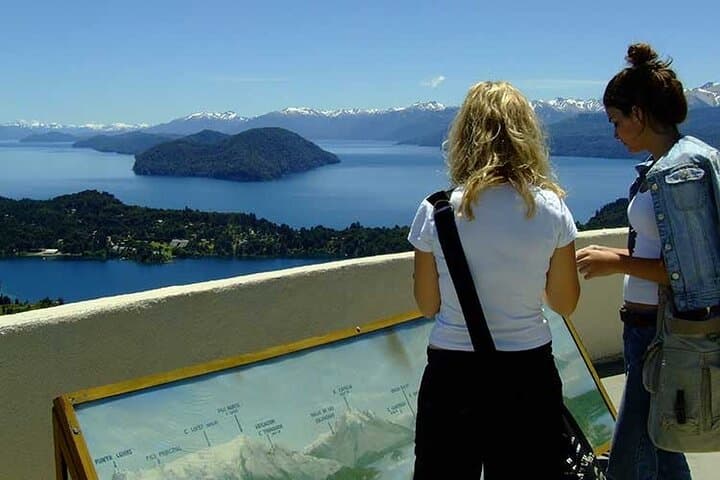
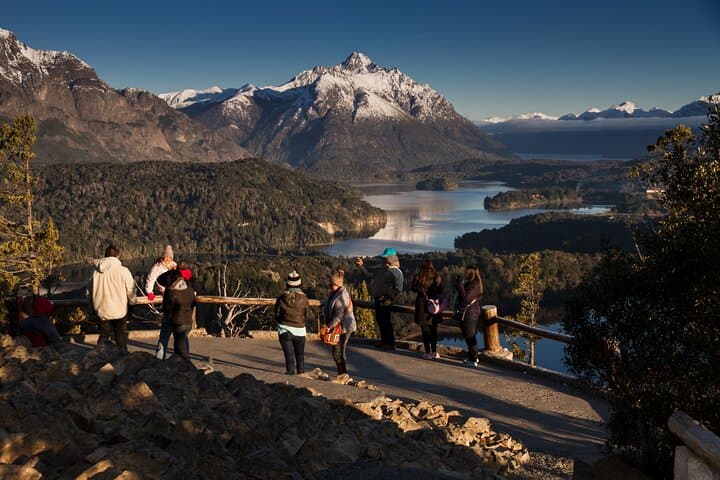
The route follows the lake for kilometers, passing Playa Bonita at about km 8, a ribbon of pebble and thin sand where locals launch kayaks. Ten kilometers farther the road narrows and the silhouette of Cerro Campanario rises—one of the region’s most photographed summits. The tour includes a low-intensity walk through the Arrayanes Trail in the Llao Llao Municipal Reserve, with its tall coihues and dense understory, plus stops around El Trébol lagoon, Moreno Lake, Puerto Pañuelo, the imposing Llao Llao Hotel and the whitewashed San Eduardo Chapel.
Geologically this landscape is recent: glacial scouring carved basins that filled to become Nahuel Huapi, and volcanic bedrock and glacial moraine shape the peninsulas. Culturally, the area sits on Mapuche lands; place names and artisanal markets in Bariloche reference that living presence. The Llao Llao Hotel, built in the 1930s, anchors the peninsula as a center of early Patagonian tourism—its stone facades and old-growth plantings are part of the town’s layered history.
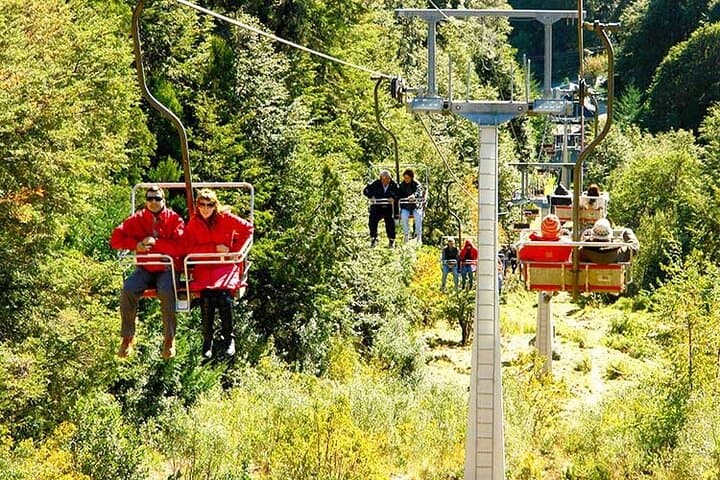
Practical guide: the full circuit is best taken as a half-day excursion—expect 3–4 hours with photo stops. Most of the time is spent riding an air-conditioned minibus; walking segments are easy and short—boardwalks and singletrack with occasional steep switchbacks if you choose to hike Cerro Campanario (the chairlift to the summit is optional but saves a 15–25 minute climb). Terrain underfoot ranges from paved avenues to groomed trails and compact dirt at viewpoints. Bring a jacket: wind off the lake can make temperatures drop quickly.
Logistics and tips: most operators pick up from Bariloche hotels; accessibility is generally good for short transfers. Carry cash for the optional chairlift and a small snack—there are cafés near Puerto Pañuelo but services are limited on the trail. Aim for early morning or late afternoon light for the best photos and fewer buses.
This is a pragmatic, beginner-friendly way to sample Bariloche’s best panoramas in one loop—less a strenuous trek than a curated visual survey of lakes, forest, and classic Patagonian hotel architecture.
easy.
3–4 hours.
Suitable for all fitness levels; walking segments are short and low-intensity but involve some uneven ground.
The tour runs about 3–4 hours total, combining driving with several short walks and viewpoint stops.
No—the chairlift is optional and paid on-site; the tour still visits the summit area for photos if you decline the lift.
Yes—most operators offer hotel pickup across Bariloche; confirm your exact pickup point when booking.
The route is family-friendly and the vehicle is accessible, but some trail sections have steps or uneven ground that limit full wheelchair access.
Basic facilities and cafés exist near Puerto Pañuelo and the Llao Llao Hotel; restrooms on the trail are limited—plan accordingly.
Summer and shoulder seasons (spring/fall) offer the best weather for views, but mornings year-round bring crisp light and fewer crowds.
The Llao Llao peninsula and surrounding shores became tourism anchors in the early 20th century; the Llao Llao Hotel opened in the 1930s and helped shape Bariloche’s alpine-style development.
The Llao Llao Municipal Reserve protects native coihue forest and protects fragile trail corridors; visitors are asked to stick to paths and pack out waste.
Natural Travel operates guided outdoor trips and adventures with an emphasis on safety, stewardship, and memorable experiences.
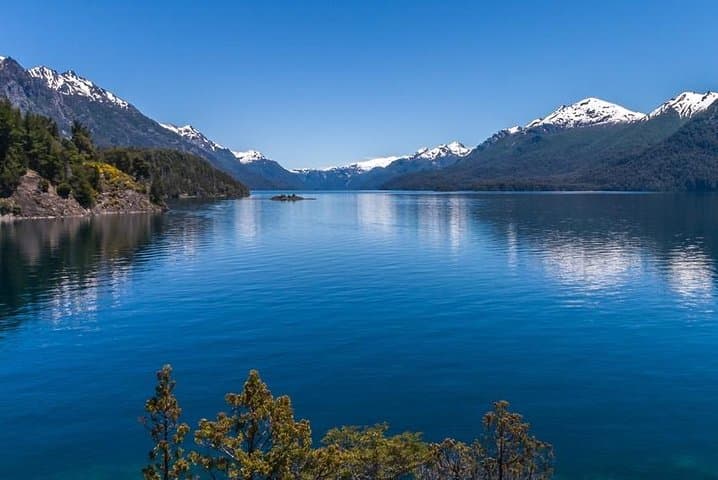
A wind from Nahuel Huapi sweeps across the road before the town wakes; the lake throws back a clean, hard light and the bus pulls up to the edge of E. Bustillo Avenue. You step out and the first view arrests you—sheets of water folding into distant tree-lined peninsulas, Huemul Island a dark dot offshore. The morning on the Small Circuit is part drive, part short, deliberate walks: a series of frames that reveal why Bariloche’s lakeshore is a favorite for quick, high-reward outings.
A wind from Nahuel Huapi sweeps across the road before the town wakes; the lake throws back a clean, hard light and the bus pulls up to the edge of E. Bustillo Avenue. You step out and the first view arrests you—sheets of water folding into distant tree-lined peninsulas, Huemul Island a dark dot offshore. The morning on the Small Circuit is part drive, part short, deliberate walks: a series of frames that reveal why Bariloche’s lakeshore is a favorite for quick, high-reward outings.
The route follows the lake for kilometers, passing Playa Bonita at about km 8, a ribbon of pebble and thin sand where locals launch kayaks. Ten kilometers farther the road narrows and the silhouette of Cerro Campanario rises—one of the region’s most photographed summits. The tour includes a low-intensity walk through the Arrayanes Trail in the Llao Llao Municipal Reserve, with its tall coihues and dense understory, plus stops around El Trébol lagoon, Moreno Lake, Puerto Pañuelo, the imposing Llao Llao Hotel and the whitewashed San Eduardo Chapel.
Geologically this landscape is recent: glacial scouring carved basins that filled to become Nahuel Huapi, and volcanic bedrock and glacial moraine shape the peninsulas. Culturally, the area sits on Mapuche lands; place names and artisanal markets in Bariloche reference that living presence. The Llao Llao Hotel, built in the 1930s, anchors the peninsula as a center of early Patagonian tourism—its stone facades and old-growth plantings are part of the town’s layered history.
Practical guide: the full circuit is best taken as a half-day excursion—expect 3–4 hours with photo stops. Most of the time is spent riding an air-conditioned minibus; walking segments are easy and short—boardwalks and singletrack with occasional steep switchbacks if you choose to hike Cerro Campanario (the chairlift to the summit is optional but saves a 15–25 minute climb). Terrain underfoot ranges from paved avenues to groomed trails and compact dirt at viewpoints. Bring a jacket: wind off the lake can make temperatures drop quickly.
Logistics and tips: most operators pick up from Bariloche hotels; accessibility is generally good for short transfers. Carry cash for the optional chairlift and a small snack—there are cafés near Puerto Pañuelo but services are limited on the trail. Aim for early morning or late afternoon light for the best photos and fewer buses.
This is a pragmatic, beginner-friendly way to sample Bariloche’s best panoramas in one loop—less a strenuous trek than a curated visual survey of lakes, forest, and classic Patagonian hotel architecture.