THE ADVENTURE COLLECTIVE® · Independent discovery and booking for outdoor travel

Pedal through Bari’s maze-like old town and along the Adriatic on a private 2-hour bike tour. Visit San Sabino Cathedral, the Basilica di San Nicola, a bustling fish market, and enjoy seaside views with local insights and a gelato stop.
Pedal through Bari’s maze-like old town and along the Adriatic on a private 2-hour bike tour. Visit San Sabino Cathedral, the Basilica di San Nicola, a bustling fish market, and enjoy seaside views with local insights and a gelato stop.
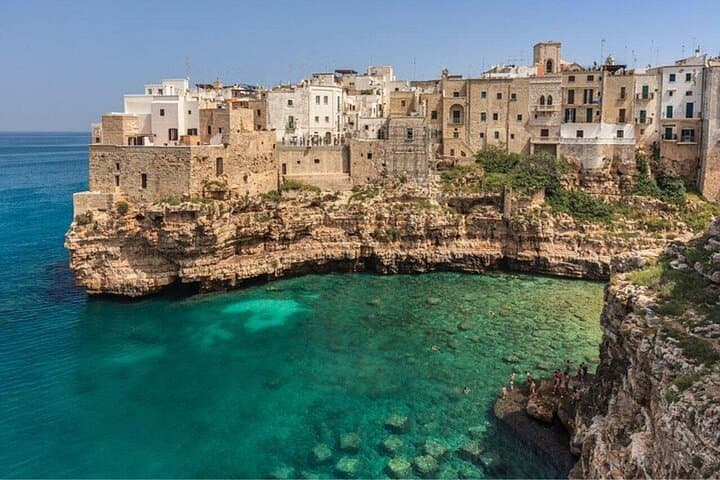
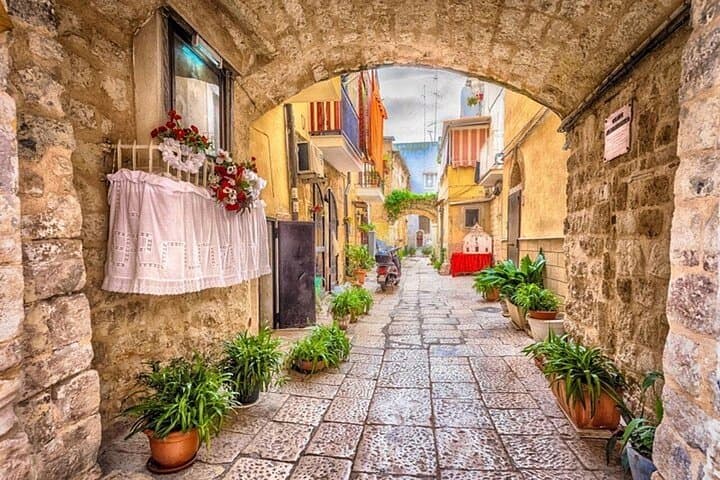
You push off from a narrow cobbled lane and the city opens — churches and fishermen’s calls frame the sea. On two wheels, Bari’s old town compresses centuries into a few short pedals: Romanesque stone, salt-bright air, and the steady line of the Adriatic daring you to look east.
Verified experiences and guided adventures in the surrounding area.
Operated by Guydeez · Bari, Apulia
You push off from a narrow cobbled lane and the city opens — churches and fishermen’s calls frame the sea. On two wheels, Bari’s old town compresses centuries into a few short pedals: Romanesque stone, salt-bright air, and the steady line of the Adriatic daring you to look east.
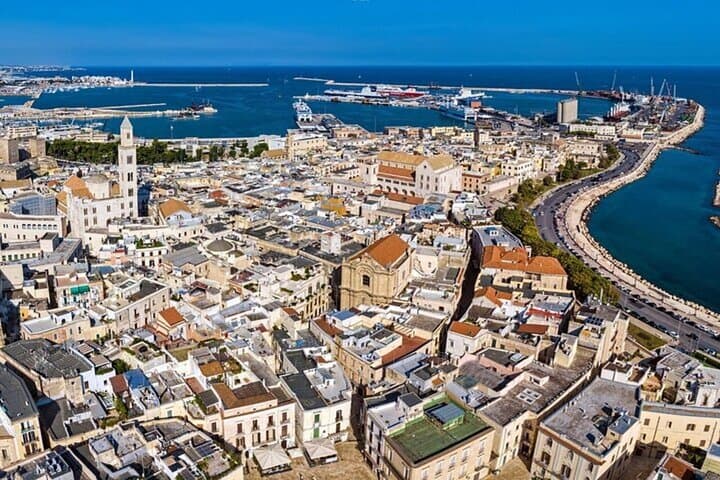
The ride threads past the 12th-century San Sabino Cathedral and the Basilica di San Nicola, both anchors of Bari’s medieval identity and pilgrimage tradition. Built where Apulia’s limestone meets the coast, the city’s geology is flat and karst-influenced; streets spill down toward the harbor, not up. Culture here is maritime and market-driven: the local fish market still governs morning life, and neighborhood cafes spill onto plazas where fishermen and families overlap.
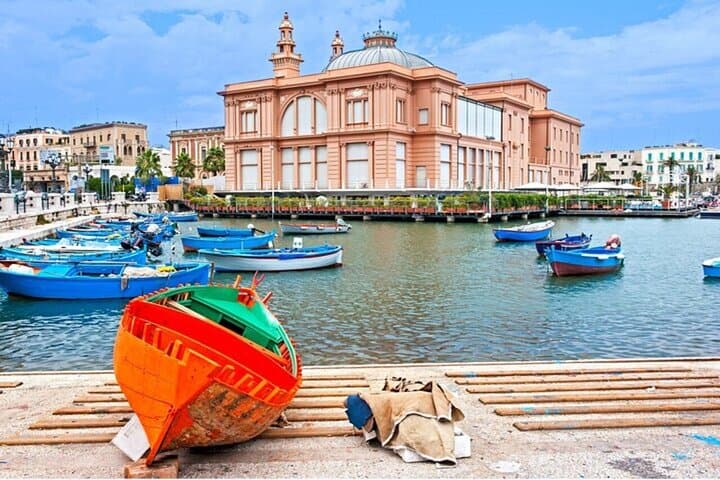
Expect roughly 6–8 km of mostly flat cycling on city streets and the seaside promenade, with frequent stops for history and tasting — a gelato break is standard. The route rewards attention: carved portals, bronze doors, and fishing boats that look like they could set off at any moment. Guides weave local lore about Saint Nicholas and Bari’s role as a crossroad between East and West.
Practical guidance: choose morning hours for cooler temperatures and market activity, bring a refillable water bottle, and wear closed-toe shoes for cobbles. Helmets are included or provided by reputable operators; be ready to share the road with scooters and pedestrians. Two hours is enough for a concise orientation that balances steady riding with cultural stops — ideal for travelers who want an immediate, manageable introduction to Bari.
easy.
2 hours.
Suitable for most fitness levels; requires basic cycling ability and comfort riding in light city traffic.
Yes — infant seats are available and the route is classified as easy, but confirm age and bike options with the operator when booking.
Most operators include standard helmets; if you prefer your own, bring it to ensure fit and comfort.
Yes — the itinerary includes a tasting stop such as handmade ice cream and short cafe breaks during the two-hour tour.
Expect about 6–8 km of riding on mostly flat terrain with several guided stops.
Bari grew as a maritime hub between East and West; its basilicas and fortifications reflect centuries of pilgrimage, Norman and Byzantine influence, and a persistent fishing economy.
Stay on paved routes and avoid littering the historic district; support local shops and markets to sustain traditional fishing and artisan practices.
Guydeez operates guided outdoor trips and adventures with an emphasis on safety, stewardship, and memorable experiences.
You push off from a narrow cobbled lane and the city opens — churches and fishermen’s calls frame the sea. On two wheels, Bari’s old town compresses centuries into a few short pedals: Romanesque stone, salt-bright air, and the steady line of the Adriatic daring you to look east.
You push off from a narrow cobbled lane and the city opens — churches and fishermen’s calls frame the sea. On two wheels, Bari’s old town compresses centuries into a few short pedals: Romanesque stone, salt-bright air, and the steady line of the Adriatic daring you to look east.
The ride threads past the 12th-century San Sabino Cathedral and the Basilica di San Nicola, both anchors of Bari’s medieval identity and pilgrimage tradition. Built where Apulia’s limestone meets the coast, the city’s geology is flat and karst-influenced; streets spill down toward the harbor, not up. Culture here is maritime and market-driven: the local fish market still governs morning life, and neighborhood cafes spill onto plazas where fishermen and families overlap.
Expect roughly 6–8 km of mostly flat cycling on city streets and the seaside promenade, with frequent stops for history and tasting — a gelato break is standard. The route rewards attention: carved portals, bronze doors, and fishing boats that look like they could set off at any moment. Guides weave local lore about Saint Nicholas and Bari’s role as a crossroad between East and West.
Practical guidance: choose morning hours for cooler temperatures and market activity, bring a refillable water bottle, and wear closed-toe shoes for cobbles. Helmets are included or provided by reputable operators; be ready to share the road with scooters and pedestrians. Two hours is enough for a concise orientation that balances steady riding with cultural stops — ideal for travelers who want an immediate, manageable introduction to Bari.