THE ADVENTURE COLLECTIVE® · Independent discovery and booking for outdoor travel

Explore Barcelona’s layered cityscape on a 2–4 hour urban planning tour that links Gothic alleys, Cerdà’s Eixample grid, Superblocks, and the 22@ innovation district. Expect an accessible mix of walking, metro hops and e‑bike stretches while learning how policy becomes public space.
Explore Barcelona’s layered cityscape on a 2–4 hour urban planning tour that links Gothic alleys, Cerdà’s Eixample grid, Superblocks, and the 22@ innovation district. Expect an accessible mix of walking, metro hops and e‑bike stretches while learning how policy becomes public space.
You step out of a narrow Gothic alley into a sunlit open square and the city shifts beneath your feet: medieval stones give way to boulevards cut in a strict grid, then to repurposed factories humming with startups. On this urban planning tour, Barcelona’s streets act like maps and arguments—each block an idea about how people should move, meet and breathe.
Verified experiences and guided adventures in the surrounding area.
Operated by Nostos Tours · Barcelona, Catalonia
You step out of a narrow Gothic alley into a sunlit open square and the city shifts beneath your feet: medieval stones give way to boulevards cut in a strict grid, then to repurposed factories humming with startups. On this urban planning tour, Barcelona’s streets act like maps and arguments—each block an idea about how people should move, meet and breathe.
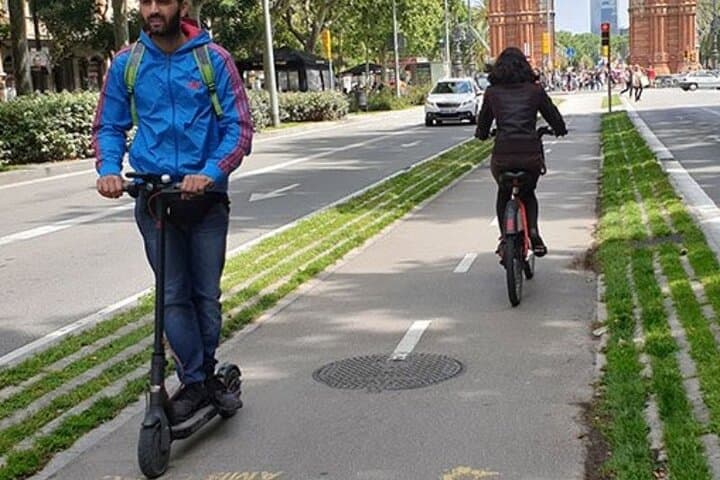
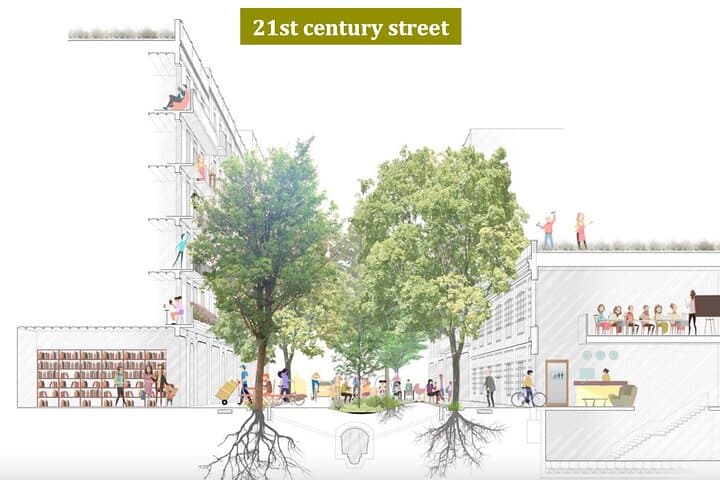
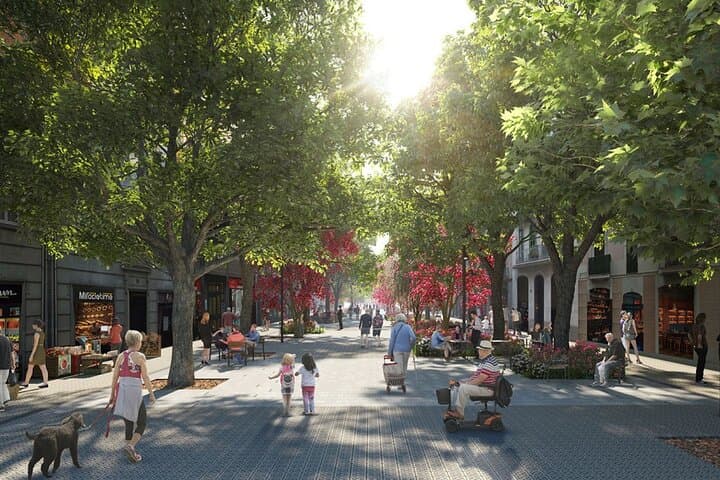
The narrative of Barcelona’s urbanism runs long: medieval origins around the cathedral, Ildefons Cerdà’s mid‑19th‑century Eixample grid that engineered airflow and light, and 21st‑century experiments such as the Superblocks program that restricts cars to prioritize people. Geology here is subtle—coastal plains that allowed outward expansion and a shoreline that shaped transport and industry. Culture and civic life are visible on benches, in plazas, and in the converted warehouses of 22@, Barcelona’s innovation district where old bricks host tech labs and shared mobility pilots.
Practical guidance: the route mixes short walking sections with easy e‑bike or metro hops across 2–4 hours, covering roughly 8–15 km depending on stops. Wear comfortable shoes for cobblestones, bring a charged phone for photos and transit apps, and carry water—summer sun and narrow alleys can concentrate heat. Expect frequent stops for explanations, light urban gradients rather than steep climbs, and access to public restrooms in major squares.
This is a tour for anyone curious about how cities are built and rebuilt—plan to leave with concrete examples of policy in pavement and an understanding of how design changes daily life.
easy.
2–4 hours.
Suitable for most fitness levels; participants should be comfortable standing and short urban walks and able to handle brief e‑bike use if chosen.
Many operators include or offer e‑bikes as an option; the tour can also be completed using Barcelona’s Metro and walking—confirm inclusion when booking.
Yes—difficulty is low and the route can be paced for families and older adults, though some mobility limitations could make cobblestones challenging.
Guides commonly speak Spanish, Catalan and English; ask the provider for other language options when booking.
Expect roughly 8–15 km covered over 2–4 hours with stops; bring a charged phone, water, sun protection and comfortable shoes.
Barcelona’s modern urban theory was shaped by Cerdà’s 19th‑century Eixample plan; more recently, Superblocks and 22@ represent civic experiments in mobility and reuse.
Superblocks and low‑emission zones reflect city policy to cut traffic and pollution; visitors are encouraged to use public transport and minimize single‑use plastics.
Nostos Tours operates guided outdoor trips and adventures with an emphasis on safety, stewardship, and memorable experiences.

You step out of a narrow Gothic alley into a sunlit open square and the city shifts beneath your feet: medieval stones give way to boulevards cut in a strict grid, then to repurposed factories humming with startups. On this urban planning tour, Barcelona’s streets act like maps and arguments—each block an idea about how people should move, meet and breathe.
You step out of a narrow Gothic alley into a sunlit open square and the city shifts beneath your feet: medieval stones give way to boulevards cut in a strict grid, then to repurposed factories humming with startups. On this urban planning tour, Barcelona’s streets act like maps and arguments—each block an idea about how people should move, meet and breathe.
The narrative of Barcelona’s urbanism runs long: medieval origins around the cathedral, Ildefons Cerdà’s mid‑19th‑century Eixample grid that engineered airflow and light, and 21st‑century experiments such as the Superblocks program that restricts cars to prioritize people. Geology here is subtle—coastal plains that allowed outward expansion and a shoreline that shaped transport and industry. Culture and civic life are visible on benches, in plazas, and in the converted warehouses of 22@, Barcelona’s innovation district where old bricks host tech labs and shared mobility pilots.
Practical guidance: the route mixes short walking sections with easy e‑bike or metro hops across 2–4 hours, covering roughly 8–15 km depending on stops. Wear comfortable shoes for cobblestones, bring a charged phone for photos and transit apps, and carry water—summer sun and narrow alleys can concentrate heat. Expect frequent stops for explanations, light urban gradients rather than steep climbs, and access to public restrooms in major squares.
This is a tour for anyone curious about how cities are built and rebuilt—plan to leave with concrete examples of policy in pavement and an understanding of how design changes daily life.