THE ADVENTURE COLLECTIVE® · Independent discovery and booking for outdoor travel

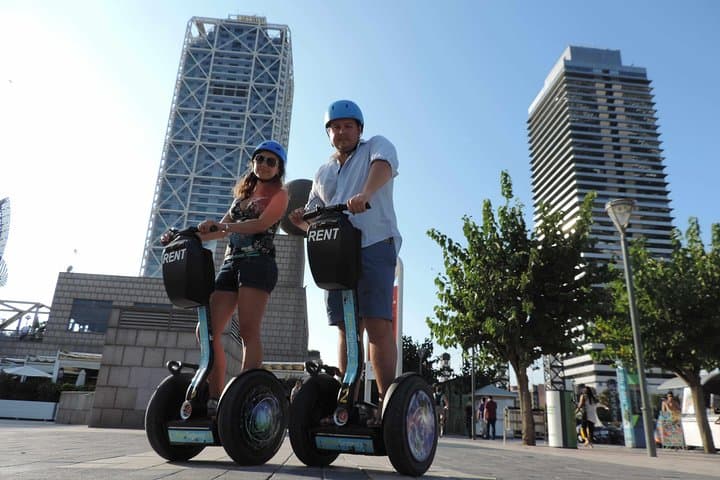
Glide from the Gothic Quarter to the Olympic Port on a guided Segway tour that mixes Roman ruins, modern marinas and open-air streetscapes. Learn local history, get hands-on training, and cover more ground than a walking tour in 2–3 hours.
Glide from the Gothic Quarter to the Olympic Port on a guided Segway tour that mixes Roman ruins, modern marinas and open-air streetscapes. Learn local history, get hands-on training, and cover more ground than a walking tour in 2–3 hours.
You mount the Segway just beyond the old Roman wall, wheels humming as the guide calls final instructions. The narrow lanes of the Gothic Quarter open toward the harbor; the Mediterranean breeze pushes forward and the city loosens its pace.
Verified experiences and guided adventures in the surrounding area.
Operated by Euro Segway Spain · Barcelona, Catalonia
You mount the Segway just beyond the old Roman wall, wheels humming as the guide calls final instructions. The narrow lanes of the Gothic Quarter open toward the harbor; the Mediterranean breeze pushes forward and the city loosens its pace.
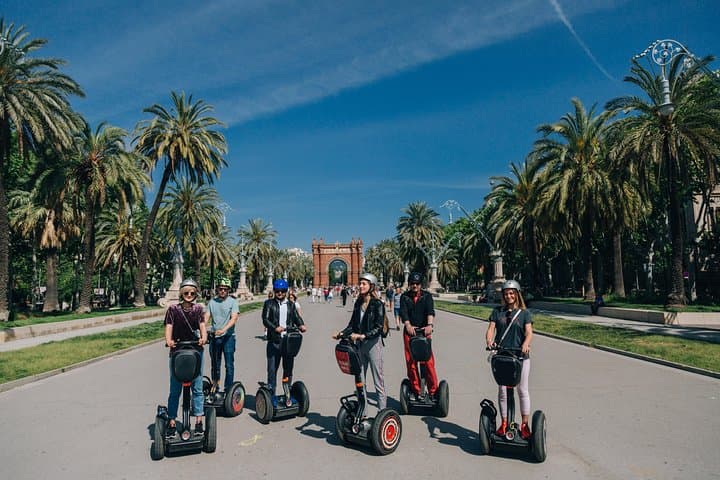
This ride threads recent history and older foundations — Roman fragments underfoot, the monumental Arc de Triomf from the 1888 World Fair, and the 1992 Olympic developments along the seafront. Geologically, the tour stays on the coastal plain below the Collserola hills, where sandy beaches meet man-made marinas and promenades shaped by decades of urban planning.
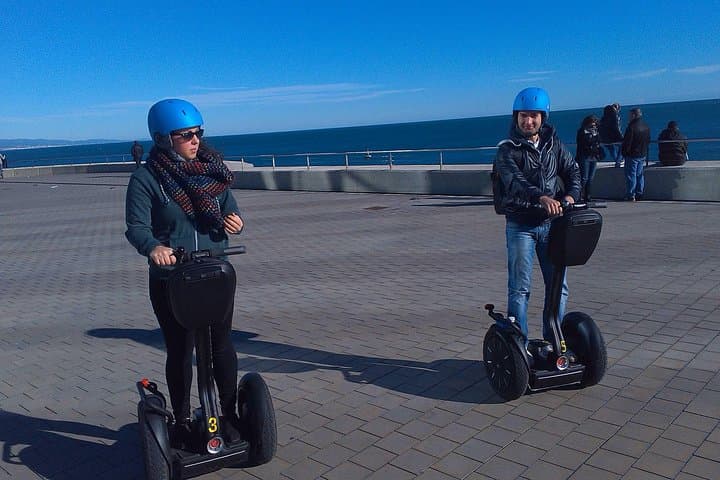
Culturally, riders pass markets, modernist facades and bohemian El Born pockets where cafés spill onto stone streets. Guides point out local rhythms: fishermen at the marina, skateboarders at Olympic Port, and daily Catalan life that continues around tourist hotspots.
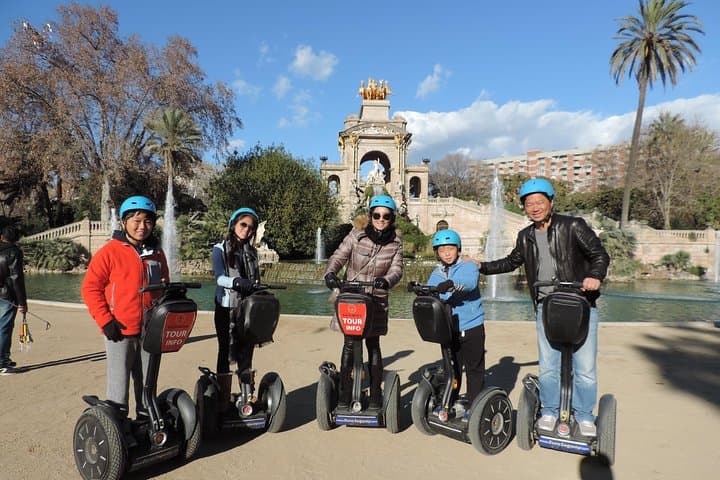
Practical guidance is straightforward. Participants receive a safety briefing and short practice before setting off; helmets are mandatory and provided. The route covers flat, paved surfaces suitable for first-time riders but requires steady balance and attention in traffic. Morning departures avoid peak crowds and shine best light onto façades. Bring a refillable water bottle, closed-toe shoes, and lightweight layers — Barcelona’s coastal weather can shift from sun to breeze in minutes. Note age and weight limits apply, and tours may be adjusted for local events or roadworks. For visitors who want efficient sightseeing with a low-exertion twist, a guided Segway tour balances city context with movement, offering a compact, readable slice of Barcelona in two to three hours.
easy.
2–3 hours.
Minimal fitness required; participants should be able to stand and balance for up to three hours with short breaks.
Minimum age to participate is 14, though local laws require riders to be 16 to use a Segway; weight limits are roughly 45–117 kg (100–260 lbs). Children under the riding age may use electric bikes provided by the operator.
No — a training session is included so first-time riders can learn balance and basic controls before the tour departs.
Tours operate in most weather; raincoats are provided for light rain, but in severe conditions the operator will offer an alternative date or time.
No — the tour focuses on outdoor sights and panoramic stops; museum entrances and ticketed attractions are not included to keep the route efficient.
Barcelona’s core grew from a Roman settlement; later expansions and the 19th-century World Fair reshaped its boulevards, and the 1992 Olympics spurred major coastal redevelopment.
Riding electric vehicles like Segways cuts local emissions versus motorized tours; visitors should follow traffic rules and avoid blocking pedestrians to reduce impact.
Euro Segway Spain operates guided outdoor trips and adventures with an emphasis on safety, stewardship, and memorable experiences.
You mount the Segway just beyond the old Roman wall, wheels humming as the guide calls final instructions. The narrow lanes of the Gothic Quarter open toward the harbor; the Mediterranean breeze pushes forward and the city loosens its pace.
You mount the Segway just beyond the old Roman wall, wheels humming as the guide calls final instructions. The narrow lanes of the Gothic Quarter open toward the harbor; the Mediterranean breeze pushes forward and the city loosens its pace.
This ride threads recent history and older foundations — Roman fragments underfoot, the monumental Arc de Triomf from the 1888 World Fair, and the 1992 Olympic developments along the seafront. Geologically, the tour stays on the coastal plain below the Collserola hills, where sandy beaches meet man-made marinas and promenades shaped by decades of urban planning.
Culturally, riders pass markets, modernist facades and bohemian El Born pockets where cafés spill onto stone streets. Guides point out local rhythms: fishermen at the marina, skateboarders at Olympic Port, and daily Catalan life that continues around tourist hotspots.
Practical guidance is straightforward. Participants receive a safety briefing and short practice before setting off; helmets are mandatory and provided. The route covers flat, paved surfaces suitable for first-time riders but requires steady balance and attention in traffic. Morning departures avoid peak crowds and shine best light onto façades. Bring a refillable water bottle, closed-toe shoes, and lightweight layers — Barcelona’s coastal weather can shift from sun to breeze in minutes. Note age and weight limits apply, and tours may be adjusted for local events or roadworks. For visitors who want efficient sightseeing with a low-exertion twist, a guided Segway tour balances city context with movement, offering a compact, readable slice of Barcelona in two to three hours.