THE ADVENTURE COLLECTIVE® · Independent discovery and booking for outdoor travel

See Barcelona from mountain summits, cathedral rooftops and a seaside cable car while tasting classic Catalan tapas in the Jewish Quarter. This private 4‑hour route pairs panoramic viewpoints with local flavors.
See Barcelona from mountain summits, cathedral rooftops and a seaside cable car while tasting classic Catalan tapas in the Jewish Quarter. This private 4‑hour route pairs panoramic viewpoints with local flavors.
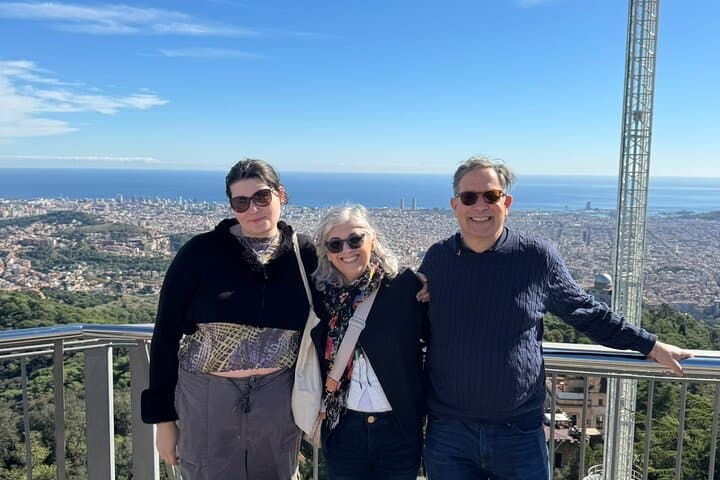
You start the day climbing toward Tibidabo, the Collserola hills holding the city beneath you as the road opens to broad blue of the Mediterranean.
Verified experiences and guided adventures in the surrounding area.
Operated by Bcityng · Barcelona, Catalonia
You start the day climbing toward Tibidabo, the Collserola hills holding the city beneath you as the road opens to broad blue of the Mediterranean.
From the terraces of the Temple of the Sacred Heart the city spreads in ordered roofs and needle spires — the Sagrada Família pointing north, the harbor glinting to the southeast — while the trampling city sounds soften into wind and gull calls.
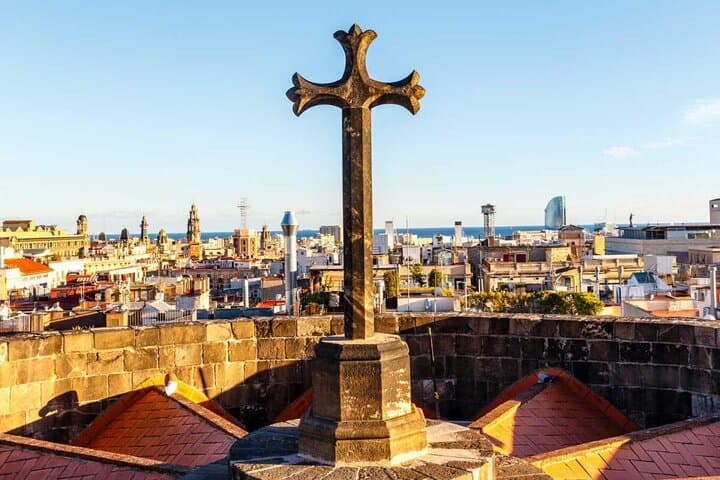
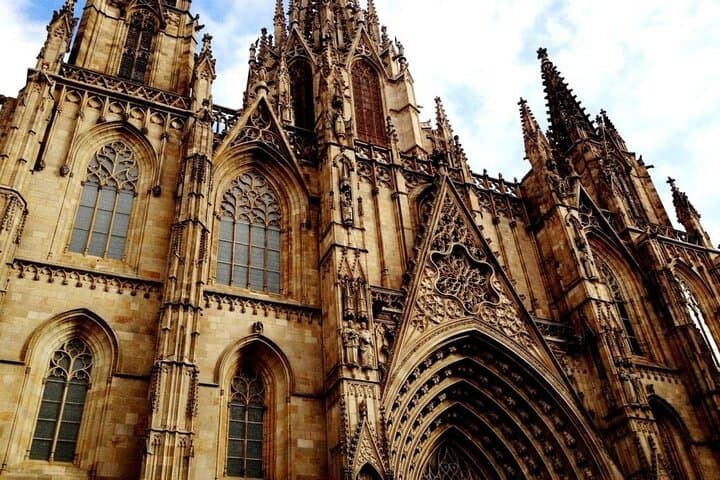
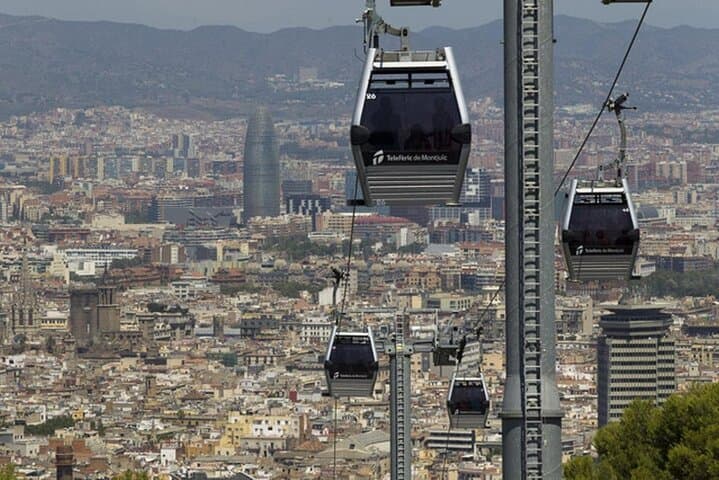
The walk down into the Gothic Quarter moves through streets shaped by Roman grids and medieval power: the Cathedral of Barcelona perches over cloisters where white geese patrol shaded pools, and its rooftop terraces offer a rare vantage on centuries of urban growth. Geology and human history meet on Montjuïc: an ancient limestone promontory converted by 20th-century exhibitions and Olympic projects into gardens, fortresses, and cable car approaches that lift you over the port.
Culinary notes thread through the day in El Call, Barcelona’s historic Jewish Quarter, where a relaxed tapas brunch centers on protected-designation cheeses, Iberian ham, and cava — small, local flavors that speak to Catalonia’s food culture.
Practical guidance: the tour is low-impact and largely accessible but includes short walks on cobbles and elevator access to roof terraces. Expect about four hours with photo stops, one seated brunch, and a cable car segment. Bring comfortable walking shoes, sun protection, a reusable water bottle, and a light layer for coastal winds. Morning light is best for panoramic photos and cooler walking; book a private pickup if you’re arriving by cruise to save transit time.
easy.
4 hours.
Suitable for most fitness levels; requires short walks on uneven cobbles and standing during views.
The itinerary lists the Montjuïc cable car as part of the route; confirm inclusion and any seasonal operating changes when you book.
The visit includes elevator access to the Cathedral terraces per the itinerary, but confirm whether skip-the-line or special-access tickets are covered in your booking.
Yes — the tour notes stroller accessibility and infant seating, though some streets have narrow cobbles and a stroller-friendly stroller helps.
Yes — the provider offers cruise-port pickup if you supply your ship name and arrival details at booking.
Barcelona’s core grew from a Roman settlement into a medieval capital; Montjuïc later became a showcase for the 1929 Exhibition and the 1992 Olympics that reshaped the hill.
Collserola Natural Park protects the green ridge above Tibidabo; visitors are asked to follow marked paths and minimize waste to protect the urban‑adjacent habitat.
Bcityng operates guided outdoor trips and adventures with an emphasis on safety, stewardship, and memorable experiences.
You start the day climbing toward Tibidabo, the Collserola hills holding the city beneath you as the road opens to broad blue of the Mediterranean.
You start the day climbing toward Tibidabo, the Collserola hills holding the city beneath you as the road opens to broad blue of the Mediterranean.
From the terraces of the Temple of the Sacred Heart the city spreads in ordered roofs and needle spires — the Sagrada Família pointing north, the harbor glinting to the southeast — while the trampling city sounds soften into wind and gull calls.
The walk down into the Gothic Quarter moves through streets shaped by Roman grids and medieval power: the Cathedral of Barcelona perches over cloisters where white geese patrol shaded pools, and its rooftop terraces offer a rare vantage on centuries of urban growth. Geology and human history meet on Montjuïc: an ancient limestone promontory converted by 20th-century exhibitions and Olympic projects into gardens, fortresses, and cable car approaches that lift you over the port.
Culinary notes thread through the day in El Call, Barcelona’s historic Jewish Quarter, where a relaxed tapas brunch centers on protected-designation cheeses, Iberian ham, and cava — small, local flavors that speak to Catalonia’s food culture.
Practical guidance: the tour is low-impact and largely accessible but includes short walks on cobbles and elevator access to roof terraces. Expect about four hours with photo stops, one seated brunch, and a cable car segment. Bring comfortable walking shoes, sun protection, a reusable water bottle, and a light layer for coastal winds. Morning light is best for panoramic photos and cooler walking; book a private pickup if you’re arriving by cruise to save transit time.