THE ADVENTURE COLLECTIVE® · Independent discovery and booking for outdoor travel

Walk the 22@ district where factories meet parametric design. This three-hour guided route through Poblenou traces Barcelona’s industrial roots and contemporary experiments in urbanism and architecture.
Walk the 22@ district where factories meet parametric design. This three-hour guided route through Poblenou traces Barcelona’s industrial roots and contemporary experiments in urbanism and architecture.
You step out of the metro at Glòries and the city’s grid exhales — a mix of tram tracks, cranes and glass facades that feel like a city mid-argument with its past. This three-hour walk through Poblenou’s 22@ district follows where factories used to smoke and start-ups now hum, pausing at Media-TIC’s honeycombed skin and other parametric experiments that push Barcelona’s skyline toward tomorrow.
Verified experiences and guided adventures in the surrounding area.
Operated by Barcelona Architecture Walks · Barcelona, Catalonia
You step out of the metro at Glòries and the city’s grid exhales — a mix of tram tracks, cranes and glass facades that feel like a city mid-argument with its past. This three-hour walk through Poblenou’s 22@ district follows where factories used to smoke and start-ups now hum, pausing at Media-TIC’s honeycombed skin and other parametric experiments that push Barcelona’s skyline toward tomorrow.
Poblenou was an industrial spine through the 19th and 20th centuries; the 22@ project recast those blocks into a tech and design district while keeping traces of the “rambles” and workers’ housing. Geologically this is flat coastal plain — you’ll notice reclaimed land and long, straight streets influenced by Ildefons Cerdà’s 19th-century grid. Culturally the area blends Catalan working-class roots, avant-garde architecture and an emerging maker scene; local cafés and small museums like Can Framis give texture between the larger buildings.
Practically: expect about 3–4 km of easy walking on paved streets, minimal elevation, and frequent stops for interpretation. Conversation covers parametric design, cradle-to-cradle thinking, superblocks and carbon footprints — architects point out materials, façades and urban strategies as you move.
Bring a charged phone for photos and maps, arrive by metro (L1 Glòries) and plan for morning or late-afternoon light for façades. The tour is wheelchair- and stroller-accessible and suitable for most fitness levels, but wear comfortable shoes and keep water handy — Barcelona sun can push the pace. Look up from your guidebook often: the future here is made of angles, light and the city’s refusal to stand still.
easy.
3 hours.
Suitable for most fitness levels; light walking stamina for 3–4 km required
Yes — the route and Disseny Hub meeting point are wheelchair- and stroller-accessible; surfaces are paved and flat.
Guides typically deliver in English; check the booking page for specific language availability and special requests.
Expect 3–4 km of mostly slow-paced walking with several stops for discussion and photos over about three hours.
Full refunds are available if you cancel at least 24 hours before departure; the tour may be canceled for bad weather or insufficient participants.
Poblenou was a textile and industrial center in the 19th–20th centuries; the 22@ initiative repurposed many blocks into a knowledge and design district while referencing Ildefons Cerdà’s 19th-century grid.
The 22@ project emphasizes adaptive reuse and reduced car traffic (superblocks) to lower urban carbon footprints; visitors are encouraged to use public transit and avoid single-use plastics.
Barcelona Architecture Walks operates guided outdoor trips and adventures with an emphasis on safety, stewardship, and memorable experiences.

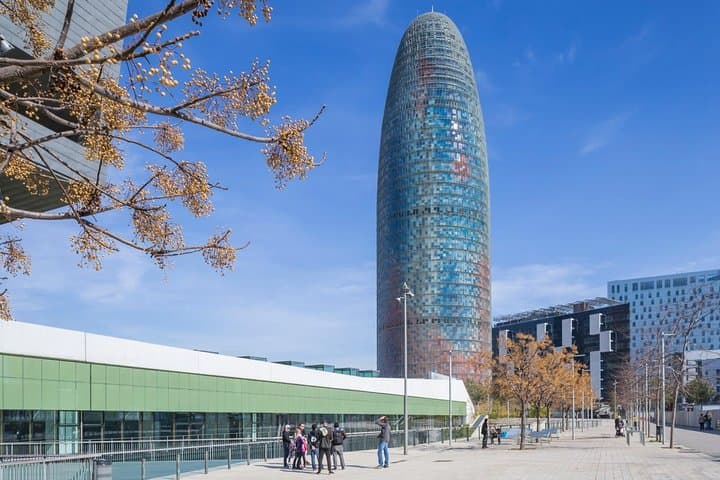
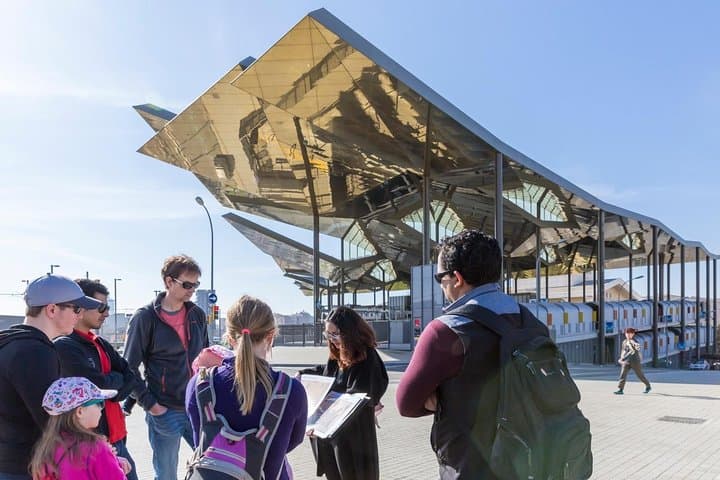

You step out of the metro at Glòries and the city’s grid exhales — a mix of tram tracks, cranes and glass facades that feel like a city mid-argument with its past. This three-hour walk through Poblenou’s 22@ district follows where factories used to smoke and start-ups now hum, pausing at Media-TIC’s honeycombed skin and other parametric experiments that push Barcelona’s skyline toward tomorrow.
You step out of the metro at Glòries and the city’s grid exhales — a mix of tram tracks, cranes and glass facades that feel like a city mid-argument with its past. This three-hour walk through Poblenou’s 22@ district follows where factories used to smoke and start-ups now hum, pausing at Media-TIC’s honeycombed skin and other parametric experiments that push Barcelona’s skyline toward tomorrow.
Poblenou was an industrial spine through the 19th and 20th centuries; the 22@ project recast those blocks into a tech and design district while keeping traces of the “rambles” and workers’ housing. Geologically this is flat coastal plain — you’ll notice reclaimed land and long, straight streets influenced by Ildefons Cerdà’s 19th-century grid. Culturally the area blends Catalan working-class roots, avant-garde architecture and an emerging maker scene; local cafés and small museums like Can Framis give texture between the larger buildings.
Practically: expect about 3–4 km of easy walking on paved streets, minimal elevation, and frequent stops for interpretation. Conversation covers parametric design, cradle-to-cradle thinking, superblocks and carbon footprints — architects point out materials, façades and urban strategies as you move.
Bring a charged phone for photos and maps, arrive by metro (L1 Glòries) and plan for morning or late-afternoon light for façades. The tour is wheelchair- and stroller-accessible and suitable for most fitness levels, but wear comfortable shoes and keep water handy — Barcelona sun can push the pace. Look up from your guidebook often: the future here is made of angles, light and the city’s refusal to stand still.