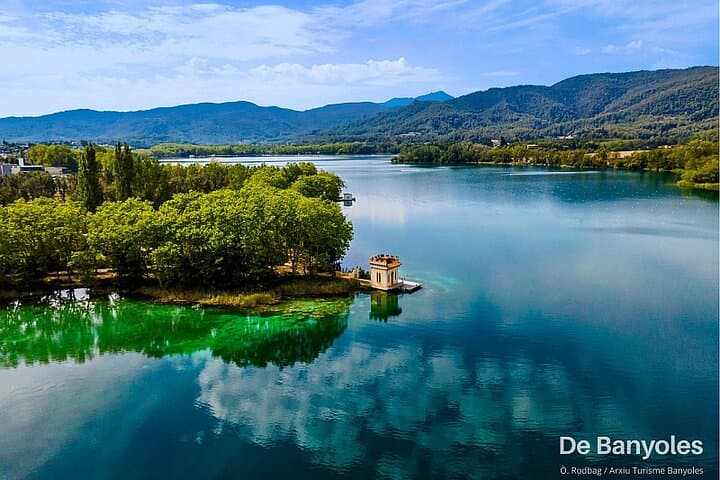
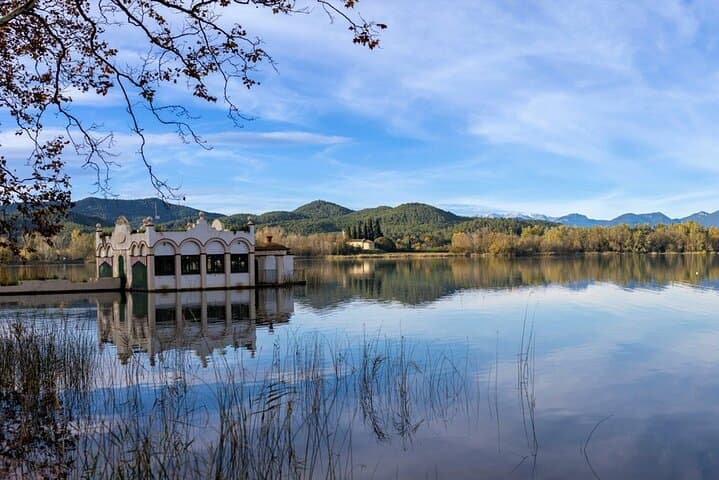
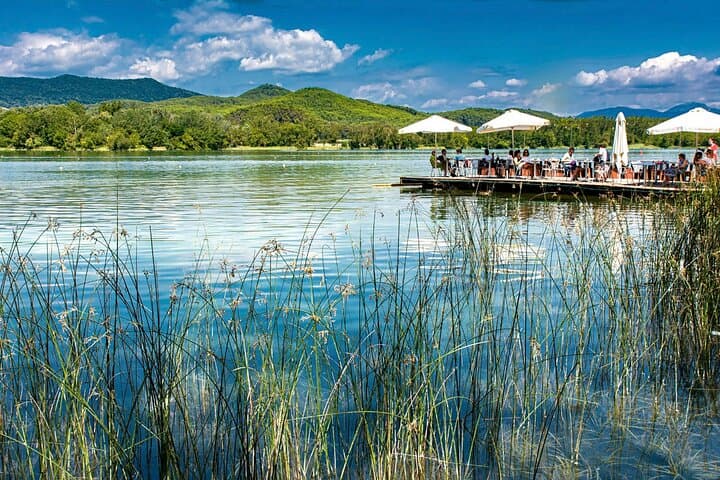
Morning over Banyoles finds the lake holding its breath, a low mist clinging to reeds while walkers follow a flat ring path that keeps the water at arm's length.
The guide points out storks on the mirador, then leads toward Les Estunes, where travertine cracks split shaded rock and local legends about the goges still circulate among pines.
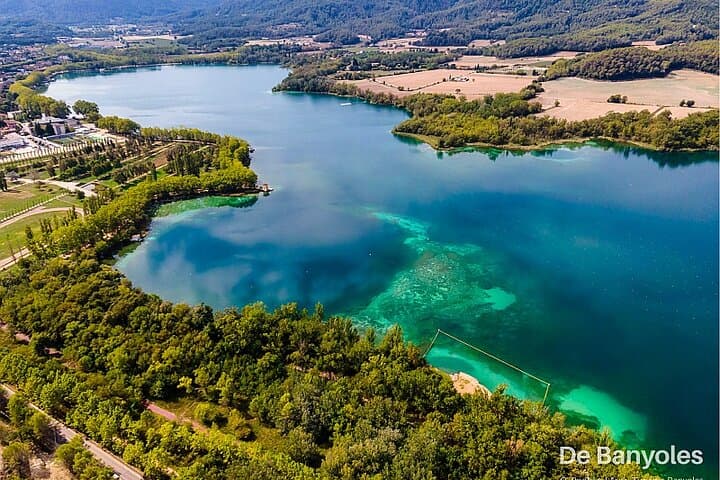
Geologically the lake is karstic—formed by dissolved limestone—and the shore is rimmed with travertine deposits and intermittent sulphurous springs that fed the 19th‑century Font Pudosa spa.
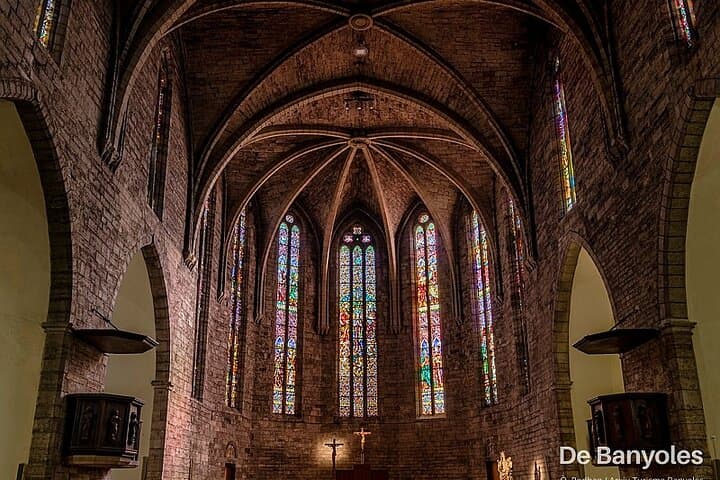
Culturally the town grew around water: the medieval monastery of Sant Esteve and the Gothic church of Santa Maria dels Turers anchor a compact historic center whose Plaça Major still hosts a lively Wednesday market.
The route is straightforward: a largely paved loop of roughly 6 km (about 3.7 miles) with minimal elevation gain, suitable for families and mobility aids; expect 2–3 hours including stops.
Bring a light daypack, water, sun protection and comfortable shoes; the surface alternates between asphalt promenades and packed dirt, and sections near Les Estunes can be slippery after rain.
Timing matters—early morning or late afternoon softens the light and concentrates bird activity, while Wednesday mornings add a market detour.
Pack binoculars for migratory birds, and plan for short interpretive stops: the spa ruins, the monastery viewpoint, and the old dye works El Tint.
Respect protected vegetation, keep dogs leashed, and follow local signage—these simple steps protect the karst shoreline and the species that rely on it.
Allow extra time for photos.