THE ADVENTURE COLLECTIVE® · Independent discovery and booking for outdoor travel

A compact full‑day circuit visiting Pre Rup, Banteay Srei, Neak Pean and Preah Khan. This small‑group tour combines fine 10th‑century carvings, island pools and forested temple galleries with hotel pickup in Siem Reap.
A compact full‑day circuit visiting Pre Rup, Banteay Srei, Neak Pean and Preah Khan. This small‑group tour combines fine 10th‑century carvings, island pools and forested temple galleries with hotel pickup in Siem Reap.
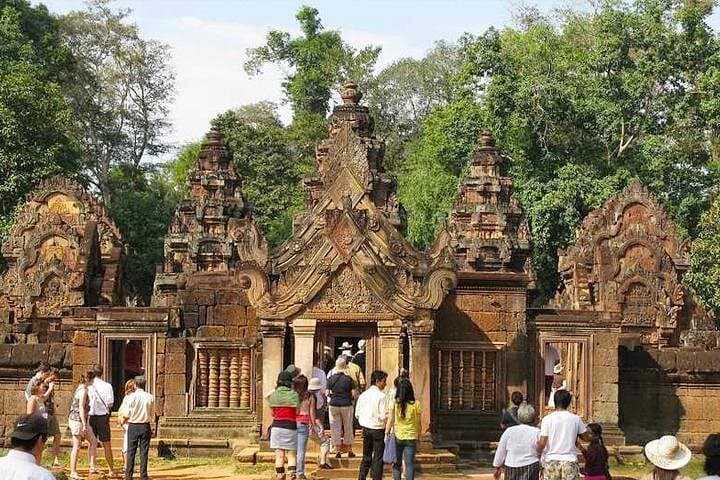
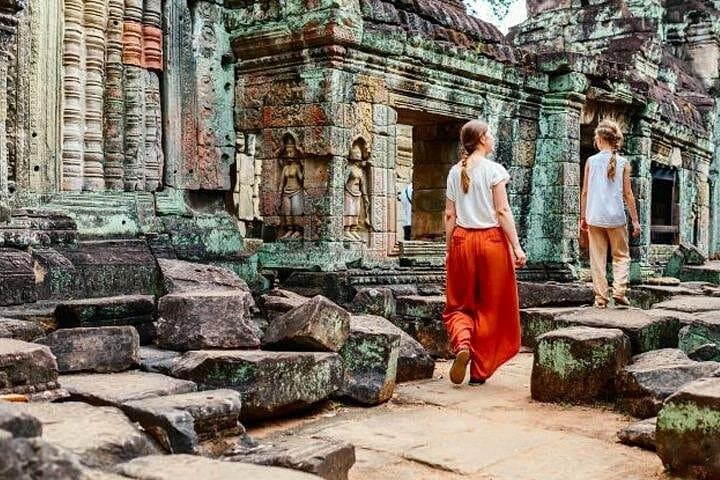
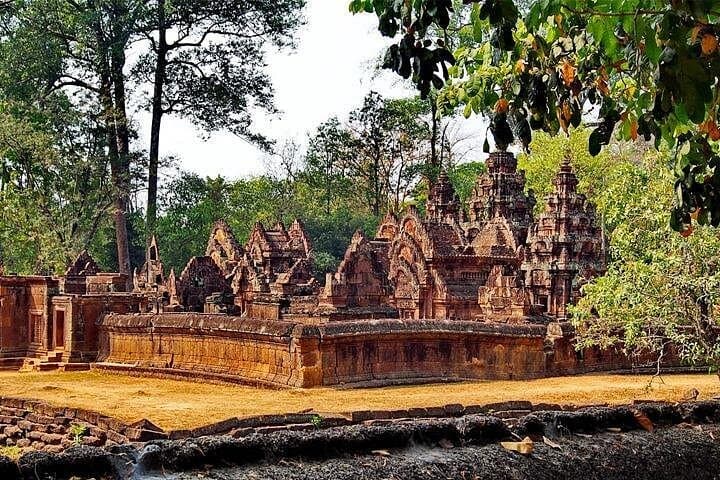
You step out of the air‑conditioned van into a heat that seems to press the jungle closer; stone lintels and carved faces peer through soft green light. The day's route threads older, quieter temples into a single arc — Pre Rup’s pyramidal silhouette, the delicate pink sandstone of Banteay Srei, the pool islands of Neak Pean and the forest-woven galleries of Preah Khan — giving a compact view of Angkor’s range beyond the big-name sites.
Verified experiences and guided adventures in the surrounding area.
Operated by Angkor Focus Travel · Siem Reap, Siem Reap
You step out of the air‑conditioned van into a heat that seems to press the jungle closer; stone lintels and carved faces peer through soft green light. The day's route threads older, quieter temples into a single arc — Pre Rup’s pyramidal silhouette, the delicate pink sandstone of Banteay Srei, the pool islands of Neak Pean and the forest-woven galleries of Preah Khan — giving a compact view of Angkor’s range beyond the big-name sites.
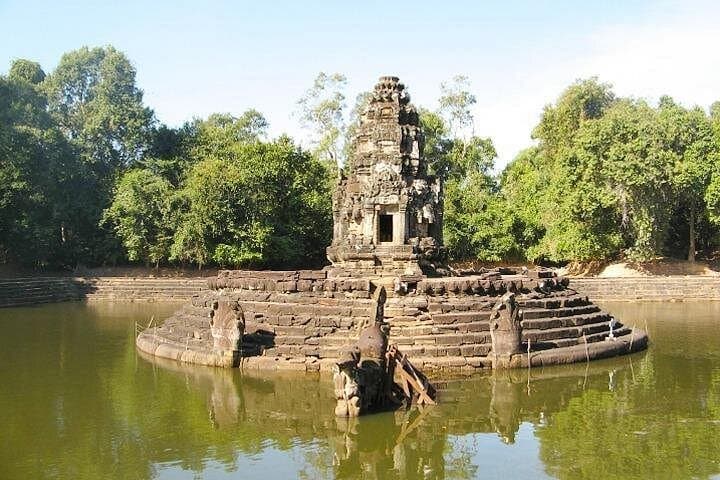
These sites span centuries of Khmer ambition. Pre Rup (10th century) was a funerary mountain-temple of Rajendravarman; Banteay Srei’s 10th‑century sandstone reliefs are famous for their fine detail and were largely inaccessible until the late 1990s; Neak Pean is an artificial island with symbolic healing pools; Preah Khan is a Jayavarman VII project that blends Buddhist and Hindu elements and is still under conservation work.
Expect mostly level walking with short flights of stone steps and uneven surfaces; a typical day is about eight hours with hotel pickup in Siem Reap. Photography is rewarding in soft morning and late-afternoon light; mid‑day is hottest and busiest. Bring water, sun protection, and a respectful demeanour — these sites are active cultural monuments. Tickets for the Angkor Archaeological Park are required (sold in Siem Reap) and guides add valuable context for the iconography and restoration work.
Small-group tours (limit ~15) keep the pace steady and allow time to inspect carvings and learn about local conservation. Plan lunch in between temples, wear lightweight layers for sudden showers in the wet season, and set aside energy to listen — stones here tell long, human stories.
easy.
8 hours.
Suitable for most travelers able to walk short distances and climb uneven stone steps; minimal endurance required.
No — Angkor Archaeological Park passes are not included; buy tickets at the official ticket centre in Siem Reap before the tour.
Walking is moderate: short on-site walks and stair climbs at each temple, with transport by vehicle between locations.
Lunch is not included; the itinerary typically allows time to buy lunch near the temples or return to Siem Reap afterward.
The tour is family‑friendly for children who can manage short walks; it’s not recommended for pregnant travelers due to uneven terrain and long day length.
These sites reflect a span of Khmer temple building from the 10th to 12th centuries, including major royal projects by Rajendravarman and Jayavarman VII.
Ongoing conservation and restoration work is overseen by APSARA and international partners; visitors should avoid touching carvings and follow paths to limit erosion.
Angkor Focus Travel operates guided outdoor trips and adventures with an emphasis on safety, stewardship, and memorable experiences.
You step out of the air‑conditioned van into a heat that seems to press the jungle closer; stone lintels and carved faces peer through soft green light. The day's route threads older, quieter temples into a single arc — Pre Rup’s pyramidal silhouette, the delicate pink sandstone of Banteay Srei, the pool islands of Neak Pean and the forest-woven galleries of Preah Khan — giving a compact view of Angkor’s range beyond the big-name sites.
You step out of the air‑conditioned van into a heat that seems to press the jungle closer; stone lintels and carved faces peer through soft green light. The day's route threads older, quieter temples into a single arc — Pre Rup’s pyramidal silhouette, the delicate pink sandstone of Banteay Srei, the pool islands of Neak Pean and the forest-woven galleries of Preah Khan — giving a compact view of Angkor’s range beyond the big-name sites.
These sites span centuries of Khmer ambition. Pre Rup (10th century) was a funerary mountain-temple of Rajendravarman; Banteay Srei’s 10th‑century sandstone reliefs are famous for their fine detail and were largely inaccessible until the late 1990s; Neak Pean is an artificial island with symbolic healing pools; Preah Khan is a Jayavarman VII project that blends Buddhist and Hindu elements and is still under conservation work.
Expect mostly level walking with short flights of stone steps and uneven surfaces; a typical day is about eight hours with hotel pickup in Siem Reap. Photography is rewarding in soft morning and late-afternoon light; mid‑day is hottest and busiest. Bring water, sun protection, and a respectful demeanour — these sites are active cultural monuments. Tickets for the Angkor Archaeological Park are required (sold in Siem Reap) and guides add valuable context for the iconography and restoration work.
Small-group tours (limit ~15) keep the pace steady and allow time to inspect carvings and learn about local conservation. Plan lunch in between temples, wear lightweight layers for sudden showers in the wet season, and set aside energy to listen — stones here tell long, human stories.