THE ADVENTURE COLLECTIVE® · Independent discovery and booking for outdoor travel

Explore two contrasting Angkor‑era sites in one day: the finely carved pink sandstone of Banteay Srei and the jungle‑swallowed mystery of Beng Mealea. This private full‑day tour from Siem Reap pairs close‑up history with practical logistics for a compact cultural adventure.
Explore two contrasting Angkor‑era sites in one day: the finely carved pink sandstone of Banteay Srei and the jungle‑swallowed mystery of Beng Mealea. This private full‑day tour from Siem Reap pairs close‑up history with practical logistics for a compact cultural adventure.
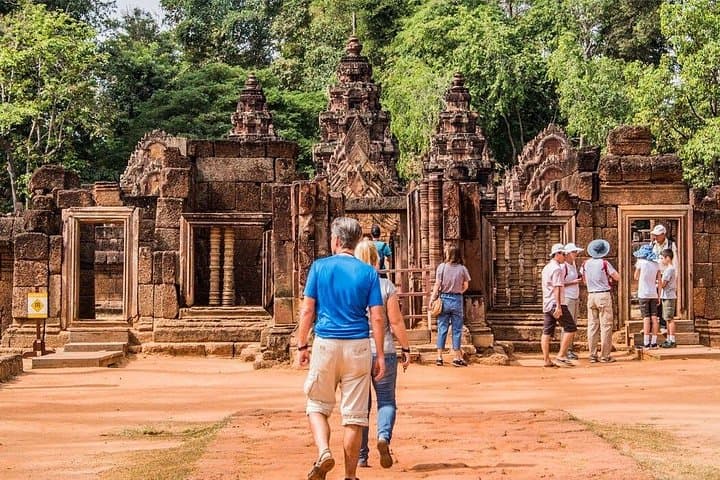
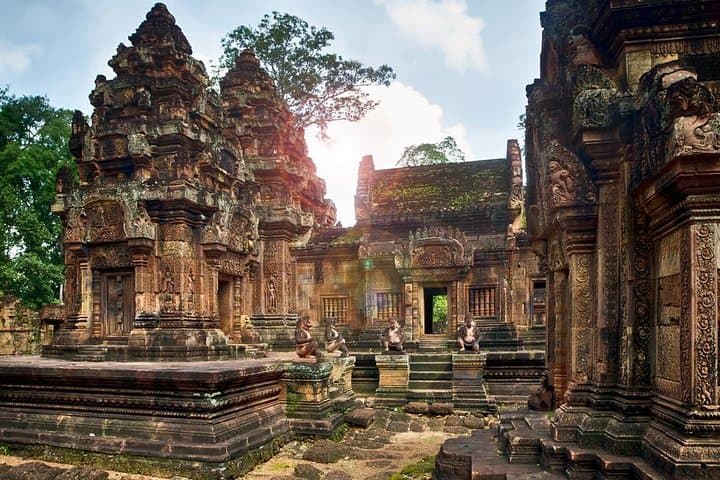
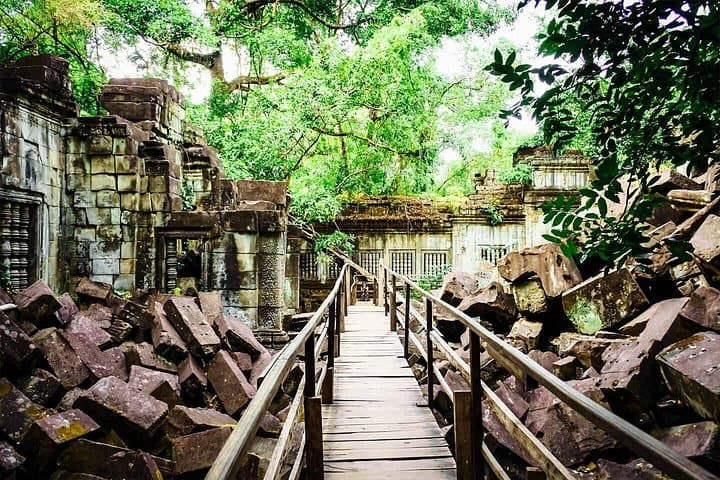
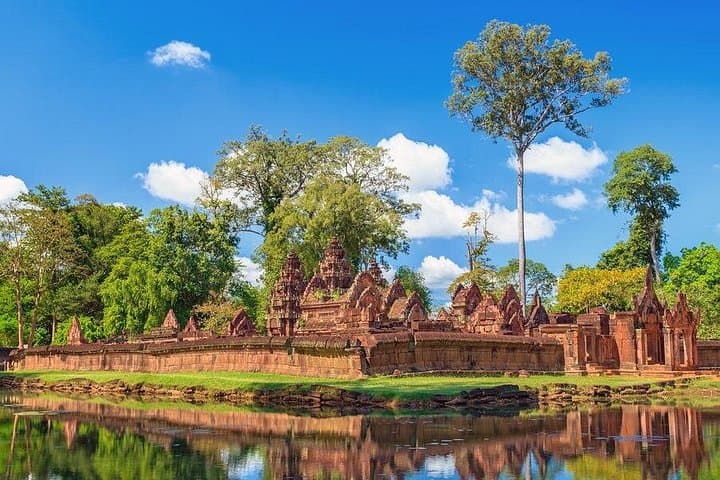
Dawn breaks over Siem Reap and your driver eases onto the rural road toward two very different ruins: Banteay Srei’s pink stone filigree and Beng Mealea’s jungle-eaten labyrinth. Morning light picks out delicate bas‑reliefs at Banteay Srei, where carvings remain unusually crisp on a small 10th‑century shrine dedicated to Shiva; later, the tour slips east into the quieter, wilder ruins of Beng Mealea where collapsed galleries and tree roots push and pry the stone apart.
Verified experiences and guided adventures in the surrounding area.
Operated by SARUS Co., Ltd · Siem Reap, Siem Reap Province
Dawn breaks over Siem Reap and your driver eases onto the rural road toward two very different ruins: Banteay Srei’s pink stone filigree and Beng Mealea’s jungle-eaten labyrinth. Morning light picks out delicate bas‑reliefs at Banteay Srei, where carvings remain unusually crisp on a small 10th‑century shrine dedicated to Shiva; later, the tour slips east into the quieter, wilder ruins of Beng Mealea where collapsed galleries and tree roots push and pry the stone apart.
Banteay Srei sits off the main Angkor axis, its coarse sandstone and compact scale reflecting a sophisticated workshop tradition rather than royal monumentality. Beng Mealea, aligned on the ancient royal highway to Preah Khan Kompong Svay, preserves the chaotic energy of an Angkor Wat–era temple left largely unrestored; nature has agency here, with figs and lianas threading through doorways.
Expect uneven stone, occasional slippery paths after rain and low doorways that reward slow movement and curious hands. Local culture is visible along the route: small villages, roadside markets and restaurants serving Khmer rice and amok for lunch.
Practically, the private tour runs about eight hours with hotel pickup, an English guide and an air‑conditioned vehicle; entrance fees are typically not included. Wear sturdy closed shoes, sun protection and insect repellent, bring cash for lunch and donations, and start early to avoid midday heat. Respect temple etiquette—cover shoulders and knees—and allow time to linger at carvings and tree‑wrapped galleries. This circuit balances close encounters with craftsmanship and the raw spectacle of ruins being slowly reclaimed by the forest.
easy.
8 hours.
Suitable for travelers who can walk short stretches on uneven ground; minimal elevation but repeated steps and uneven surfaces.
No. This tour’s price typically excludes Angkor ticket or local site fees—buy an Angkor pass or pay at the gate as directed by your operator.
Banteay Srei is roughly 25–30 km northeast of central Siem Reap; Beng Mealea lies about 40 km east of the main Angkor group—expect 30–60 minutes to each site depending on traffic.
Yes—it's rated easy with minimal walking per site, but participants should be able to handle uneven steps and carry their own water; notify the operator of any mobility needs.
On private tours you typically get time to wander; the guide will note meeting points and return times—confirm the exact schedule when you book.
Banteay Srei dates to the 10th century and is celebrated for its detailed pink sandstone carvings; Beng Mealea was built in the Angkor Wat period and sits on an ancient royal highway to eastern sites.
Both sites face pressure from visitor wear and vegetation growth; staying on paths, avoiding climbing on ruins and following guide instructions help limit damage.
SARUS Co., Ltd operates guided outdoor trips and adventures with an emphasis on safety, stewardship, and memorable experiences.
Dawn breaks over Siem Reap and your driver eases onto the rural road toward two very different ruins: Banteay Srei’s pink stone filigree and Beng Mealea’s jungle-eaten labyrinth. Morning light picks out delicate bas‑reliefs at Banteay Srei, where carvings remain unusually crisp on a small 10th‑century shrine dedicated to Shiva; later, the tour slips east into the quieter, wilder ruins of Beng Mealea where collapsed galleries and tree roots push and pry the stone apart.
Dawn breaks over Siem Reap and your driver eases onto the rural road toward two very different ruins: Banteay Srei’s pink stone filigree and Beng Mealea’s jungle-eaten labyrinth. Morning light picks out delicate bas‑reliefs at Banteay Srei, where carvings remain unusually crisp on a small 10th‑century shrine dedicated to Shiva; later, the tour slips east into the quieter, wilder ruins of Beng Mealea where collapsed galleries and tree roots push and pry the stone apart.
Banteay Srei sits off the main Angkor axis, its coarse sandstone and compact scale reflecting a sophisticated workshop tradition rather than royal monumentality. Beng Mealea, aligned on the ancient royal highway to Preah Khan Kompong Svay, preserves the chaotic energy of an Angkor Wat–era temple left largely unrestored; nature has agency here, with figs and lianas threading through doorways.
Expect uneven stone, occasional slippery paths after rain and low doorways that reward slow movement and curious hands. Local culture is visible along the route: small villages, roadside markets and restaurants serving Khmer rice and amok for lunch.
Practically, the private tour runs about eight hours with hotel pickup, an English guide and an air‑conditioned vehicle; entrance fees are typically not included. Wear sturdy closed shoes, sun protection and insect repellent, bring cash for lunch and donations, and start early to avoid midday heat. Respect temple etiquette—cover shoulders and knees—and allow time to linger at carvings and tree‑wrapped galleries. This circuit balances close encounters with craftsmanship and the raw spectacle of ruins being slowly reclaimed by the forest.