THE ADVENTURE COLLECTIVE® · Independent discovery and booking for outdoor travel

Visit the pink sandstone wonders of Banteay Srei on a 4–6 hour active day tour from Siem Reap, combining intricately carved 10th-century temples with village life and countryside views. Ideal for travelers who want history, hands-on culture, and manageable walking.
Visit the pink sandstone wonders of Banteay Srei on a 4–6 hour active day tour from Siem Reap, combining intricately carved 10th-century temples with village life and countryside views. Ideal for travelers who want history, hands-on culture, and manageable walking.
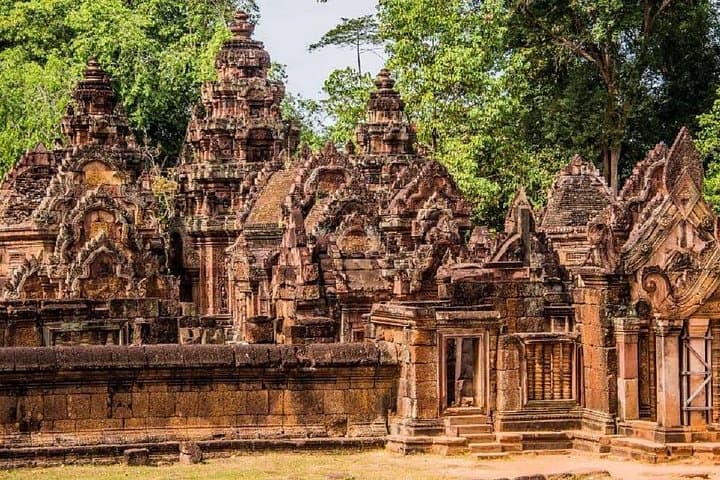
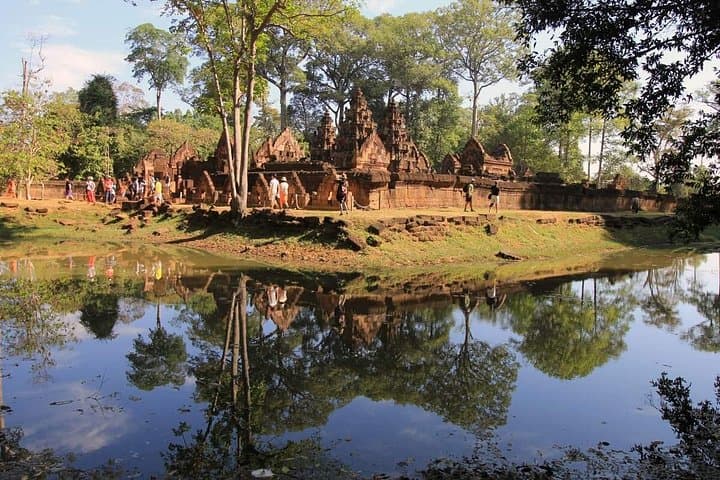
You arrive before the heat of the day, the road narrowing into a ribbon of palm and rice paddies as the hum of Siem Reap drops away. A band of carved sandstone rises from the green—Banteay Srei’s pink walls catching sunlight like a worked jewel. The air smells of wet earth and wood smoke; the countryside seems to push forward, inviting a slower pace and closer look.
Verified experiences and guided adventures in the surrounding area.
Operated by Trip Focus Cambodia · Siem Reap, Siem Reap Province
You arrive before the heat of the day, the road narrowing into a ribbon of palm and rice paddies as the hum of Siem Reap drops away. A band of carved sandstone rises from the green—Banteay Srei’s pink walls catching sunlight like a worked jewel. The air smells of wet earth and wood smoke; the countryside seems to push forward, inviting a slower pace and closer look.
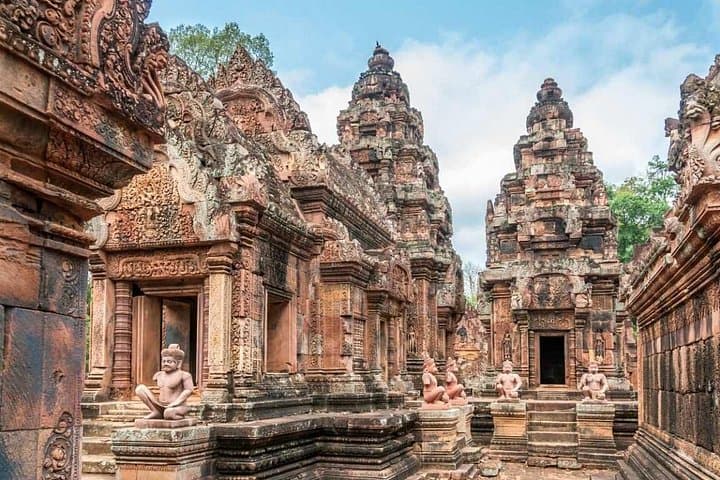
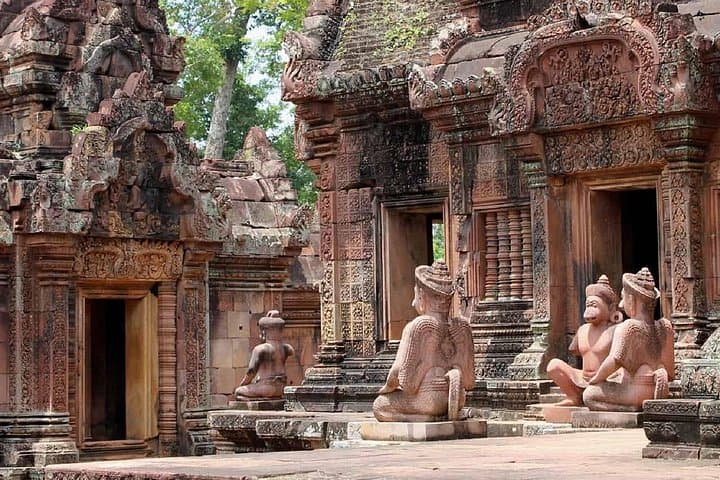
Built in the 10th century, Banteay Srei is unusual in scale and material: fine-grained rose-pink sandstone allowed craftsmen to carve exceptionally detailed reliefs of Ramayana scenes and floral motifs. Geologically, the sandstone weathers differently than later Angkorian stone, so the site’s preservation depends on careful conservation. Nearby Banteay Samre offers a contrast—larger, more classical Angkorian architecture—while Preah Dak Village gives the day context, showing how rice, silviculture, and village life still shape the landscape.
Practical guidance: the tour is typically 4–6 hours with transportation and an English-speaking guide included. Expect uneven steps, tight doorways and shaded courtyards; comfortable walking shoes and sun protection are essential. Bring a refillable water bottle—the operator provides mineral water—and dress modestly for temple etiquette (shoulders covered, knees below the knee). Mornings are cooler and best for photographs; afternoons can be humid or rainy during monsoon months. Respect conservation rules—don’t climb fragile carvings and follow marked paths. With a little planning, this active day tour pairs cultural depth with the rhythm of rural Cambodia, leaving enough space to listen to language, wind and carved stone.
easy.
4–6 hours.
Suitable for most fitness levels; involves several short walks and stairs but no sustained climbs.
Yes—Banteay Srei sits within the Angkor area and visitors typically require a valid Angkor Archaeological Park pass purchased before entry.
Yes—the advertised tour includes transportation and an English-speaking guide, plus bottled water as listed in inclusions.
No technical climbs are required, but expect uneven steps, low doorways and short flights of stone stairs—mobility limitations may make some areas difficult.
Drone use is generally restricted in Angkor Archaeological Park and tripods may be regulated; check current park rules and ask your guide before setting up.
Banteay Srei, dedicated to Shiva and Parvati, dates to the 10th century and is famed for its delicate carvings executed in a fine pink sandstone.
Visitor pressure and weathering threaten carvings; follow park rules, avoid touching reliefs and support local conservation initiatives when possible.
Trip Focus Cambodia operates guided outdoor trips and adventures with an emphasis on safety, stewardship, and memorable experiences.
You arrive before the heat of the day, the road narrowing into a ribbon of palm and rice paddies as the hum of Siem Reap drops away. A band of carved sandstone rises from the green—Banteay Srei’s pink walls catching sunlight like a worked jewel. The air smells of wet earth and wood smoke; the countryside seems to push forward, inviting a slower pace and closer look.
You arrive before the heat of the day, the road narrowing into a ribbon of palm and rice paddies as the hum of Siem Reap drops away. A band of carved sandstone rises from the green—Banteay Srei’s pink walls catching sunlight like a worked jewel. The air smells of wet earth and wood smoke; the countryside seems to push forward, inviting a slower pace and closer look.
Built in the 10th century, Banteay Srei is unusual in scale and material: fine-grained rose-pink sandstone allowed craftsmen to carve exceptionally detailed reliefs of Ramayana scenes and floral motifs. Geologically, the sandstone weathers differently than later Angkorian stone, so the site’s preservation depends on careful conservation. Nearby Banteay Samre offers a contrast—larger, more classical Angkorian architecture—while Preah Dak Village gives the day context, showing how rice, silviculture, and village life still shape the landscape.
Practical guidance: the tour is typically 4–6 hours with transportation and an English-speaking guide included. Expect uneven steps, tight doorways and shaded courtyards; comfortable walking shoes and sun protection are essential. Bring a refillable water bottle—the operator provides mineral water—and dress modestly for temple etiquette (shoulders covered, knees below the knee). Mornings are cooler and best for photographs; afternoons can be humid or rainy during monsoon months. Respect conservation rules—don’t climb fragile carvings and follow marked paths. With a little planning, this active day tour pairs cultural depth with the rhythm of rural Cambodia, leaving enough space to listen to language, wind and carved stone.