THE ADVENTURE COLLECTIVE® · Independent discovery and booking for outdoor travel

Explore the ornate pink sandstone of Banteay Srei and four other Angkor temples in a single full-day small-group tour from Siem Reap. This structured route pairs cultural context with practical logistics—ideal for travelers who want maximum temples with minimal planning.
Explore the ornate pink sandstone of Banteay Srei and four other Angkor temples in a single full-day small-group tour from Siem Reap. This structured route pairs cultural context with practical logistics—ideal for travelers who want maximum temples with minimal planning.
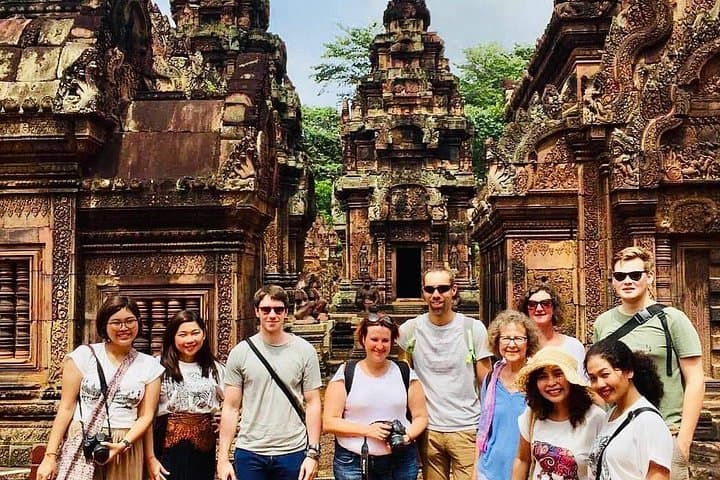
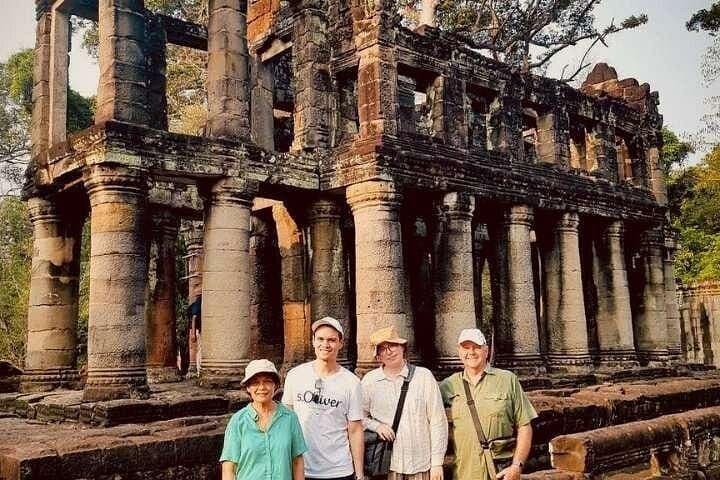
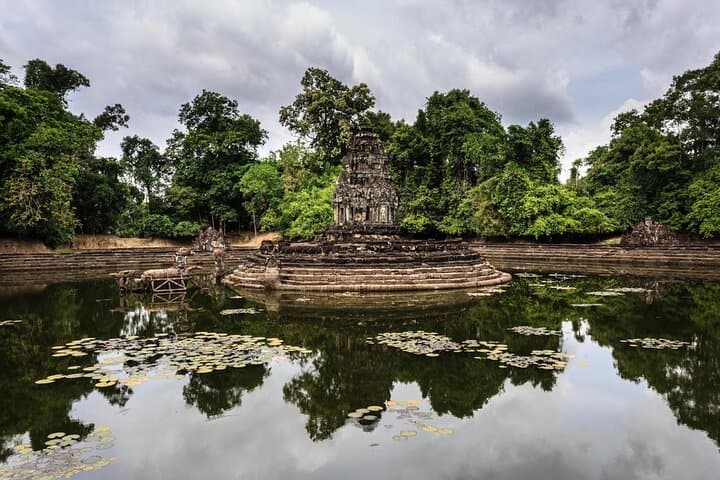
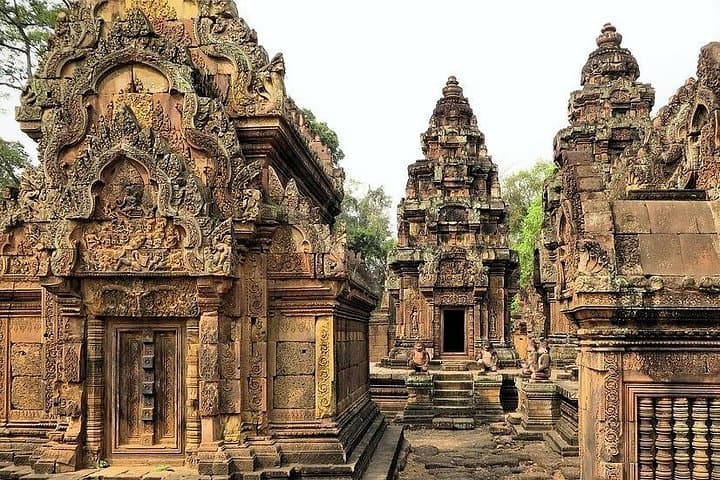
You step off the minibus into a heat-tilted morning and the first stone carvings confront you like pages scraped clean by time. The pink sandstone of Banteay Srei glows under the sun; bas-reliefs of demons and lotus vines crowd the lintels, each cut so small it feels intimate. The day unfolds as a measured circuit—Banteay Srei, Preah Khan, East Mebon, Pre Rup, Ta Som and the reflective pool of Neak Pean—linked by flat rural roads and short walks through shaded temple grounds.
Verified experiences and guided adventures in the surrounding area.
Operated by Siem Reap Shuttle · Siem Reap, Siem Reap Province
You step off the minibus into a heat-tilted morning and the first stone carvings confront you like pages scraped clean by time. The pink sandstone of Banteay Srei glows under the sun; bas-reliefs of demons and lotus vines crowd the lintels, each cut so small it feels intimate. The day unfolds as a measured circuit—Banteay Srei, Preah Khan, East Mebon, Pre Rup, Ta Som and the reflective pool of Neak Pean—linked by flat rural roads and short walks through shaded temple grounds.
These temples span centuries of the Khmer Empire, from the 10th-century refinement at Banteay Srei to the 10th–12th-century, state-scale masonry of Preah Khan and Pre Rup. Geologically, the region sits on low-lying alluvial plains fed by the Tonle Sap; temple foundations mix laterite and sandstone quarried upstream. Local culture is inseparable from the sites—monks, vendors selling rice-paper amok, and villagers maintaining irrigation that once sustained Angkor’s rice fields.
On a practical note: expect a 7–8 hour day with several short walks on uneven stone and compacted dirt; elevation changes are minimal but temple steps can be steep and irregular. Dress respectfully—shoulders and knees covered to enter temple sanctuaries. Bring sunscreen, a wide-brim hat and plenty of water; the operator provides bottled water and cold towels on the minibus. Timing matters: Banteay Srei is furthest out, so it’s visited early to beat crowds; afternoons at Pre Rup offer softer light for photos.
This tour suits travelers who want a structured, single-day overview of Angkor’s quieter, ornate sites with English-speaking guidance and hotel pickup included.
easy.
7–8 hours.
Suitable for most fitness levels; requires walking on uneven ground and climbing temple steps.
The tour runs about 7–8 hours with hotel pickup in the morning and return in the late afternoon.
Admissions are not included by default—you should bring cash or purchase an Angkor pass separately as required.
The operator notes it is not suitable for children under 12; the day is long and involves walking and heat exposure.
An English-speaking guide certified by the Apsara Authority leads the tour.
The temples visited reflect different functions—Banteay Srei is known for intricate devotional carving; Preah Khan and Pre Rup served both ceremonial and administrative roles during the Angkor period.
Visitor numbers and weathering threaten carvings; follow marked paths, avoid touching reliefs, and support local guides who promote responsible tourism.
Siem Reap Shuttle operates guided outdoor trips and adventures with an emphasis on safety, stewardship, and memorable experiences.
You step off the minibus into a heat-tilted morning and the first stone carvings confront you like pages scraped clean by time. The pink sandstone of Banteay Srei glows under the sun; bas-reliefs of demons and lotus vines crowd the lintels, each cut so small it feels intimate. The day unfolds as a measured circuit—Banteay Srei, Preah Khan, East Mebon, Pre Rup, Ta Som and the reflective pool of Neak Pean—linked by flat rural roads and short walks through shaded temple grounds.
You step off the minibus into a heat-tilted morning and the first stone carvings confront you like pages scraped clean by time. The pink sandstone of Banteay Srei glows under the sun; bas-reliefs of demons and lotus vines crowd the lintels, each cut so small it feels intimate. The day unfolds as a measured circuit—Banteay Srei, Preah Khan, East Mebon, Pre Rup, Ta Som and the reflective pool of Neak Pean—linked by flat rural roads and short walks through shaded temple grounds.
These temples span centuries of the Khmer Empire, from the 10th-century refinement at Banteay Srei to the 10th–12th-century, state-scale masonry of Preah Khan and Pre Rup. Geologically, the region sits on low-lying alluvial plains fed by the Tonle Sap; temple foundations mix laterite and sandstone quarried upstream. Local culture is inseparable from the sites—monks, vendors selling rice-paper amok, and villagers maintaining irrigation that once sustained Angkor’s rice fields.
On a practical note: expect a 7–8 hour day with several short walks on uneven stone and compacted dirt; elevation changes are minimal but temple steps can be steep and irregular. Dress respectfully—shoulders and knees covered to enter temple sanctuaries. Bring sunscreen, a wide-brim hat and plenty of water; the operator provides bottled water and cold towels on the minibus. Timing matters: Banteay Srei is furthest out, so it’s visited early to beat crowds; afternoons at Pre Rup offer softer light for photos.
This tour suits travelers who want a structured, single-day overview of Angkor’s quieter, ornate sites with English-speaking guidance and hotel pickup included.