THE ADVENTURE COLLECTIVE® · Independent discovery and booking for outdoor travel

Spend a long day from Quito exploring Baños’ dramatic waterfalls, the famous Swing at the End of the World, and panoramic Agoyán Dam vistas. This active tour blends short hikes, scenic stops, and cultural pitstops for a full-day outdoor experience.
Spend a long day from Quito exploring Baños’ dramatic waterfalls, the famous Swing at the End of the World, and panoramic Agoyán Dam vistas. This active tour blends short hikes, scenic stops, and cultural pitstops for a full-day outdoor experience.
A cool morning wind brushes past the Mirador Casa del Árbol as the swing creaks and you push off toward Tungurahua’s crater—everything below tilts into a patchwork of river canyons, farmland and cloud-stitched forest. The guide counts heads, and the van hums down the Waterfall Route where basalt cliffs funnel water into curtains that dare you to get close.
Verified experiences and guided adventures in the surrounding area.
Operated by Ecuador Traveler Planet · Baños de Agua Santa, Tungurahua
A cool morning wind brushes past the Mirador Casa del Árbol as the swing creaks and you push off toward Tungurahua’s crater—everything below tilts into a patchwork of river canyons, farmland and cloud-stitched forest. The guide counts heads, and the van hums down the Waterfall Route where basalt cliffs funnel water into curtains that dare you to get close.
Baños grew as a thermal stop between Andean highlands and the Amazon basin; its hot springs and river valleys reflect volcanic activity from Tungurahua, whose eruptions shaped the steep ravines and the pastel soils that feed local orchards. The geology is immediate: volcanic rock, deep incision by the Pastaza River and waterfalls that thread the slopes. Local culture is practical and warm—ice-cream stands in Salcedo, mountain guides who know every raincloud, and small restaurants serving mote and trout caught upriver.
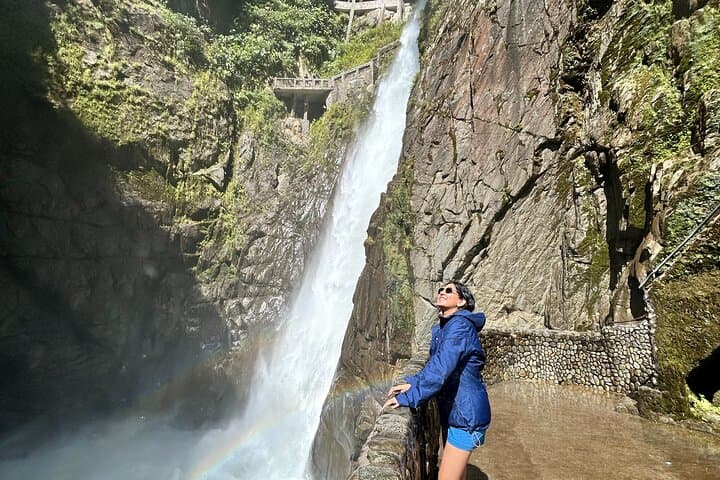
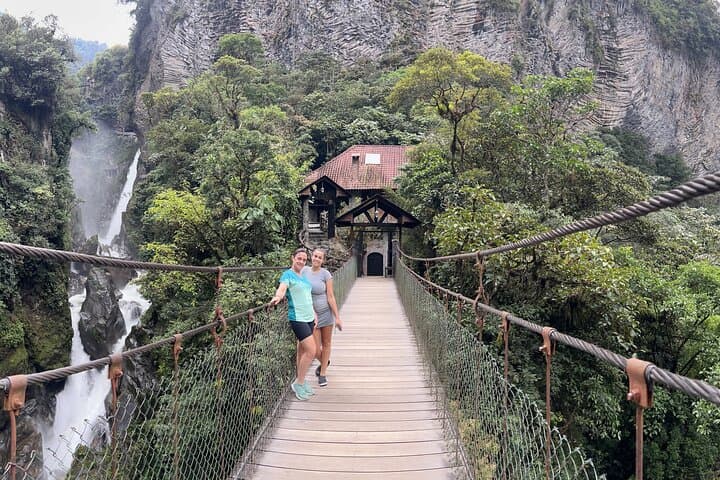
Visitors can expect short but sometimes steep hikes to Cascada de la Virgen and the Pailón del Diablo, narrow boardwalks, spray-dampened viewpoints and one long scenic stop at the Agoyán Dam. Optional zip-lines demand upper-body strength and a steady stomach.
Practical guidance: start early from Quito, bring a lightweight rain jacket, solid footwear with grip, and at least 2 liters of water. Expect 9–12 hours total, moderate fitness, and muddy trail sections after rain. Respect ropes and signage near cliff edges, and leave no trace—Baños’ paths recover faster when hikers stick to established routes.
moderate.
9–12 hours.
Good cardiovascular stamina and the ability to handle several short, steep hikes and some stairs.
Yes—roundtrip pickup from Quito is included, with an early morning departure and return in the evening.
Lunch and most local fees are included; some attractions like the Pailón del Diablo have small entrance or path fees covered by the operator.
The swing is a popular viewpoint operated locally; use provided harnesses if offered and follow staff instructions—exercise caution on wet platforms.
Infants must sit on laps; the tour isn’t recommended for people with serious heart or spinal conditions and involves stairs and uneven terrain that may challenge very young or older participants.
Baños developed around thermal springs used since pre-Columbian times and later became a staging point between the highlands and the Amazon.
High visitor numbers can erode trails and stress water sources; stick to paths, pack out waste, and use refillable bottles to reduce single-use plastics.
Ecuador Traveler Planet operates guided outdoor trips and adventures with an emphasis on safety, stewardship, and memorable experiences.
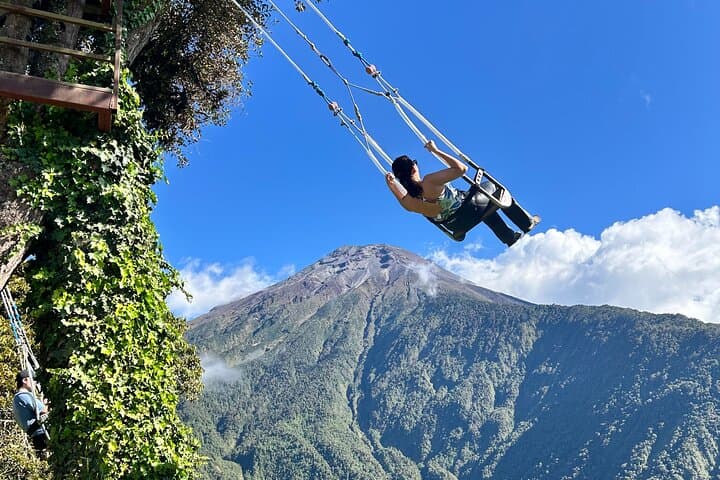
A cool morning wind brushes past the Mirador Casa del Árbol as the swing creaks and you push off toward Tungurahua’s crater—everything below tilts into a patchwork of river canyons, farmland and cloud-stitched forest. The guide counts heads, and the van hums down the Waterfall Route where basalt cliffs funnel water into curtains that dare you to get close.
A cool morning wind brushes past the Mirador Casa del Árbol as the swing creaks and you push off toward Tungurahua’s crater—everything below tilts into a patchwork of river canyons, farmland and cloud-stitched forest. The guide counts heads, and the van hums down the Waterfall Route where basalt cliffs funnel water into curtains that dare you to get close.
Baños grew as a thermal stop between Andean highlands and the Amazon basin; its hot springs and river valleys reflect volcanic activity from Tungurahua, whose eruptions shaped the steep ravines and the pastel soils that feed local orchards. The geology is immediate: volcanic rock, deep incision by the Pastaza River and waterfalls that thread the slopes. Local culture is practical and warm—ice-cream stands in Salcedo, mountain guides who know every raincloud, and small restaurants serving mote and trout caught upriver.
Visitors can expect short but sometimes steep hikes to Cascada de la Virgen and the Pailón del Diablo, narrow boardwalks, spray-dampened viewpoints and one long scenic stop at the Agoyán Dam. Optional zip-lines demand upper-body strength and a steady stomach.
Practical guidance: start early from Quito, bring a lightweight rain jacket, solid footwear with grip, and at least 2 liters of water. Expect 9–12 hours total, moderate fitness, and muddy trail sections after rain. Respect ropes and signage near cliff edges, and leave no trace—Baños’ paths recover faster when hikers stick to established routes.