THE ADVENTURE COLLECTIVE® · Independent discovery and booking for outdoor travel

Walk the fields where Robert the Bruce secured Scotland’s future. This guided 60–75 minute outdoor tour covers the Battle of Bannockburn, the Wars of Independence, and nearby Stirling Bridge with accessible, small-group commentary.
Walk the fields where Robert the Bruce secured Scotland’s future. This guided 60–75 minute outdoor tour covers the Battle of Bannockburn, the Wars of Independence, and nearby Stirling Bridge with accessible, small-group commentary.
You step off the lane and onto the sweep of grass where, in June 1314, Robert the Bruce turned a risky gamble into Scotland’s defining victory. The land is honest — open fields, low hummocks and the faint channel of Bannock Burn — and the guide’s voice maps the battle like a navigator pointing out currents on a river.
Verified experiences and guided adventures in the surrounding area.
Operated by Freedom Tour Today · Bannockburn, Scotland
You step off the lane and onto the sweep of grass where, in June 1314, Robert the Bruce turned a risky gamble into Scotland’s defining victory. The land is honest — open fields, low hummocks and the faint channel of Bannock Burn — and the guide’s voice maps the battle like a navigator pointing out currents on a river.
This one-hour walking tour moves across the battlefield itself (it’s an independent walk, not linked to the visitor centre) and threads together the Wars of Independence, the key players — Bruce, James Douglas — and the aftermath that shaped Scottish nationhood. Nearby Stirling Bridge, covered on request, recalls William Wallace’s earlier victory in 1297 and the strategic choke points that decided medieval warfare here.
Geologically, the area sits on low-lying Carboniferous silt and glacial deposits that create the rolling, tactical ground soldiers used; culturally, the site remains a place of memory where locals and visitors come to reflect. The tour operator is accessible-minded: routes are wheelchair- and stroller-friendly and small-group sizes keep the experience conversational.
Practical guide: expect 60–75 minutes of mostly flat walking on grass and compact paths. Wear sturdy footwear and a waterproof layer — Scottish weather changes fast. Bring water and binoculars for distant markers and birdlife. If you want Stirling Bridge included, request it when booking; groups cap at about 15 people. Above all, stay on paths out of respect for a protected historic landscape and any ongoing conservation work.
easy.
1–1.25 hours.
Suitable for most fitness levels; mostly flat walking for an hour with brief stops
Yes — the operator lists the walking route as wheelchair- and stroller-accessible, with mostly flat surfaces and compact paths.
Service animals are allowed; other dogs may be welcome but should be kept on a short lead—check with the operator when booking.
No — this walking tour operates on the battlefield itself and is not linked to the visitor centre; any visitor centre entry is separate.
Groups are small (up to about 15 people) and the walking tour lasts approximately 60 to 75 minutes.
The Battle of Bannockburn (1314) was a pivotal Scottish victory under Robert the Bruce that curtailed English attempts to control Scotland; nearby Stirling Bridge (1297) marks William Wallace’s earlier tactical win.
The battlefield is both a memorial and an archaeological landscape; stay on designated paths, avoid disturbing features, and follow local guidance to protect soils and monuments.
Freedom Tour Today operates guided outdoor trips and adventures with an emphasis on safety, stewardship, and memorable experiences.
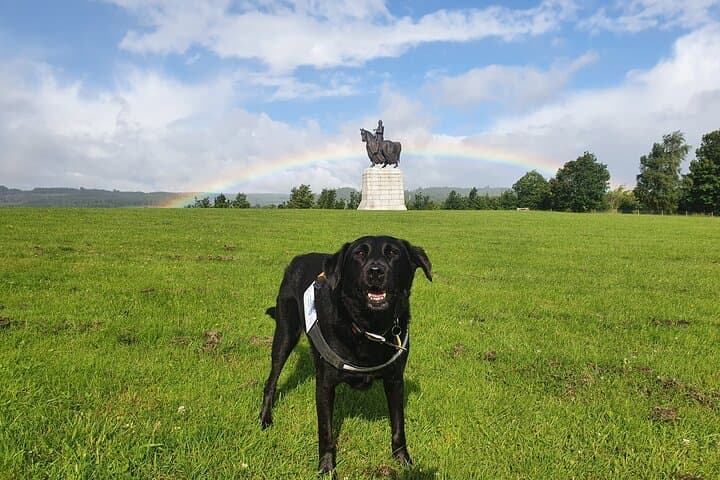
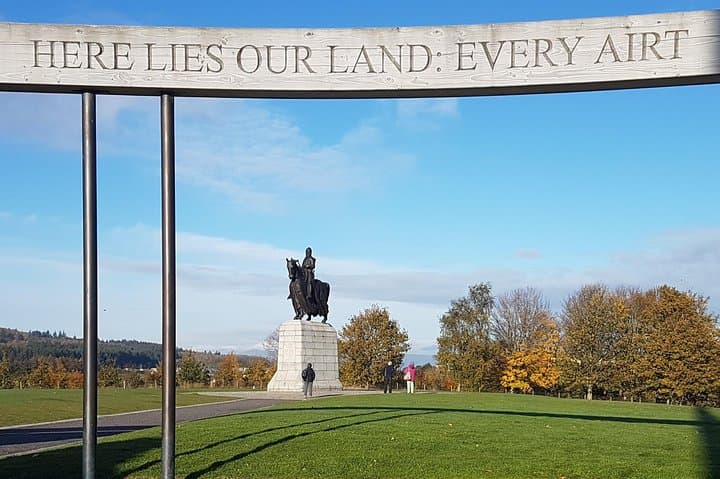
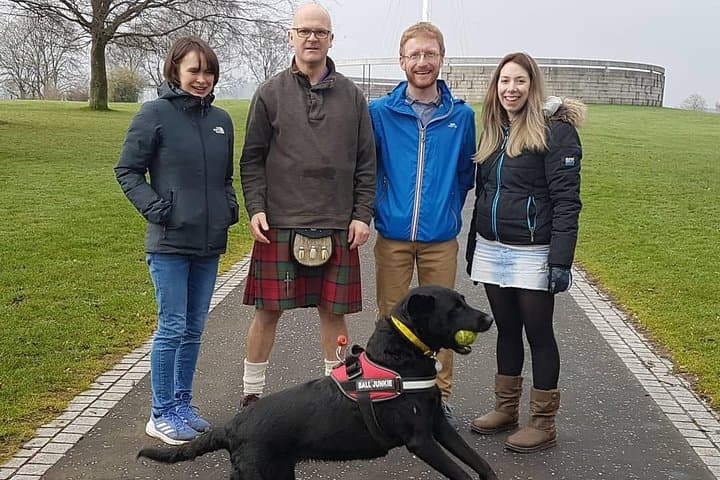
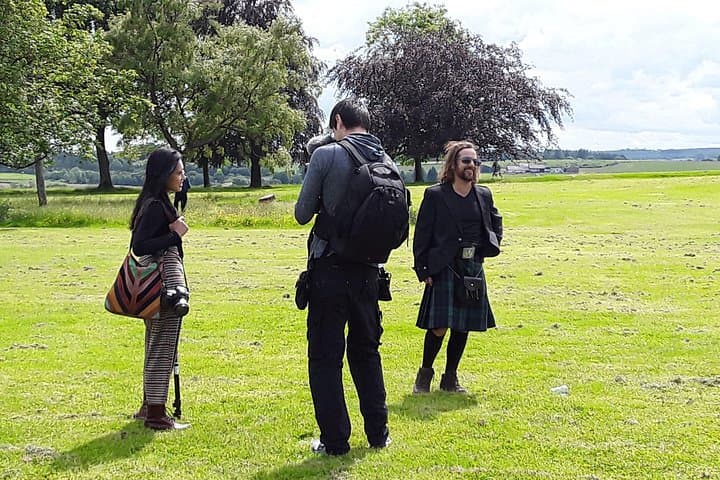
You step off the lane and onto the sweep of grass where, in June 1314, Robert the Bruce turned a risky gamble into Scotland’s defining victory. The land is honest — open fields, low hummocks and the faint channel of Bannock Burn — and the guide’s voice maps the battle like a navigator pointing out currents on a river.
You step off the lane and onto the sweep of grass where, in June 1314, Robert the Bruce turned a risky gamble into Scotland’s defining victory. The land is honest — open fields, low hummocks and the faint channel of Bannock Burn — and the guide’s voice maps the battle like a navigator pointing out currents on a river.
This one-hour walking tour moves across the battlefield itself (it’s an independent walk, not linked to the visitor centre) and threads together the Wars of Independence, the key players — Bruce, James Douglas — and the aftermath that shaped Scottish nationhood. Nearby Stirling Bridge, covered on request, recalls William Wallace’s earlier victory in 1297 and the strategic choke points that decided medieval warfare here.
Geologically, the area sits on low-lying Carboniferous silt and glacial deposits that create the rolling, tactical ground soldiers used; culturally, the site remains a place of memory where locals and visitors come to reflect. The tour operator is accessible-minded: routes are wheelchair- and stroller-friendly and small-group sizes keep the experience conversational.
Practical guide: expect 60–75 minutes of mostly flat walking on grass and compact paths. Wear sturdy footwear and a waterproof layer — Scottish weather changes fast. Bring water and binoculars for distant markers and birdlife. If you want Stirling Bridge included, request it when booking; groups cap at about 15 people. Above all, stay on paths out of respect for a protected historic landscape and any ongoing conservation work.