THE ADVENTURE COLLECTIVE® · Independent discovery and booking for outdoor travel

A five-hour guided orientation through Banjul that pairs panoramic views from Arch 22 with the bustle of Albert Market, a look at Edward Francis Small Teaching Hospital and a beach-side lunch. Ideal for first-time visitors who want a concise, on-the-ground introduction to the capital.
A five-hour guided orientation through Banjul that pairs panoramic views from Arch 22 with the bustle of Albert Market, a look at Edward Francis Small Teaching Hospital and a beach-side lunch. Ideal for first-time visitors who want a concise, on-the-ground introduction to the capital.
You step out of a shaded minivan into a hot bay breeze, the Gambia River daring you to look across its slow current toward the Atlantic. Arch 22 looms above—an angular concrete gate that rewards the climb with a broad view of Banjul’s low-slung rooftops, mangrove edges and the ribbon of water that defines the city.
Verified experiences and guided adventures in the surrounding area.
Operated by Black & White Safari · Banjul, Banjul
You step out of a shaded minivan into a hot bay breeze, the Gambia River daring you to look across its slow current toward the Atlantic. Arch 22 looms above—an angular concrete gate that rewards the climb with a broad view of Banjul’s low-slung rooftops, mangrove edges and the ribbon of water that defines the city.
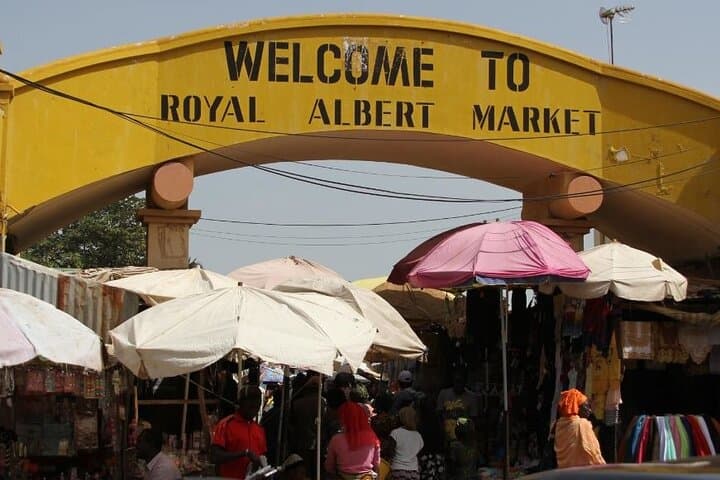
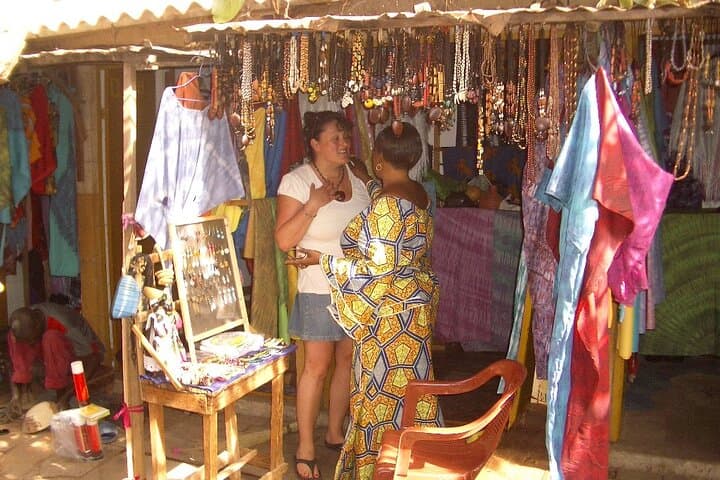
The city’s story is visible in the streets. MacCarthy Square and State House echo colonial grid-planning, while Edward Francis Small Teaching Hospital recalls early 20th-century public works that shaped medical care here. Albert Market is an immediate, sensory counterpoint: vendors call prices on textiles and spices, fishermen lay out the morning catch, and local craftsmen work batik and carved goods in shaded stalls.
Geologically, Banjul sits at the mouth of the Gambia River on sandy tidal flats and mangrove fringes—expect salty air, flat horizons and tidal rhythm. Culturally, the tour traces transitions from colonial administration to modern Gambian civic life: markets, memorials and the hospital show those layers.
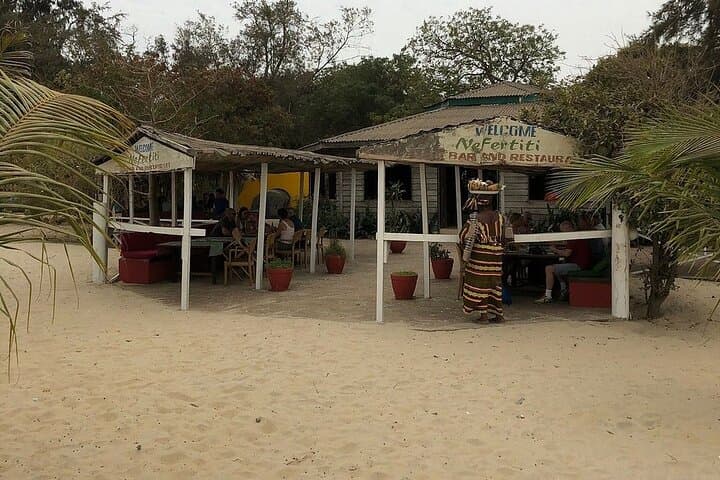
Practical guidance: the full orientation lasts about five hours with light walking between stops, so wear sturdy sandals or trainers, bring sunscreen and cash for market purchases. Photography is welcomed but ask before shooting people. Lunch at a beach bar near Nefertiti offers a cooling wind and simple grill dishes—perfect for a pause after market crowds.
The route gives a compact, walkable primer on Banjul’s urban fabric and riverside character—accessible for travelers with moderate mobility who want a clear, sensory introduction to the capital.
moderate.
5 hours.
Suitable for travelers with moderate fitness—short walks and some stairs at Arch 22; not strenuous.
Yes—private transportation includes hotel pickup and drop-off within central Banjul; specify pickup point when booking.
Expect light to moderate walking between stops, including a short stair climb to the top of Arch 22 and roaming through market aisles.
Lunch and non-alcoholic beverages are included; alcoholic drinks at beach bars are typically extra.
Infants and small children can join (stroller accessible and infant seats available), but child rates apply only when sharing with two paying adults.
Banjul’s urban core reflects colonial-era planning with later post-independence layers; Arch 22 marks a pivotal moment in recent Gambian political history and offers a strategic lookout over the river mouth.
The city is sensitive to coastal erosion and waste buildup—minimize single-use plastics and follow guide instructions to avoid disturbing mangroves and shorebirds.
Black & White Safari operates guided outdoor trips and adventures with an emphasis on safety, stewardship, and memorable experiences.
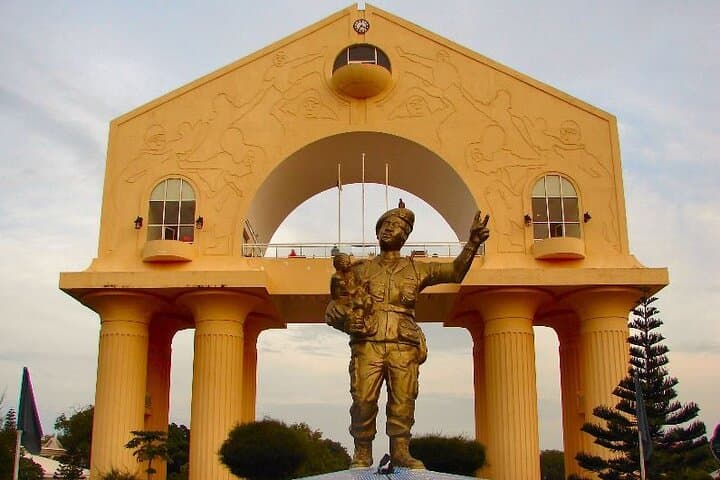
You step out of a shaded minivan into a hot bay breeze, the Gambia River daring you to look across its slow current toward the Atlantic. Arch 22 looms above—an angular concrete gate that rewards the climb with a broad view of Banjul’s low-slung rooftops, mangrove edges and the ribbon of water that defines the city.
You step out of a shaded minivan into a hot bay breeze, the Gambia River daring you to look across its slow current toward the Atlantic. Arch 22 looms above—an angular concrete gate that rewards the climb with a broad view of Banjul’s low-slung rooftops, mangrove edges and the ribbon of water that defines the city.
The city’s story is visible in the streets. MacCarthy Square and State House echo colonial grid-planning, while Edward Francis Small Teaching Hospital recalls early 20th-century public works that shaped medical care here. Albert Market is an immediate, sensory counterpoint: vendors call prices on textiles and spices, fishermen lay out the morning catch, and local craftsmen work batik and carved goods in shaded stalls.
Geologically, Banjul sits at the mouth of the Gambia River on sandy tidal flats and mangrove fringes—expect salty air, flat horizons and tidal rhythm. Culturally, the tour traces transitions from colonial administration to modern Gambian civic life: markets, memorials and the hospital show those layers.
Practical guidance: the full orientation lasts about five hours with light walking between stops, so wear sturdy sandals or trainers, bring sunscreen and cash for market purchases. Photography is welcomed but ask before shooting people. Lunch at a beach bar near Nefertiti offers a cooling wind and simple grill dishes—perfect for a pause after market crowds.
The route gives a compact, walkable primer on Banjul’s urban fabric and riverside character—accessible for travelers with moderate mobility who want a clear, sensory introduction to the capital.