THE ADVENTURE COLLECTIVE® · Independent discovery and booking for outdoor travel

Walk between Wat Pho and Wat Arun, cross the Chao Phraya by traditional boat, and witness Bangkok’s riverine pulse. This 3–4 hour tour blends iconic temples, local history, and practical tips for a respectful, comfortable visit.
Walk between Wat Pho and Wat Arun, cross the Chao Phraya by traditional boat, and witness Bangkok’s riverine pulse. This 3–4 hour tour blends iconic temples, local history, and practical tips for a respectful, comfortable visit.
You step off the BTS at Saphan Taksin into the humid press of Bangkok and the river immediately asserts itself—Chao Phraya daring you to cross. The walk to Wat Pho places you amid incense-scented courtyards and the low murmur of monks; the Reclining Buddha fills your peripheral vision with gilded calm. A short boat ride slices through sun-glitter on the river before you climb the stepped terraces of Wat Arun, porcelain spires catching light like tiny mirrors.
Verified experiences and guided adventures in the surrounding area.
Operated by Way to Bangkok · Bangkok, Bangkok
You step off the BTS at Saphan Taksin into the humid press of Bangkok and the river immediately asserts itself—Chao Phraya daring you to cross. The walk to Wat Pho places you amid incense-scented courtyards and the low murmur of monks; the Reclining Buddha fills your peripheral vision with gilded calm. A short boat ride slices through sun-glitter on the river before you climb the stepped terraces of Wat Arun, porcelain spires catching light like tiny mirrors.
These two temples bookend centuries of Siamese history. Wat Pho is older than the present Grand Palace and long served as a center for Buddhist learning and traditional Thai medicine; Wat Arun grew in prominence after the fall of Ayutthaya and displays the later Ayutthayan and Rattanakosin-era decorative arts. Geologically the Chao Phraya plain is a sedimentary floodplain whose shifting channels shaped Bangkok’s canals and piers—hence why temples and markets cluster along the water.
Culturally, expect a quiet reverence: remove shoes, cover shoulders and knees, and lower voices inside shrines. Practically, this is a gentle, urban walking tour of about 3–4 hours with stairs at Wat Arun and short boat transfers. Bring a refillable water bottle, sun protection, and a lightweight cover-up for temple entry rules. Morning slots avoid heat and crowds; late afternoons give softer light for photos but can be busier.
Plan for slippery steps by the river, keep valuables secured on boats, and build time to wander nearby flower markets or the museum of traditional medicine if your schedule allows.
easy.
3–4 hours.
Suitable for most fitness levels; requires short periods of standing and stair climbs at Wat Arun
Yes—this tour includes admission to Wat Pho and Wat Arun as part of the ticket.
Short river ferries and longtail boats are regularly used and safe; follow crew instructions and hold children close during transfers.
Pickup options vary by booking—some departures include hotel transfer; otherwise meet at BTS Saphan Taksin Exit 2 as directed.
Many temple grounds are flat but historic steps and uneven surfaces limit full accessibility; check with the operator for specific assistance options.
Wat Pho is one of Bangkok’s oldest centers for learning and traditional Thai massage; Wat Arun rose to prominence in the early Rattanakosin period and is famed for its porcelain-covered prang.
River health and temple preservation are ongoing concerns—choose low-waste practices, avoid single-use plastics, and respect designated paths to limit erosion and wear.
Way to Bangkok operates guided outdoor trips and adventures with an emphasis on safety, stewardship, and memorable experiences.

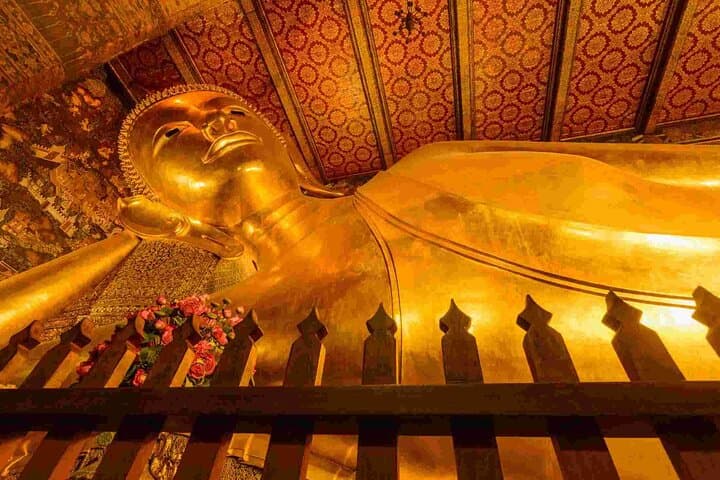


You step off the BTS at Saphan Taksin into the humid press of Bangkok and the river immediately asserts itself—Chao Phraya daring you to cross. The walk to Wat Pho places you amid incense-scented courtyards and the low murmur of monks; the Reclining Buddha fills your peripheral vision with gilded calm. A short boat ride slices through sun-glitter on the river before you climb the stepped terraces of Wat Arun, porcelain spires catching light like tiny mirrors.
You step off the BTS at Saphan Taksin into the humid press of Bangkok and the river immediately asserts itself—Chao Phraya daring you to cross. The walk to Wat Pho places you amid incense-scented courtyards and the low murmur of monks; the Reclining Buddha fills your peripheral vision with gilded calm. A short boat ride slices through sun-glitter on the river before you climb the stepped terraces of Wat Arun, porcelain spires catching light like tiny mirrors.
These two temples bookend centuries of Siamese history. Wat Pho is older than the present Grand Palace and long served as a center for Buddhist learning and traditional Thai medicine; Wat Arun grew in prominence after the fall of Ayutthaya and displays the later Ayutthayan and Rattanakosin-era decorative arts. Geologically the Chao Phraya plain is a sedimentary floodplain whose shifting channels shaped Bangkok’s canals and piers—hence why temples and markets cluster along the water.
Culturally, expect a quiet reverence: remove shoes, cover shoulders and knees, and lower voices inside shrines. Practically, this is a gentle, urban walking tour of about 3–4 hours with stairs at Wat Arun and short boat transfers. Bring a refillable water bottle, sun protection, and a lightweight cover-up for temple entry rules. Morning slots avoid heat and crowds; late afternoons give softer light for photos but can be busier.
Plan for slippery steps by the river, keep valuables secured on boats, and build time to wander nearby flower markets or the museum of traditional medicine if your schedule allows.