THE ADVENTURE COLLECTIVE® · Independent discovery and booking for outdoor travel

Glide through Thonburi’s klongs on a longtail boat to see Bangkok from its historic waterways. This 2–3 hour tour mixes cultural insight with close-up views of riverside temples, stilt houses, and local daily life.
Glide through Thonburi’s klongs on a longtail boat to see Bangkok from its historic waterways. This 2–3 hour tour mixes cultural insight with close-up views of riverside temples, stilt houses, and local daily life.
You push off from the River City pier and the city’s noise thins; the longtail’s engine hum becomes a steady companion as narrow waterways open into scenes of everyday riverside life. Wooden stilt houses lean toward the water, laundry flutters like small flags, and temple roofs peek over clusters of palms. From this low angle the Grand Palace and Wat Arun appear differently—landmarks observed rather than approached, framed by aging concrete and floating vegetation.
Verified experiences and guided adventures in the surrounding area.
Operated by I Asia Thailand · Bangkok, Bangkok
You push off from the River City pier and the city’s noise thins; the longtail’s engine hum becomes a steady companion as narrow waterways open into scenes of everyday riverside life. Wooden stilt houses lean toward the water, laundry flutters like small flags, and temple roofs peek over clusters of palms. From this low angle the Grand Palace and Wat Arun appear differently—landmarks observed rather than approached, framed by aging concrete and floating vegetation.
Thonburi was once a separate capital and the area preserves more of the old klong network than central Bangkok. Geologically the Chao Phraya basin’s slow sediments shaped a flat, meandering river plain where canals were cut for transport and irrigation; culturally, the waterways sustained floating markets and a waterborne rhythm of life that persists in pockets today.
Expect 2–3 hours aboard a traditional longtail boat, moving through larger klongs and smaller side channels. The pace is relaxed but physical: boarding involves a low, sometimes slippery step, and the engine’s rumble and spray are part of the experience. Local guides point out temples, communal washing areas, and the occasional artist’s house tucked behind narrow alleys.
Practical notes: go early for softer light and lower midday heat, wear non-slip shoes and sun protection, and carry a refillable water bottle. Respect residents—photograph discreetly and avoid tossing anything into the water. For a short, intimate window into Bangkok’s riverine history, the klong tour delivers context, contrast, and the steady invitation of the water to slow down and look closer.
easy.
2–3 hours.
Minimal fitness required but ability to step on/off a low, sometimes slippery boat is needed
Meet at the River City shopping mall pier next to the Royal Orchid Sheraton Hotel; the tour does not include hotel pickup.
Yes—infants may ride in strollers or on laps, but life-jackets may not fit very small children; check with the operator in advance.
Basic restroom stops are available at selected piers or riverside facilities, but facilities on smaller canals are limited.
Tours typically run in light rain; the operator may cancel for severe weather or if minimum traveler numbers aren’t met—check the booking terms for refunds.
Thonburi was an independent capital until 1971; its surviving klongs reflect Bangkok’s earlier identity as a city built on waterways once called the “Venice of the East.”
Canal water quality varies and plastic pollution is an ongoing issue; visitors help by not littering, supporting local clean-up initiatives, and choosing operators that respect riverside communities.
I Asia Thailand operates guided outdoor trips and adventures with an emphasis on safety, stewardship, and memorable experiences.
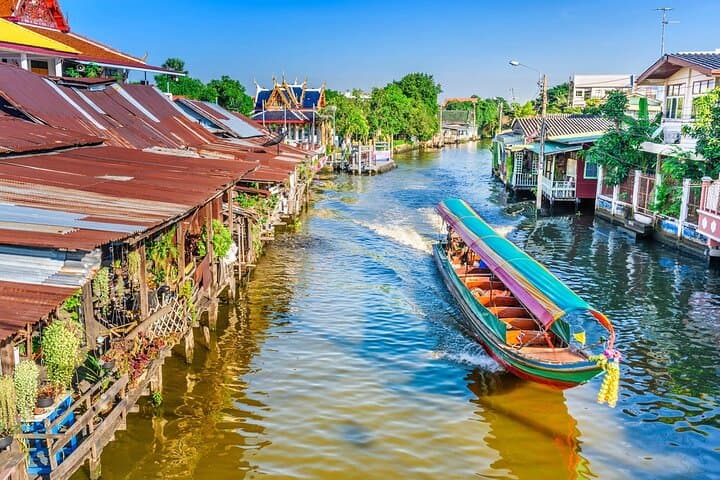
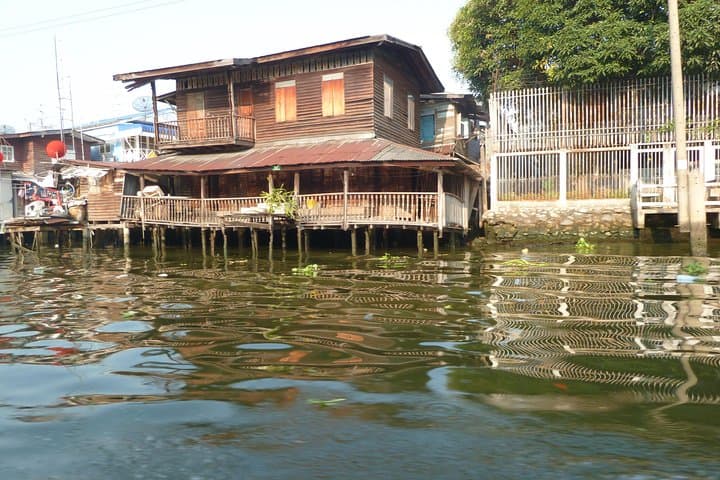
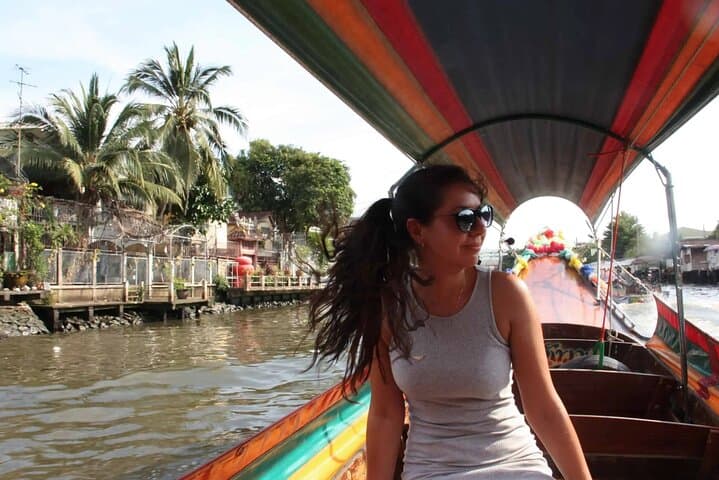
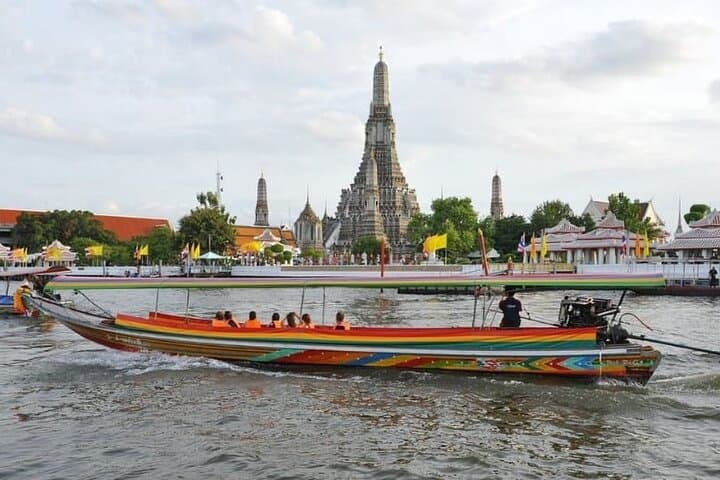
You push off from the River City pier and the city’s noise thins; the longtail’s engine hum becomes a steady companion as narrow waterways open into scenes of everyday riverside life. Wooden stilt houses lean toward the water, laundry flutters like small flags, and temple roofs peek over clusters of palms. From this low angle the Grand Palace and Wat Arun appear differently—landmarks observed rather than approached, framed by aging concrete and floating vegetation.
You push off from the River City pier and the city’s noise thins; the longtail’s engine hum becomes a steady companion as narrow waterways open into scenes of everyday riverside life. Wooden stilt houses lean toward the water, laundry flutters like small flags, and temple roofs peek over clusters of palms. From this low angle the Grand Palace and Wat Arun appear differently—landmarks observed rather than approached, framed by aging concrete and floating vegetation.
Thonburi was once a separate capital and the area preserves more of the old klong network than central Bangkok. Geologically the Chao Phraya basin’s slow sediments shaped a flat, meandering river plain where canals were cut for transport and irrigation; culturally, the waterways sustained floating markets and a waterborne rhythm of life that persists in pockets today.
Expect 2–3 hours aboard a traditional longtail boat, moving through larger klongs and smaller side channels. The pace is relaxed but physical: boarding involves a low, sometimes slippery step, and the engine’s rumble and spray are part of the experience. Local guides point out temples, communal washing areas, and the occasional artist’s house tucked behind narrow alleys.
Practical notes: go early for softer light and lower midday heat, wear non-slip shoes and sun protection, and carry a refillable water bottle. Respect residents—photograph discreetly and avoid tossing anything into the water. For a short, intimate window into Bangkok’s riverine history, the klong tour delivers context, contrast, and the steady invitation of the water to slow down and look closer.