THE ADVENTURE COLLECTIVE® · Independent discovery and booking for outdoor travel

Move through Bangkok on foot with a flexible self-guided app that links the Grand Palace, Wat Arun, Chinatown, Chatuchak, and Lumpini Park into a 5–6 hour urban loop. Expect flat walking, temple stairs, markets, and riverside vistas with practical tips for heat, rain, and dress codes.
Move through Bangkok on foot with a flexible self-guided app that links the Grand Palace, Wat Arun, Chinatown, Chatuchak, and Lumpini Park into a 5–6 hour urban loop. Expect flat walking, temple stairs, markets, and riverside vistas with practical tips for heat, rain, and dress codes.
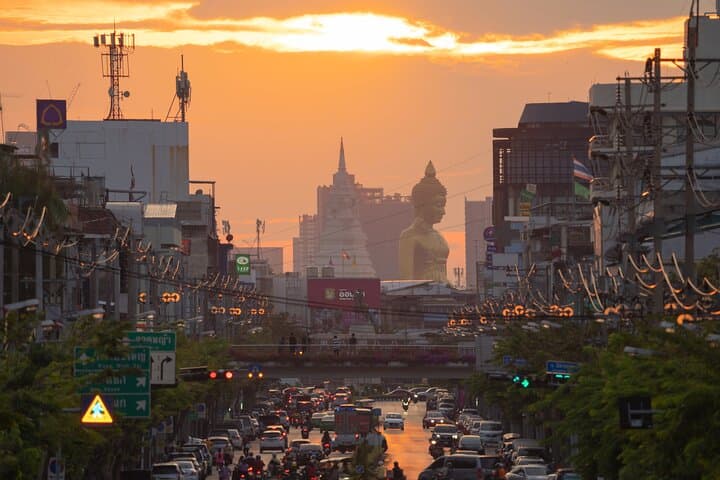
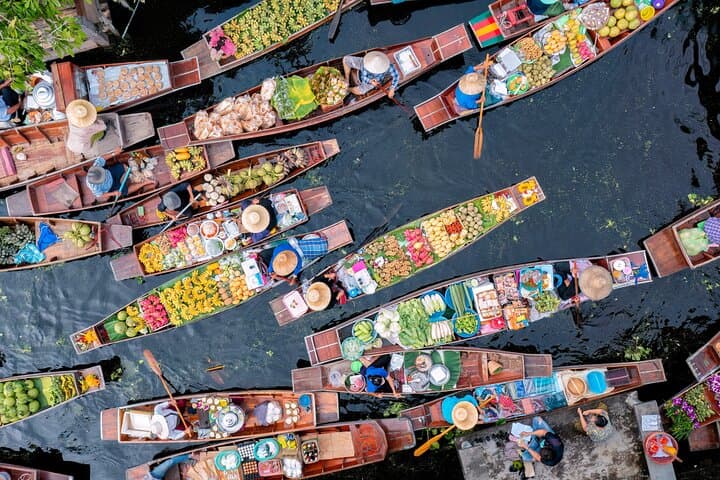
The city presses close here: temple spires puncture steam-thick air, tuk‑tuks hum like busy insects, and the Chao Phraya ambles past, daring you to follow its curve. On a self-guided walk through Bangkok's core, travelers move from the glitter of the Grand Palace to the neon pulse of Yaowarat, tracing the city's long lines of trade, faith, and migration.
Verified experiences and guided adventures in the surrounding area.
Operated by CloudGuide S.L · Bangkok, Bangkok
The city presses close here: temple spires puncture steam-thick air, tuk‑tuks hum like busy insects, and the Chao Phraya ambles past, daring you to follow its curve. On a self-guided walk through Bangkok's core, travelers move from the glitter of the Grand Palace to the neon pulse of Yaowarat, tracing the city's long lines of trade, faith, and migration.
Bangkok grew where rivers met rice fields; the Grand Palace and Wat Phra Kaew reflect centuries of royal patronage and Thai craftsmanship, while Wat Arun’s prang keeps its watch over the river. Chinatown and Khao San Road tell later stories—merchant networks, migrant cultures, and the international backpacker economy. The city’s geology is alluvium and reclaimed marsh; its human geography is improvisation, with canals and markets repurposed across generations.
Expect flat, mostly paved walking with intermittent stairs at temple sites and steep approaches at Wat Arun. The river will pull at your attention; Lumpini Park will slow your pace, monitor lizards slipping like small guardians through the grass. The tour app supplies routes, context, and audio; download content for offline use and map your timing around hot midday and weekend crowds at Chatuchak.
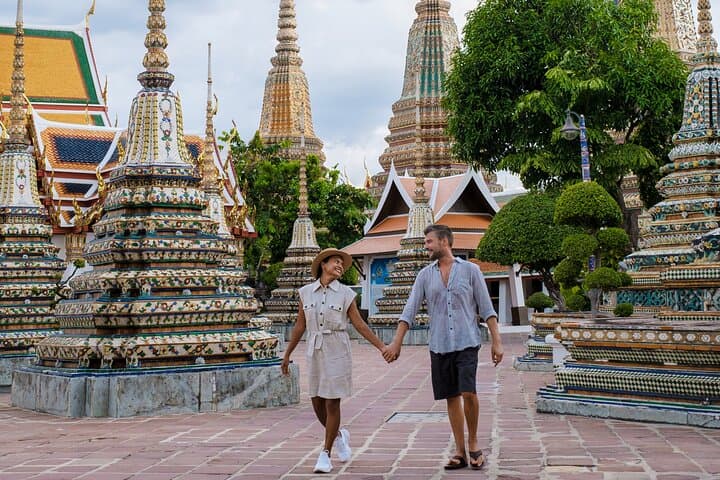
Practical tips: plan 5–6 hours to sample key sites without rushing, wear breathable shoes, and carry a rain layer for sudden storms. Respect temple dress codes, carry small change for food stalls, and be ready to trade the city’s noise for quiet green spaces when you need it. This walk hands you Bangkok’s many faces—history, commerce, ritual—at your own steady rhythm.
easy.
5–6 hours.
Suitable for most fitness levels; requires stamina for continuous walking across 8–12 km depending on route choices.
Entry is purchased on-site; queues can be long—arrive early or plan to view from the perimeter if you prefer less waiting.
Yes—routes are flat and flexible; reduce daily distance and allow extra rest stops in parks or cafes.
The app works best with data but offers offline downloads; download maps and audio beforehand to avoid connectivity issues.
Generally yes; standard precautions—watch belongings in crowded markets and respect cultural norms—are sufficient.
Bangkok expanded rapidly from the late 18th century after the Chakri dynasty established the capital at Rattanakosin; many temple complexes date to that foundational period.
Urban green spaces like Bang Krachao and Lumpini are actively promoted to offset development; visitors are encouraged to reduce plastic use and respect local wildlife habitats.
CloudGuide S.L operates guided outdoor trips and adventures with an emphasis on safety, stewardship, and memorable experiences.
The city presses close here: temple spires puncture steam-thick air, tuk‑tuks hum like busy insects, and the Chao Phraya ambles past, daring you to follow its curve. On a self-guided walk through Bangkok's core, travelers move from the glitter of the Grand Palace to the neon pulse of Yaowarat, tracing the city's long lines of trade, faith, and migration.
The city presses close here: temple spires puncture steam-thick air, tuk‑tuks hum like busy insects, and the Chao Phraya ambles past, daring you to follow its curve. On a self-guided walk through Bangkok's core, travelers move from the glitter of the Grand Palace to the neon pulse of Yaowarat, tracing the city's long lines of trade, faith, and migration.
Bangkok grew where rivers met rice fields; the Grand Palace and Wat Phra Kaew reflect centuries of royal patronage and Thai craftsmanship, while Wat Arun’s prang keeps its watch over the river. Chinatown and Khao San Road tell later stories—merchant networks, migrant cultures, and the international backpacker economy. The city’s geology is alluvium and reclaimed marsh; its human geography is improvisation, with canals and markets repurposed across generations.
Expect flat, mostly paved walking with intermittent stairs at temple sites and steep approaches at Wat Arun. The river will pull at your attention; Lumpini Park will slow your pace, monitor lizards slipping like small guardians through the grass. The tour app supplies routes, context, and audio; download content for offline use and map your timing around hot midday and weekend crowds at Chatuchak.
Practical tips: plan 5–6 hours to sample key sites without rushing, wear breathable shoes, and carry a rain layer for sudden storms. Respect temple dress codes, carry small change for food stalls, and be ready to trade the city’s noise for quiet green spaces when you need it. This walk hands you Bangkok’s many faces—history, commerce, ritual—at your own steady rhythm.