THE ADVENTURE COLLECTIVE® · Independent discovery and booking for outdoor travel

Walk through Bangkok’s Chinatown into the gilded courts of the Grand Palace and the serene halls of Wat Pho on a guided 5‑hour cultural tour. Practical guidance on dress, timing, and what to expect makes this a smart choice for first‑time visitors.
Walk through Bangkok’s Chinatown into the gilded courts of the Grand Palace and the serene halls of Wat Pho on a guided 5‑hour cultural tour. Practical guidance on dress, timing, and what to expect makes this a smart choice for first‑time visitors.
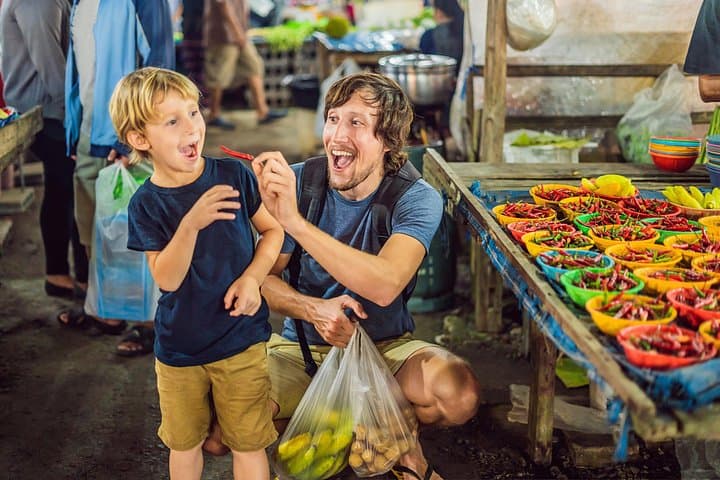
You step off the tuk‑tuk into Chinatown’s clamor: vendors calling out, steam rising from spice‑slick woks, and narrow alleys folding into shadowed shrines. For five hours the city feels immediate—temples, river air, and markets pressing close as your guide threads history into each stop.
Verified experiences and guided adventures in the surrounding area.
Operated by TRIPZA sightseeing · Bangkok, Bangkok
You step off the tuk‑tuk into Chinatown’s clamor: vendors calling out, steam rising from spice‑slick woks, and narrow alleys folding into shadowed shrines. For five hours the city feels immediate—temples, river air, and markets pressing close as your guide threads history into each stop.
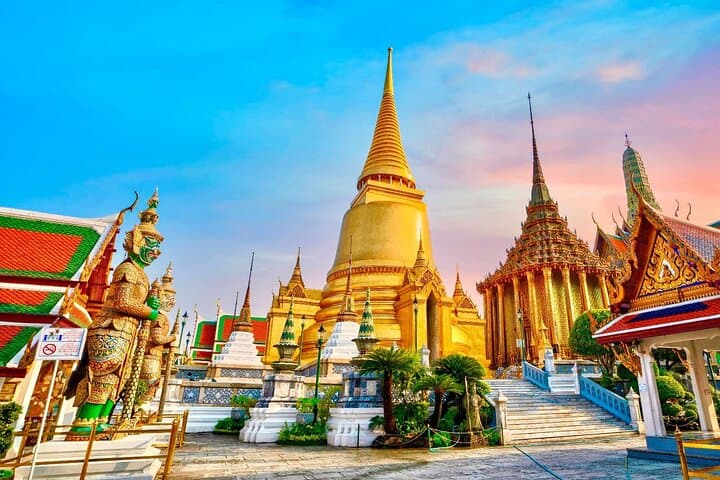
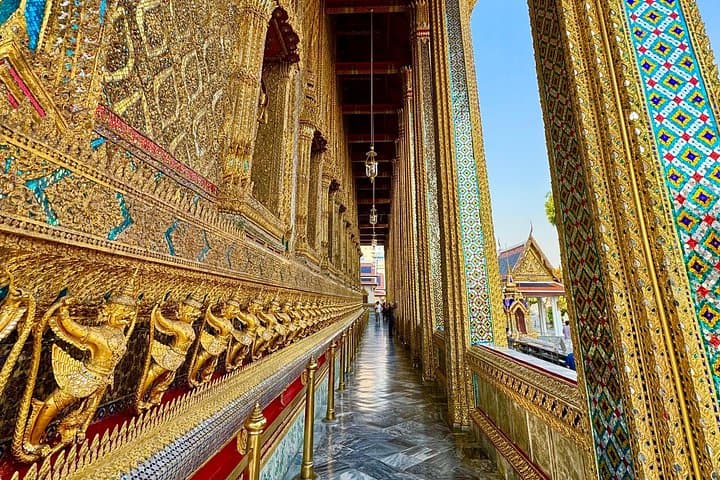
Begin with Yaowarat’s sensory overload—gold leaf, incense, and street food stalls that have fed Bangkok for generations—then move toward the Grand Palace, built in 1782 when Bangkok became the Chakri dynasty’s seat of power. The palace complex’s gilded roofs and patterned tiles are not decoration alone; they narrate Siam’s royal and religious identity. Nearby, Wat Pho houses the reclining Buddha and the original Thai massage school, a living link between devotional practice and traditional healing.
This walk combines culture and logistics: a licensed English‑speaking guide, hotel pick‑up/drop‑off, and the stated admission fees for Grand Palace and Wat Pho are included. Expect 2–4 miles of mostly paved walking, intermittent shade, and strict dress codes at religious sites—long sleeves and covered legs are required.
Practical notes: arrive hydrated, wear sturdy closed shoes with a back strap, and carry a lightweight scarf to cover shoulders for temple entry. Bring small local currency for market snacks and gratuities. Plan this tour in the morning to avoid peak heat and late‑afternoon crowds; a layered, respectful approach will keep you comfortable and in keeping with local customs.
easy.
5 hours.
Suitable for light urban walking; you should be able to stand and walk for several hours in warm conditions.
According to the tour inclusions, admission fees for the Grand Palace and Wat Pho are provided as part of the booking.
Wear clothing that covers shoulders and knees; sleeveless tops, shorts, and open-backed sandals are typically not permitted.
Hotel pick‑up and drop‑off are listed among the inclusions; confirm your pickup point when booking and arrive 15 minutes early.
The tour is described as physically easy, but it involves walking and some standing; inquire about accessibility needs when booking and note infants may need to sit on laps.
The Grand Palace complex dates to 1782 under King Rama I and houses the Emerald Buddha; Wat Pho was a center for learning and is considered the birthplace of traditional Thai massage.
Respectful visitation supports conservation—follow dress and behavior rules, avoid littering, and choose local vendors to help sustain community livelihoods.
TRIPZA sightseeing operates guided outdoor trips and adventures with an emphasis on safety, stewardship, and memorable experiences.
You step off the tuk‑tuk into Chinatown’s clamor: vendors calling out, steam rising from spice‑slick woks, and narrow alleys folding into shadowed shrines. For five hours the city feels immediate—temples, river air, and markets pressing close as your guide threads history into each stop.
You step off the tuk‑tuk into Chinatown’s clamor: vendors calling out, steam rising from spice‑slick woks, and narrow alleys folding into shadowed shrines. For five hours the city feels immediate—temples, river air, and markets pressing close as your guide threads history into each stop.
Begin with Yaowarat’s sensory overload—gold leaf, incense, and street food stalls that have fed Bangkok for generations—then move toward the Grand Palace, built in 1782 when Bangkok became the Chakri dynasty’s seat of power. The palace complex’s gilded roofs and patterned tiles are not decoration alone; they narrate Siam’s royal and religious identity. Nearby, Wat Pho houses the reclining Buddha and the original Thai massage school, a living link between devotional practice and traditional healing.
This walk combines culture and logistics: a licensed English‑speaking guide, hotel pick‑up/drop‑off, and the stated admission fees for Grand Palace and Wat Pho are included. Expect 2–4 miles of mostly paved walking, intermittent shade, and strict dress codes at religious sites—long sleeves and covered legs are required.
Practical notes: arrive hydrated, wear sturdy closed shoes with a back strap, and carry a lightweight scarf to cover shoulders for temple entry. Bring small local currency for market snacks and gratuities. Plan this tour in the morning to avoid peak heat and late‑afternoon crowds; a layered, respectful approach will keep you comfortable and in keeping with local customs.