THE ADVENTURE COLLECTIVE® · Independent discovery and booking for outdoor travel

Taste Bangkok’s boldest local dishes on a four‑hour route that combines river ferry, tuk‑tuk and train. From boat noodles to pork‑brain soup, this guided walk-through neighborhoods popular with locals delivers a compact, offbeat culinary education.
Taste Bangkok’s boldest local dishes on a four‑hour route that combines river ferry, tuk‑tuk and train. From boat noodles to pork‑brain soup, this guided walk-through neighborhoods popular with locals delivers a compact, offbeat culinary education.
You step off a river ferry into an alley where steam and spice press up against you like a living thing. The Bizarre Food Challenge threads Bangkok’s neighborhoods—Wang Lang’s boat‑noodle stalls, vintage pork‑brain shops, Samsen’s frog‑skin plates—moving by ferry, tuk‑tuk and a short train ride. The city’s rhythms push you forward: vendors calling, ferries slicing the Chao Phraya, cramped kitchens dishing out heritage flavors.
Verified experiences and guided adventures in the surrounding area.
Operated by Bangkok Food Tours · Bangkok, Bangkok
You step off a river ferry into an alley where steam and spice press up against you like a living thing. The Bizarre Food Challenge threads Bangkok’s neighborhoods—Wang Lang’s boat‑noodle stalls, vintage pork‑brain shops, Samsen’s frog‑skin plates—moving by ferry, tuk‑tuk and a short train ride. The city’s rhythms push you forward: vendors calling, ferries slicing the Chao Phraya, cramped kitchens dishing out heritage flavors.
This route maps modern Bangkok cuisine to regional histories: Isan ingredients like red ant eggs point to northeastern fermentation practices, while Hua Lamphong station—opened under King Rama V—anchors the tour in a turn‑of‑the‑century transport network that helped spread regional foods into the capital. Geology matters only as heat and humidity; streets are flat, paved and often crowded, but stairways at older shops and the train require basic mobility.
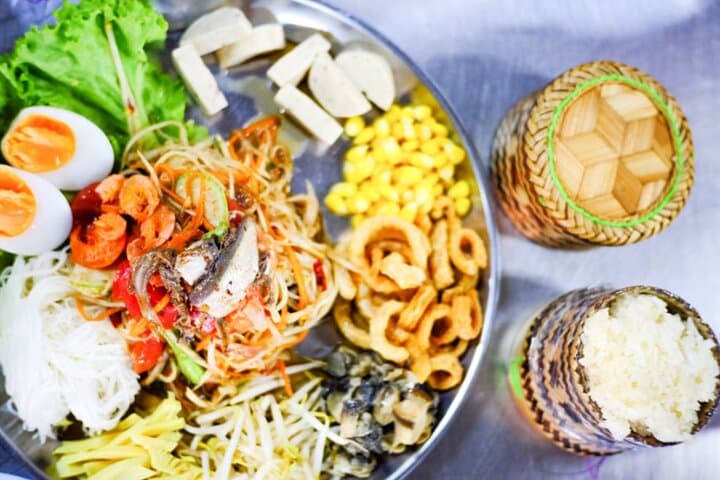
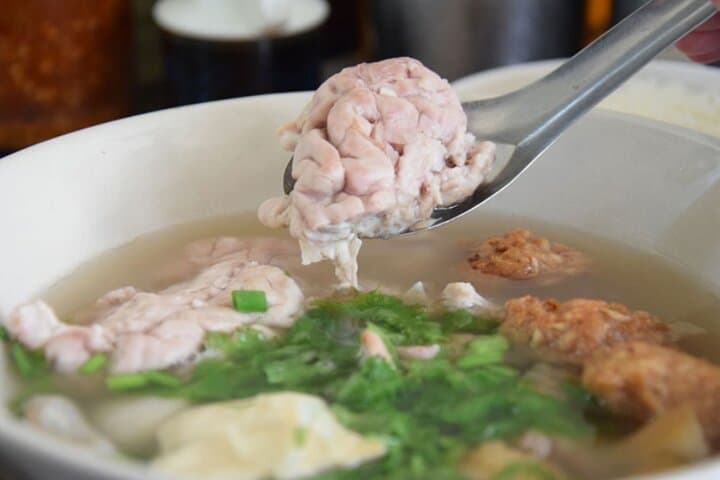
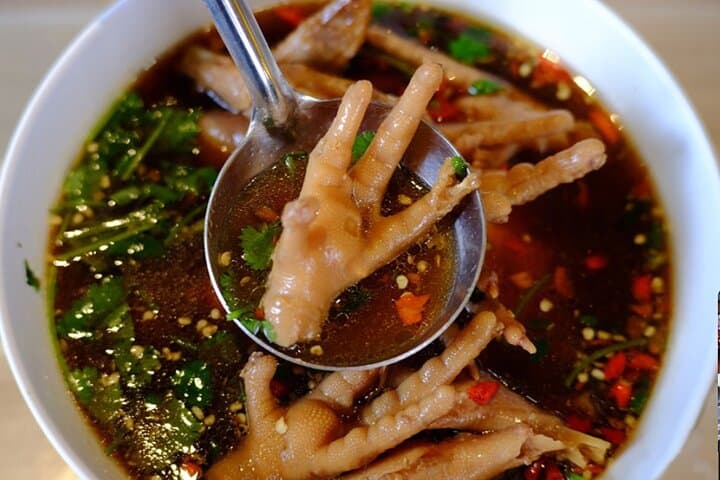
Expect 2–4 km of walking over four hours, frequent standing, and small‑plate portions meant for sharing. Dishes range from smelly fermented fish to pork brain soup, chicken‑feet broth and crispy corn with ant eggs—acquired tastes that are local favorites rather than tourist novelties. Guides explain ingredients, sourcing and cultural context while helping you pace tasting to avoid overload.
Practical points: bring small bills, stay hydrated in Bangkok’s heat, and plan the tour for morning or early evening to dodge peak sun and market crush. If you have allergies or dietary restrictions, notify the operator beforehand; many dishes are off‑menu and use whole‑animal preparations. The tour is a tactile, noisy, unmistakably urban way to meet Bangkok through its boldest flavors.
moderate.
4 hours.
Moderate fitness; able to walk 2–4 km on flat, crowded pavements and stand for tastings.
The tour is about four hours with roughly 2–4 km of walking across flat city streets; there are short transfers by ferry, tuk‑tuk and train.
Some vendors serve whole‑animal dishes and fermented ingredients; notify the operator ahead of booking so guides can adjust stops where possible.
Vendors on these routes are popular with locals and experienced in preparing these dishes; choose a reputable operator and follow basic precautions like eating cooked items and avoiding ice from unknown sources.
Guides typically speak English and Thai; private tours often provide a guide who can explain ingredients and context in conversational English.
Stops reflect Bangkok’s role as a transport hub since the late 19th century; regional specialties arrived with migrant vendors and railway connections, shaping the city’s street‑food culture.
Support small vendors to keep traditional recipes alive and minimize single‑use plastics by carrying a bottle; avoid food waste and respect local sourcing practices.
Bangkok Food Tours operates guided outdoor trips and adventures with an emphasis on safety, stewardship, and memorable experiences.
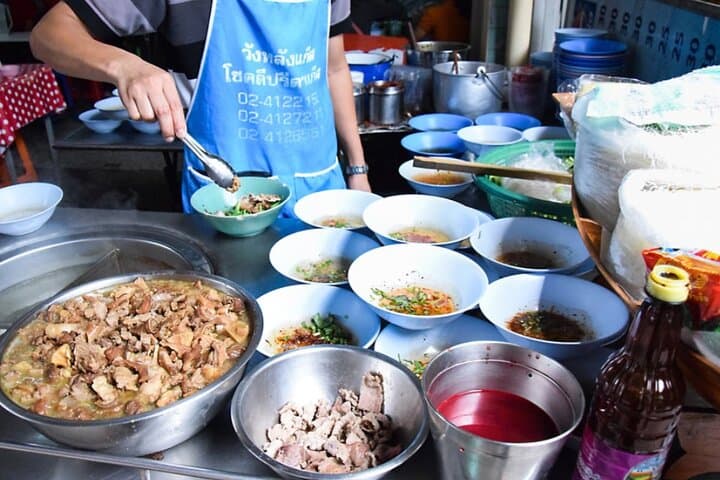
You step off a river ferry into an alley where steam and spice press up against you like a living thing. The Bizarre Food Challenge threads Bangkok’s neighborhoods—Wang Lang’s boat‑noodle stalls, vintage pork‑brain shops, Samsen’s frog‑skin plates—moving by ferry, tuk‑tuk and a short train ride. The city’s rhythms push you forward: vendors calling, ferries slicing the Chao Phraya, cramped kitchens dishing out heritage flavors.
You step off a river ferry into an alley where steam and spice press up against you like a living thing. The Bizarre Food Challenge threads Bangkok’s neighborhoods—Wang Lang’s boat‑noodle stalls, vintage pork‑brain shops, Samsen’s frog‑skin plates—moving by ferry, tuk‑tuk and a short train ride. The city’s rhythms push you forward: vendors calling, ferries slicing the Chao Phraya, cramped kitchens dishing out heritage flavors.
This route maps modern Bangkok cuisine to regional histories: Isan ingredients like red ant eggs point to northeastern fermentation practices, while Hua Lamphong station—opened under King Rama V—anchors the tour in a turn‑of‑the‑century transport network that helped spread regional foods into the capital. Geology matters only as heat and humidity; streets are flat, paved and often crowded, but stairways at older shops and the train require basic mobility.
Expect 2–4 km of walking over four hours, frequent standing, and small‑plate portions meant for sharing. Dishes range from smelly fermented fish to pork brain soup, chicken‑feet broth and crispy corn with ant eggs—acquired tastes that are local favorites rather than tourist novelties. Guides explain ingredients, sourcing and cultural context while helping you pace tasting to avoid overload.
Practical points: bring small bills, stay hydrated in Bangkok’s heat, and plan the tour for morning or early evening to dodge peak sun and market crush. If you have allergies or dietary restrictions, notify the operator beforehand; many dishes are off‑menu and use whole‑animal preparations. The tour is a tactile, noisy, unmistakably urban way to meet Bangkok through its boldest flavors.